Scan to play on mobile
2048: Wood Block
How to Play
Game Overview
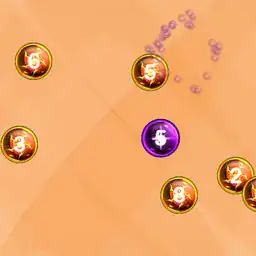
So 2048: Wood Block is basically that classic number-sliding puzzle but with a whole wood-carved makeover. The tiles look like little wooden plaques with numbers carved into them, and the board has this nice warm brown tone that makes it feel less like staring at a spreadsheet. You drop these blocks onto a grid, and matching two of the same number makes them merge into one bigger number -- 2 and 2 become 4, 4 and 4 become 8, all the way up to 2048. The controls are dead simple: just click or tap where you want the block to go. But the trick is planning ahead because if you fill up the board without making matches, you're stuck. It's one of those games where you keep telling yourself "just one more round" and then an hour disappears. The sound effects are satisfying little clicks and thuds, like wooden blocks knocking together. There's a leaderboard too, which adds that competitive edge -- seeing your score compared to others makes you want to optimize every move. The vibe is chill but tense at the same time; it's relaxing until you realize you have three 2s and no space. Anyone who likes puzzle games or number games will probably get hooked. It's not flashy or complicated, just a solid, well-made version of a classic idea that feels nice to interact with.
About 2048: Wood Block
So this game is 2048, but with wood blocks. The basic loop is pretty straightforward: you get these wooden tiles with numbers on them, and you're dropping them onto a 4x4 grid. You click or tap where you want each block to go. The goal is to get two tiles with the same number to touch, and they merge into one tile with the next number up. Two 2s make a 4, two 4s make an 8, and so on. You're aiming for the 2048 tile, but the game keeps going after that if you want a higher score.
What makes it tricky is that you're not sliding a whole row like in the original 2048. You place each block individually, and they pile up. If the grid fills up and you can't place the next block, game over. So you have to think about where to put things to keep merges happening. The early game is chill -- you're just matching low numbers. But once you get into the 128s and 256s, the board gets crowded fast. You start prioritizing merges over everything else.
There's no new mechanics or special blocks that show up later, which is actually kind of nice. It's just pure number management. The satisfying moment is when you set up a chain reaction -- like dropping a 64 next to another 64, and then that 128 merges with another 128, and suddenly you have a 512 in one move. That feels great.
The controls are dead simple: left click on PC, tap on mobile. There's a leaderboard icon (a trophy) that shows your rank against other players' high scores. The wood texture is just cosmetic, but it does make the game feel less sterile than the plain number tiles. Difficulty ramps unevenly -- sometimes you'll cruise to 1024, other times you'll get stuck at 512 because you placed a 2 in the wrong spot early on. There's no undo button, so every placement matters. It's the kind of game where you almost swear you hear the wood blocks clacking together in your head. The high score system keeps you coming back, even if you just want to beat your own number. I've found that keeping the left side of the grid emptier helps, but that's just me 💥.
Tips & Tricks
First off, don't get too attached to filling up the grid from one side. I kept trying to stack everything left, and it always backfired when a big block dropped right where I needed space. Leave gaps in the middle sometimes--that saved my runs more than once. The block preview at the top is your best friend. I ignored it for too many games, then realized you can spot incoming merges and plan a few moves ahead. When a 2 drops next to a 2, that feels great, but watch out for the order they fall. I lost a perfect setup because I merged too fast and a new block landed on a lone tile. Empty cells near the top are dangerous; if you crowd the top row, you're begging for a game over. Instead, keep the bottom rows open for big combos. One trick that clicked for me: focus on building one or two high-number tiles at a time, not spreading out. Spreading out makes you run out of room quicker. Also, the leaderboard is hidden behind that trophy icon--I didn't click it until day three, thinking it was just for show. It's not. Check it after a good run to see where you stand. Small board, big decisions.











Comments
Please login to leave a comment.