Scan to play on mobile
Assemble Factory Puzzle
How to Play
Game Overview
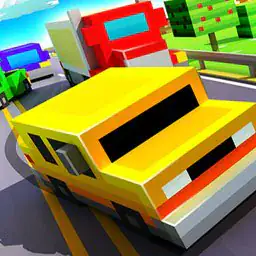
Assemble Factory Puzzle is one of those browser games that looks deceptively simple until you're five levels in and staring at a mess of conveyor belts wondering where it all went wrong. The whole thing is set in a bright, almost cartoonish factory floor -- think primary colors and chunky machines that look like they belong in a toy set rather than an industrial plant. You get this bird's-eye view of a production line where you have to figure out the right order to place different assembly machines, like drillers and welders and painters, so that the car parts come out looking right. It feels less like a puzzle and more like a logic puzzle mixed with a traffic jam simulator. The challenge isn't just knowing which machine goes where -- it's about routing the parts through the line efficiently without everything crashing into each other. Some levels are over in a minute if you spot the trick, others take ten minutes of trial and error. There's a nice sense of satisfaction when you finally see that perfect part roll off the line. The vibe is relaxed until it suddenly isn't. Who'd get hooked? People who liked those old flash logic games, or anyone who enjoys rearranging furniture in real life and wishes it had more stakes.
About Assemble Factory Puzzle
So you're running a factory that makes car parts, but it's not like those idle games where everything happens automatically. In Assemble Factory Puzzle, you actually have to think about the order machines go in. Each level gives you a blueprint of what the finished part should look like, and then you get a handful of machine tiles to place on a grid. Some machines stamp metal, others weld pieces together, some add paint or attach smaller components. You drag them onto the assembly line spaces in the right sequence. Get it wrong and the part comes out busted, which is a fail condition until you redo it. The early levels are basically tutorials with names like 'Basic Bumper' or 'Simple Fender' where you just put a stamping press then a painting booth. But around level 15, things get tricky. They introduce 'Rotary Joint' machines that can turn the part around, because some steps need the part oriented a certain way. Then you get 'Splitter Conveyors' that let you build two sub-assemblies at once and merge them later. The satisfying moment is when you figure out a tight layout and all the arrows line up and the conveyor belts don't jam. Your brain is constantly running spatial logic and sequence planning. Later mechanics include 'Timed Presses' that take longer to finish, and 'Quality Check' stations that reject parts if they go through in the wrong order. There's also a 'Recycle' machine that eats failed parts and gives back some resources, which becomes essential on the harder puzzles where one mistake wastes a lot. The difficulty ramps by adding more machine types and bigger grids, but also by giving you limited space and sometimes a budget for each level. You earn stars based on how fast and efficient your layout is. The game never forces speed, but chasing three stars makes you rethink everything. Some levels have names like 'Axle Assembly' or 'Engine Block Maze' that hint at the complexity. What's weird is that the factory setting is pretty chill visually--cartoonish parts and bright colors--but the puzzles are genuinely hard around level 30. You might spend 15 minutes on one puzzle, tweaking the placement of a single 'Oven' machine because the timing is off. It's not about twitch reflexes; it's about planning and then adjusting when your plan fails. The loop is: look at blueprint, place machines, run the simulation, watch the part travel through, see where it breaks, then rearrange. Repeat until it clicks.
Tips & Tricks
The first few levels lull you into thinking you can just slap machines down anywhere. Don't do that. One wrong placement early on messes up the whole flow later, and you'll be restarting from scratch. I learned to sketch the path in my head before placing even the first conveyor belt. Some machines output faster than they input, which sounds obvious but I kept forgetting. That bottleneck cost me a perfect score on level 14 more times than I'd like to admit. Rotating machines is way more useful than you'd think -- you can snake parts around obstacles without adding extra steps. The game doesn't hammer this home, but it clicked for me after I watched a friend breeze through a level I was stuck on. Also, pay attention to the order of colors on the car part schematics. I kept mixing up the sequence for the bumper assembly and wasted minutes backtracking. There's a trick with the double-sided machine that lets you process two parts at once, but only if you feed them from opposite sides. I missed that entirely until I accidentally placed one wrong and saw it work. Finally, don't be afraid to scrap a layout if it feels clunky halfway through. The reset button is faster than forcing a bad plan. Speed comes from knowing the shortcuts, not from rushing.























Comments
Please login to leave a comment.