Scan to play on mobile
Color Slide Fit
How to Play
Game Overview
Color Slide Fit is this browser game where you push colored blocks around a grid until they sit next to matching donut-shaped targets. It''s not flashy or anything -- the visuals are clean and flat, like a minimalist app, with blocks in primary colors on a white board. The vibe is more like a digital puzzle toy than a game with music or story. You click and drag blocks, but they slide with momentum, so you can''t just nudge them perfectly; you have to account for the physics, which makes it trickier than it sounds. Sometimes a block overshoots the target and you have to loop around the whole board. It''s actually pretty frustrating in a good way, because solving a level feels earned, not random. The difficulty ramps up fast -- early levels are just two blocks, but later ones have six or more scattered around obstacles. I could see puzzle fans, especially people who like Sokoban or pipe-connecting games, getting hooked. The game doesn''t explain much, so you figure out strategies on your own, like clearing a path before sliding the final block. Short sessions work well because levels rarely take more than a few minutes. The donut targets look a bit silly, honestly, like cartoon bagels, but that adds charm. It''s a solid brain workout without any pressure.
About Color Slide Fit
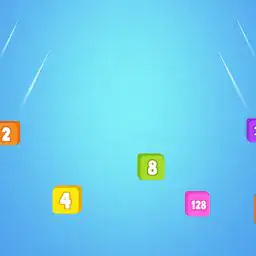
So here's the deal with Color Slide Fit. You're staring at a board covered in colorful blocks, and somewhere on that board are these donut-shaped targets that match the colors of those blocks. Your job is to slide each block until it sits right next to its matching donut. Not on top of it, but adjacent -- side by side. That's the whole goal, but getting there is where the fun starts.
The controls are simple: click and drag any block that isn't pinned down by another block or the board edges. You slide them one space at a time in four directions. There's no timer, no pressure -- just you and the puzzle. But here's the thing: blocks can block each other. You might move a red block out of the way to reach a blue one, only to realize you've trapped yourself later. That's the brain workout.
Early levels are easy. Stuff like "Garden Path" or "Easy Breezy" with like 3-4 blocks. You can brute force them in seconds. But by level 15, things get nasty. The board grows, and you get obstacles like static walls that can't be moved, or L-shaped blocks that need extra planning. There's this mechanic called "locked blocks" that appear around world 2 -- they're stuck in place until you clear certain other blocks first. And don't get me started on the "double donuts" that require two same-colored blocks to surround them at once.
The satisfying moment is when you finally slide that last block into place and the whole board kind of clicks. The game gives a little ripple effect on completion -- it's subtle but feels good. Levels are named things like "Checkmate" and "Log Jam" and "Tight Squeeze" which honestly describe the frustration well. There's no upgrade system here, no power-ups. It's pure puzzle logic.
Difficulty ramps up mostly through block density and weird board shapes. Some levels have blocks that are longer than 1x1 -- like 2x1 rectangles that take up more space and are harder to wiggle around corners. You'll find yourself redrawing paths in your head, testing moves mentally before making them. The game doesn't punish you for mistakes though -- you can undo an unlimited number of moves, which is a lifesaver. No lives system, no score. Just you against the layout.
What really gets me is how some levels look impossible at first but then you spot a sequence that opens everything up. That "aha" moment is why I keep coming back. The physics are lightweight -- blocks don't have momentum or anything fancy, they just slide where you drag them. But the spatial reasoning required is real.
One tip: leave the blocks closest to the edges for last if you can. Pushing something into a corner early can lock you out. Also, pay attention to which donuts are surrounded by obstacles -- those need priority. And for god's sake, don't ignore the locked blocks. They're there to force you into a specific order of moves, and fighting that order just wastes time.
Tips & Tricks
Early on, I kept rushing to move blocks straight into their matching donuts -- that''s a trap. You''ll quickly learn that sliding a block against a wall or another piece can save you from painting yourself into a corner. Pay attention to the order you tackle colors; sometimes it''s smarter to shift a block away from its target to clear space for others. The physics are surprisingly touchy -- blocks don''t always stop exactly where you expect, so use gentle drags instead of fast flicks, which cause overshoots that ruin your alignment. One trick that clicked for me: if you''re stuck, try sliding a block in a big loop around the board rather than pushing it directly -- the extra room gives you breathing space. Don''t ignore the corners; they''re not dead ends if you approach them from the right angle. Another mistake I made was forgetting that blocks can share edges with multiple donuts at once -- that overlap is often the key to solving harder levels. Finally, take a break if you''re frustrated; coming back fresh makes those tricky layouts click faster than brute force ever will.











Comments
Please login to leave a comment.