Scan to play on mobile
Crazy Merge Room Puzzle
How to Play
Game Overview
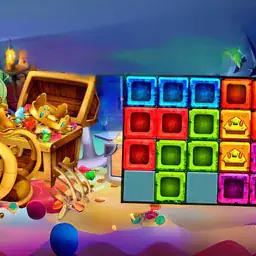
I spent a good chunk of an evening with Crazy Merge Room Puzzle, and it''s exactly what it sounds like--a sliding tile game where you''re piecing together rooms that look like someone threw a housewarming party for a tornado. The visuals are bright and cartoony, almost like a Saturday morning cartoon about messy living spaces. Each level drops you into a grid of scrambled tiles, and you slide them around by clicking to merge matching ones, which gradually reveals the full picture. The rooms themselves are wild--you''ll see a kitchen where the fridge is wearing a lampshade, or a bedroom with a fish tank floating on the ceiling. It''s not deep or story-driven, just pure puzzle action that asks you to spot patterns and plan moves ahead. The controls are simple, just mouse clicks, but the challenge ramps up as more tiles get introduced and the grids get bigger. What''s fun is that it feels less about speed and more about patience--you can sit back and think without a timer screaming at you. The vibe is light and goofy, not stressful. I''d say this is perfect for anyone who likes casual brain teasers like 2048 or those old sliding puzzles from magazines. It''s also great if you just want to kill twenty minutes without committing to a big game. The tile art has a lot of personality, which kept me grinning even when I got stuck on a particularly chaotic bathroom scene.
About Crazy Merge Room Puzzle
So you click a room tile on the grid, and it slides into an empty adjacent spot. That's the basic move. The goal is to rearrange everything so the picture makes sense--a living room with a couch next to a lamp, not a couch floating in a bathroom. The game calls these "merge puzzles" because matching two similar objects, like two halves of a broken table, fuses them into a single item. That's the satisfying click sound you hear, and it clears up space for more moves. Each level has a name like "Kitchen Chaos" or "Bedroom Blender" that hints at what's coming. Early levels are just four-by-four grids with obvious pairs, so you finish in maybe thirty seconds. But around level ten, things get mean. The grid expands to five-by-five, and now you have "junk tiles" that don't merge at all--they just sit there, blocking your path until you slide them to the edge. There's no undo button either, which is annoying. Later, you unlock "boosters" you earn from clearing three levels in a row without restarting. One booster lets you swap two non-empty tiles for free. Another turns a junk tile into a wildcard that matches anything. I save those for levels like "Mismatch Mansion" where the room is split into four different themes in one grid--a couch next to a toilet next to a cactus. The game doesn't tell you this, but some tiles have hidden timers. If you don't merge a chest tile within ten moves, it spawns a "dust bunny" that takes up an extra slot. Dust bunnies can't be removed unless you merge them with a vacuum tile, which is rare. So you learn to prioritize chests over decorative pillows. The hardest levels, like "Disaster Dome," have sixteen tiles but only two empty slots at the start. You have to plan five moves ahead, and one wrong slide costs you the run. The satisfying moment is when the last tile slides into place, the room snaps into a clean image, and a score pops up based on how few moves you used. There's no story, no characters--just you, the mouse, and a pile of broken furniture to fix. The difficulty jumps are real, but that's what keeps you clicking.
Tips & Tricks
Start by scanning the whole room for tiles that obviously connect--like a lamp base and its shade sitting apart. That sounds basic, but early on I wasted moves shifting random pieces instead of hunting for those clear matches first. If you get stuck, don't be shy about reversing a move; the undo button is your friend, and I ignored it for way too long, thinking I could brute-force everything. One trick that saved me: look for edge pieces that form part of the room's frame, like windows or door frames, because locking those in early gives you a stable reference point. I lost a few levels by rushing to merge tiles in the center before establishing those borders. Another thing: some tiles look similar but actually belong to different objects--I've merged a chair leg with a table leg by accident, which messed up my layout. To avoid that, focus on color patterns and tiny details like shadows or texture lines. Also, if a tile doesn't seem to fit anywhere, try sliding it to a corner temporarily; it clears space and sometimes triggers a visual hint when you shift other pieces. Finally, don't panic when things get jumbled mid-puzzle--every slide changes the board, and sometimes the solution emerges from chaos if you keep moving with purpose rather than randomly clicking.
















Comments
Please login to leave a comment.