Scan to play on mobile
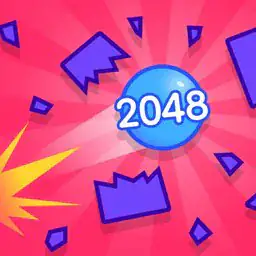
Funny Cubes 2048
How to Play
Game Overview
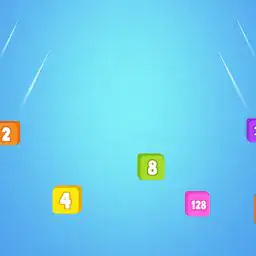
Funny Cubes 2048 takes the classic number-merge puzzle and throws it into a chaotic physics sandbox. Instead of sliding tiles on a grid, you're literally chucking cubes into a container and hoping they land on matching numbers. The visual style is bright and cartoonish, with bouncy cubes that have goofy faces drawn on them -- it''s not trying to look serious, which fits the vibe perfectly. Playing it feels like a weird mix of careful planning and pure luck. You aim your throw, the cube tumbles through the air, and then it either clatters perfectly onto a twin or spins off into a pile of mismatched numbers. When you nail a merge, the cube doubles in value and pops with a satisfying little animation. But when you miss, the container slowly fills up with random cubes, making each new throw riskier. The game keeps you on edge because one bad toss can clutter everything up fast. Who gets hooked on this? People who like quick puzzle rounds but also enjoy a bit of slapstick chaos. It''s less about deep strategy and more about that tense moment right before your cube lands. The achievements and global leaderboard add a reason to keep trying for bigger numbers, but the core loop is simple: throw, merge, panic, repeat. It''s the kind of game you pick up for a few minutes and suddenly an hour''s gone.
About Funny Cubes 2048
Funny Cubes 2048 takes the classic number-merging puzzle and adds a physics sandbox on top. Instead of swiping a grid, you're literally tossing cubes into a container. The core loop is simple: pick up a cube, aim it at another cube with the same number, and let gravity do the rest. When they collide, they fuse into a bigger cube with double the value--so two 2s make a 4, two 4s make an 8, and so on. Your hands are busy dragging and releasing, while your brain's calculating trajectories and stacking patterns.
The container fills up fast. Mismatched cubes just bounce off each other and pile up, creating clutter that makes it harder to land clean merges. The pressure builds as the container gets crowded--you'll start seeing cubes teetering on the edge, and one bad throw can send everything tumbling. Lose control and the container overflows, ending your run. That's the loss condition, and it hits you when you least expect it.
Boosters save your skin. The main one is a "sorting" booster that clears out mismatched cubes by grouping them temporarily--handy when you've got a pile of 2s and 4s blocking your path. You earn boosters by pulling off multi-merges, like dropping a cube that chains into three or four fusions at once. That's the satisfying moment: watching a single toss ripple through a cluster, numbers doubling in rapid succession, and the score counter jumping.
Later levels introduce different container shapes--some are narrow towers, others are wide bowls. The physics get more unpredictable too, with cubes sometimes rolling in weird ways off uneven stacks. There's also a global leaderboard where you compete for the highest cube value, and achievements pop for milestones like hitting 2048 or 4096. The game doesn't hold your hand--you learn through failure, figuring out that throwing cubes at a 45-degree angle works better than straight down, or that stacking similar numbers together before merging saves space 💥.
Difficulty ramps up because the number values grow exponentially. Getting to 128 is easy, but 256 requires careful planning. By the time you're chasing 1024 or 2048, every throw counts, and one misstep means restarting from scratch. The boosters become more valuable as you go, but they're limited, so you hoard them for emergencies. There's no upgrade system per se--just your own skill improving over dozens of attempts.
What keeps me coming back is the chaos. No two runs feel the same because the physics make every pile unique. Sometimes you get lucky and cubes land perfectly; other times you're cursing as a 64 bounces off a 2 and knocks over your carefully built tower.
Tips & Tricks
Don't just toss cubes randomly -- early on, I kept losing because I ignored where the 2s and 4s landed. Aim for the center of the container first; it gives you more room to maneuver on the sides. Stacking cubes with matching values gets trickier as the pile rises, so prioritize merging small numbers like 2 and 4 before they get buried under bigger ones. Boosters are precious -- I wasted my first few by using them too late, when the container was already overflowing. Instead, activate a booster when you have two or three possible merges lined up, not as a panic button. Another thing: watching the physics is key. Cubes bounce and roll based on where they hit, so a gentle toss from a low angle can land a cube exactly where you need it, while a hard throw might scatter everything. I learned the hard way that trying to play too fast backfires -- slower, deliberate throws let you plan two or three moves ahead. Also, don't ignore the leaderboard scores; they hint at what cube values are realistic to aim for. For example, reaching 128 consistently is a solid goal before chasing 256. Finally, if you see two matching cubes floating near each other, resist the urge to drop a third on them -- wait for a better angle, or you might knock them apart.










Comments
Please login to leave a comment.