Scan to play on mobile
Mahjong connect : majong classic
How to Play
Game Overview
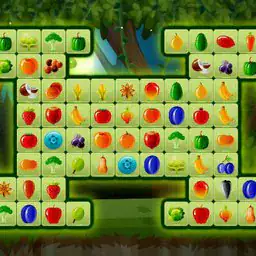
So this game is basically Mahjong Connect, which if you haven't played it before is like the classic tile-matching puzzle but with a twist. Instead of just clicking pairs, you have to connect them with a path that bends up to three times. The tiles are these ornate mahjong pieces with Chinese characters and symbols, and the layouts get pretty wild -- some are shaped like turtles or dragons, which is neat. The whole thing has a calm, almost zen vibe, with soft colors and a gentle soundtrack that doesn't get annoying. It feels more like a brain teaser than a frantic race, which is why I like it. You're not competing against a clock in most modes, so you can sit back and think. But don't let the chill look fool you -- some levels are genuinely tricky because tiles stack on top of each other, so you have to plan which ones to clear first. The visual style is clean but not flashy, kind of like a polished mobile game from a few years ago. Who would get hooked? Anyone who likes puzzles that make you think ahead, like Sudoku or nonograms, but wants something more visual. Also people who just want to zone out for twenty minutes without losing progress if they mess up. It's not trying to be the next big thing, just a solid, satisfying puzzle game that respects your time.
About Mahjong connect : majong classic
So you open Mahjong Connect and there's this board full of tiles stacked in some shape -- a turtle, a dragon, a lotus. Your job is to find two matching tiles and connect them with a line. But the line can only turn twice, so three straight segments max. And the tiles have to be free -- meaning no other tile is sitting on top of them or blocking their left or right side. That's the core loop: scan the board, spot a pair, check if they're connectable, click both. If they are, they disappear. If not, you hear a little buzz and nothing happens. You're stuck looking for another pair.
Your brain is constantly doing spatial math -- can the line go around that cluster? Is that tile actually free or does it look free from this angle? The game throws layouts like Turtle Formation where the shell is packed tight and you have to clear the legs first to open the center. Later there's Dragons Path' where tiles snake across the board with only narrow corridors between them. Matching early pairs is easy but you quickly realize you can screw yourself by removing the wrong tiles -- suddenly a tile you needed is isolated with no way to connect.
The satisfying moments come when you've been staring at a dead end for a minute and then spot a connection that goes over, down, then left -- three turns exactly -- and the tiles vanish with a nice clack sound. There's a hint button that highlights a valid pair if you're stuck, but it costs you points at the end. That's the only real pressure -- you get a star rating based on how fast you finish and how few hints you use. No timers, no lives, so you can sit there and figure it out.
As you progress, the game introduces locked tiles that can't be matched until you clear adjacent ones, and sometimes there are gold tiles that give bonus points when matched. The difficulty ramps not by speeding you up but by making the layouts more crowded and the tile shapes weirder -- like the Phoenixs Wing' layout where tiles are arranged in a spiral that's easy to get lost in. Some levels have multiple layers: you clear the top layer and a whole new shape appears underneath. That catches you off guard the first time.
The controls are just tap or click. That's it. You don't drag or swipe. Your hands are mostly idle except for clicking, but your eyes are darting everywhere. There's a shuffle button that rearranges all remaining tiles once per level -- use it when you're truly stuck, not just lazy. The game doesn't punish you for using it but you lose some style points. No upgrades, no enemies, no story -- just you and the tiles and the math of the lines. It's oddly meditative until you hit that one layout where nothing connects and you start clicking tiles just to see if the game broke.
Tips & Tricks
You can actually rotate the board in some versions -- check if your game has a rotate button, because seeing the layout from a different angle makes hidden matches obvious. I wasted so many games staring at a dead end when a simple rotation would have shown me two tiles that were already free. Match from the outside in -- focus on clearing the outer layers of tiles first, since those block everything behind them. The center tiles can usually wait, but if you notice a tile with only one free side, grab its partner immediately before that tile gets buried. Shuffles are limited, so don't waste one early just because you're impatient. Try to leave yourself at least two or three possible moves at all times; if you're down to one path, you're probably about to get stuck. When you have multiple matches available, pick the pair that frees up the most new tiles -- sometimes a match that looks obvious is actually a trap because it doesn't open anything. The three-line connection rule trips everyone up at first: you can use up to two 90-degree turns, so practice tracing imaginary L-shapes or Z-shapes in your head. One mistake I kept making was assuming tiles on the same row would connect easily, but if there''s a pile between them, that straight line gets blocked. Lastly, if you hit a wall, use the hint button -- it''s not cheating, it''s learning where you missed a pair.



















Comments
Please login to leave a comment.