Scan to play on mobile
Maze Mania
How to Play
Game Overview
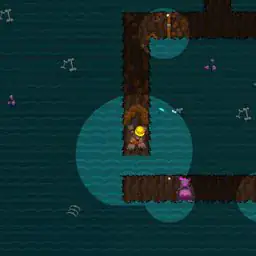
Maze Mania is one of those games that sounds simple on paper but gets under your skin after a few runs. It''s basically an arcade-style race through eight hand-drawn mazes, and you have to get from the start to the exit before time runs out. The visual style is clean and flat -- think bright colors against a dark background, like a neon sign in a dim room. Each maze has its own look and theme, from icy blue corridors to rusty red industrial sections, which keeps things from feeling samey. The vibe is tense but not stressful -- more like a quick puzzle you can jump into during a coffee break. What surprised me was how much the game relies on pattern recognition rather than pure speed. You''ll hit dead ends, double back, and curse under your breath, but when you finally find the right path in the last ten seconds, it feels earned. There''s no story or fluff here -- just you, the maze, and a ticking clock. The controls are simple: just arrow keys or a joystick, and you can adjust them in the options menu if the default feels off. Who would get hooked? People who liked old-school arcade games like Pac-Man or those flash maze games from the early 2000s. It''s also good for anyone who wants a quick challenge without committing to a long session -- each maze takes maybe two or three minutes to clear once you know the route. The difficulty ramps up pretty fast around maze four or five, so don''t expect to breeze through everything on your first try.
About Maze Mania
So Maze Mania starts you off in a basic maze called "The Gauntlet" and you think you've got this -- just find the exit, right? Wrong. The clock is ticking from the second you hit start, and that timer is unforgiving. Your hands are on the keyboard or controller, moving a little cursor or character through corridors. Early levels are straightforward, teaching you the loop: look at the map (pressing Tab shows a full layout for a few seconds), memorize a path, then run it without hitting dead ends. The brain work is real because you're planning routes on the fly while the clock eats away at your time. Satisfying moments come when you nail a shortcut or thread the needle through a series of tight turns without slowing down. By level three, "The Web," things get messy -- the maze has multiple floors connected by one-way passages, so backtracking is punishing. Later mazes introduce moving walls that shift every 10 seconds, and in "The Spire" you're dodging falling blocks that block paths randomly. There's no upgrade system -- it's pure grit and memorization. The controls are simple: move with arrow keys or WASD, use Tab for the map, and Space to sprint (but sprinting drains a stamina bar that refills slowly, so timing matters). The real difficulty spike hits around level five, "The Labyrinth," where the maze is a giant grid with teleporters that send you to random spots unless you memorize their patterns. Level seven, "The Mirror Maze," is a nightmare -- walls look identical and the minimap is unreliable, forcing you to rely on mental mapping. The final level, "Omega Maze," combines all mechanics: moving walls, teleporters, falling blocks, and a timer that counts down twice as fast. What keeps you going is that moment when you figure out the trick in a maze you've failed ten times -- the path suddenly clicks and you sprint through with seconds to spare. The sound design helps too: a low heartbeat thumps faster as the timer drops below 30 seconds, which actually makes your palms sweat. There's no story, no power-ups, no handholding -- just you, the maze, and a clock that never stops.
Tips & Tricks
The first maze is a trap -- it's actually one of the trickiest because the path loops back on itself in ways you don't expect until you've traced the whole thing. I spent three runs just memorizing that left wall leads to a dead end that looks like an exit. Use the pause feature when you hit a fork; the timer stops, so you can really study the layout without pressure. Dead ends in Mazes 3 and 5 have hidden shortcuts painted on the floor that are barely visible unless you slow down -- look for slightly darker tiles. The exit marker sometimes spawns near the center, not the edge, which threw me off for hours. If you're stuck, try running the opposite wall from what feels natural; Maze 4's design punishes right-hand rule hard. One thing that clicked late: the game tracks your fastest path per maze, but it doesn't tell you that resetting from the menu is faster than dying. That saved me three minutes on the final maze alone. Also, don't trust the visual symmetry -- Maze 7 looks mirrored but has a single asymmetric corridor that's the only way through. My biggest mistake was rushing the first few turns every time. Slow down for the first ten seconds, then sprint.












Comments
Please login to leave a comment.