Scan to play on mobile
Merge Combo
How to Play
Game Overview
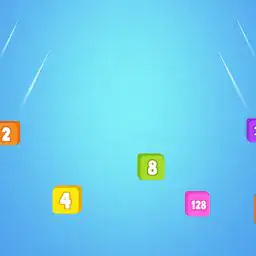
Merge Combo is one of those games that looks simple but somehow eats up your whole evening. You've got this square grid in front of you, and little colorful blocks drop down from the top -- they've got numbers on them, like 2, 4, 8, that sort of thing. The whole aesthetic is clean and bright, almost like a pastel version of those old falling-block games, but the vibe is way more chill than frantic. You just drag a block left or right to stack it onto another block with the same number, and when they touch, they merge into a bigger number. The satisfying pop sound when blocks combine is honestly half the fun. It feels a bit like playing with digital Legos, where each merge gets you closer to some absurdly high number like 2048 or even 4096. The challenge creeps up on you -- the grid fills faster than you expect, and you start sweating over where to place a 32 block because you accidentally made a mess. Who would get hooked? Probably anyone who likes puzzle games but doesn't want to think too hard about story or characters. It's perfect for killing time on the bus or during a coffee break. The combo system is neat too -- if you chain merges together quickly, you get bonus points, which adds a little pressure without being stressful. I''ve seen my friend play this nonstop for an hour just trying to beat their own high score. It''s not trying to be deep or artistic; it''s just a solid, colorful way to zone out and feel clever for ten minutes.
About Merge Combo
Merge Combo is one of those games where you start off thinking it's just another mindless number merger, but then you're suddenly sweating over a single tile placement. The core loop is simple: blocks drop down with numbers on them, and you drag them onto matching numbers to merge them into a bigger number. You're doing this with your finger or mouse, sliding tiles around a grid that gradually fills up. The objective is to keep merging to reach the highest possible number before the board gets completely clogged. Early on, it's chill -- you're casually pairing 2s and 4s, feeling clever. But around level 10 or so, the game introduces "obstacle blocks" that don't merge with anything and take up space. Then you get "lock tiles" that freeze a column for a few seconds. These aren't explained upfront; you just see them appear and have to figure out they're bad news. The satisfying moments come when you chain merges -- like dropping a 16 onto another 16 just as a new row spawns, making a 32, then another 32 appears right next to it from a previous merge. That combo sound effect is genuinely rewarding. The difficulty builds through the game's "World" structure -- after World 1's basic fields, World 2 adds a timer mechanic where every 10 seconds, a random row gets pushed up from the bottom, forcing faster decisions. World 3 is where I started losing: it introduces "bomb blocks" that explode after three turns if not merged, wiping out nearby tiles. You have to prioritize them or risk losing your setup. The upgrade system isn't flashy -- you earn coins from merges and can buy perks like "undo last move" or "shuffle board" once per round. But these cost a lot, so you hoard them for emergencies. There's also a "combo meter" that fills as you merge, and when it's full, the next merge creates a wild card that matches with any number. That's a rush. Some levels have names like "Cascade Canyon" or "Bomb Alley" that hint at the gimmick. The game doesn't hold your hand -- you learn by losing. And losing is frustrating because one bad placement can spiral. But that's why I keep coming back. There's no story or characters; it's just you, a grid, and the creeping dread of running out of space while chasing a new personal best.
Tips & Tricks
First off, don't just haphazardly drag blocks together. The real trick is to plan a few moves ahead -- merging three identical blocks at once gives you a bigger number jump than just pairing two, and that saved me tons of time. Early on, I kept ignoring the edges of the board, but later I realized keeping the highest blocks near the center stops them from getting stuck. Watch out for the 1-block gaps; if you merge two blocks with a space between, it doesn't count until they touch, which is annoying but avoidable by sliding them into adjacent spots. A mistake that cost me big: merging too fast when a new block drops -- it can create a chain reaction you didn't intend, breaking your combo streak. The combo meter is everything; once it fills, you get a bonus multiplier, so try to keep merges happening close together without rushing. If the board gets clogged, don't panic -- focus on clearing lower-number blocks first to make room, rather than chasing the highest number. One thing that clicked later was using the undo button (if available) -- I used to think it was cheating, but it's actually there to help you learn from bad moves without losing your progress. Finally, the game rewards patience: waiting a second before dragging often reveals a better merge option you missed at first glance.















Comments
Please login to leave a comment.