Scan to play on mobile
Merge to Zero
How to Play
Game Overview
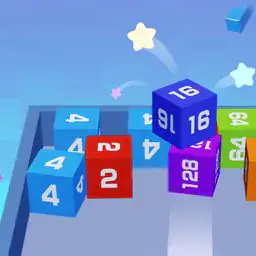
Merge to Zero is this weirdly calming little puzzle game I picked up on a whim, and it''s been eating my free time. The whole deal is you''ve got this minimal grid with numbered tiles, and you click to merge matching ones together. But instead of making bigger numbers like in those other merge games, the numbers actually get smaller when you combine them -- two 4s become an 8, but two 2s make a 4, and eventually you''re chasing that zero tile. The visual style is super clean, almost like a black-and-white zen garden on your screen, with soft animations and a lo-fi soundtrack that''s more white noise than music. It feels like a cross between a logic puzzle and a meditation session, because there''s no timer, no score multiplier, just you and the tiles. You''re constantly planning a few moves ahead, watching for chains where merging one pair creates another, and another, until the whole board collapses. The satisfaction when you pull off a long cascade is real, but it''s also brutal when you misclick and mess up your setup. Who''d get hooked? Anyone who liked 2048 but found it too frantic, or people who enjoy Sudoku or solitaire for that quiet brain-work vibe. It''s not flashy, but it''s got this addictive pull where you keep saying 'just one more round'.
About Merge to Zero
So you've got a grid of numbered tiles, and the name of the game is to get them all down to zero. That's the whole point. You click on two identical numbers that are next to each other--horizontally or vertically--and they merge into one tile with a lower value. For example, two 4s become a single 3, two 3s become a 2, and so on. The catch is that you can only merge tiles that are touching, and the board fills up with new tiles after each move. It starts off simple enough with low numbers like 1s and 2s, but things get hairy fast when 8s and 9s start showing up.
The actual loop is pretty straightforward: you scan the board for pairs, click to merge, watch the numbers drop, and hope you don't get stuck. But the brain work comes from planning a few moves ahead. Sometimes merging two 5s into a 4 is obvious, but that 4 might block a crucial pair of 3s later. You learn to think in chains--like setting up a cascade where merging one pair opens up another, and another, until you clear a whole row. The satisfying moments are when you pull off a string of merges that wipes out half the board in a few seconds. The game rewards you with a little pop sound and a brief flash, which feels nice.
Difficulty ramps up mostly through the tile values. Early levels cap at 5, but later ones throw 8s and 9s at you, which take forever to reduce. There's also a timer mode called "Race to Zero" that adds pressure--you have to clear the grid before time runs out, and new tiles spawn faster as you progress. Another mode, "Endless," just keeps going until you block yourself, which is where the real strategy kicks in. I've noticed that the game doesn't explain everything upfront. For instance, there's a special tile called the "Joker" that can merge with any number, but it only appears in certain levels like "Mayhem" or "Chaos." Using it at the right moment can save your run.
My hands just click tiles--nothing fancy--but my brain is constantly evaluating which merges are safe and which will trap me. The worst is when you have two 6s separated by a 3 that you can't move. You end up staring at the board for a minute, knowing one wrong click is game over. The best is when a plan comes together and you hit zero with no tiles left. That rush is why I keep playing, even when I lose ten times in a row.
Tips & Tricks
Your first few games will feel random. That's normal. The real trick is noticing that merging two 4s into an 8 gives you a 4 and an 8 on the board, not just a single tile--so you're actually adding numbers, not just shrinking them. I kept merging everything early because it felt productive, but that just filled the board with higher values faster. Instead, focus on clearing the low numbers first: 1s and 2s vanish when merged into 0s, and those disappear completely. If you see a 0 on the board, leave it alone until you can merge two 0s--they cancel each other out and free up space, which is huge. Another thing: the game gives you new tiles in random positions, but you can rotate the board (right-click or middle-mouse, I think) to line things up better. I didn't realize that for hours and suffered for it. When you're stuck, don't panic-merge. Pause. Look for a single pair of matching numbers that's isolated. Sometimes breaking one pair creates a chain reaction that clears half the grid. The soundtrack is nice, but I turned it off after a while because I kept missing the sound cues for merges--turn on visual effects instead. Most importantly, accept that some runs are lost. The board can fill with 6s and 9s that just won't match, and that's okay. Restart and try a different sequence of merges. Repetition teaches you patterns the tutorial never mentions.














Comments
Please login to leave a comment.