Scan to play on mobile
Rescue Helicopter
How to Play
Game Overview
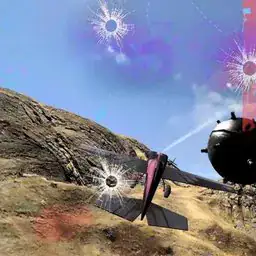
I spent way too much time on Rescue Helicopter last weekend. It's this old-school 2D arcade thing where you fly a chopper around trying to pick up little pixel people from rooftops, mountainsides, and sometimes in the middle of a river. The graphics are simple but they have this gritty, late-90s vibe that makes everything feel like you're playing an actual toy helicopter game. The physics are the real star here though -- your chopper wobbles and drifts like crazy when the wind kicks in, and landing on a tiny ledge feels like threading a needle while drunk. You click to direct the helicopter, click again to send out a rope ladder, and the survivors just sort of scramble up. It's frustrating in a good way. The game doesn't hold your hand at all; you'll crash into a canyon wall because you misjudged the rotor clearance, and then you just restart and try again. Who would get hooked? People who like punishing but fair skill tests -- anyone who loved stuff like Lunar Lander or those flash games where one wrong move means everything explodes. It's not flashy or deep, but that's the point. There's no story, no upgrades that change the feel, just you, a helicopter, and mountains that hate you. I kept playing because each rescue felt earned. The wind patterns change between runs, so you can't memorize your way through it either. It's raw, it's tight, and it's exactly the kind of game you play for twenty minutes then realize two hours have passed.
About Rescue Helicopter
So you're piloting a little helicopter, and honestly the hardest part is just keeping the thing from crashing into everything. The mouse controls are twitchy at first -- you click and drag to move the chopper, and the physics make it feel like you're fighting the wind constantly. Your main job is to spot these little stick figures waving from rooftops, cliff ledges, or sinking boats, then land close enough for them to hop in. Once they're aboard, you fly them back to the extraction zone, which is usually a helipad or a clearing. That's the loop: find, land, pick up, deliver. But the game throws stuff at you to make every step harder.
Early levels are simple enough. "Mountain Pass" has some rocks and a few gusts, but nothing crazy. Then "Raging River" introduces moving water and survivors on rafts that drift away if you're slow. "City Canyon" is where it gets mean -- tall buildings block your view, and there are antenna towers and power lines that'll shred your rotors instantly if you clip them. The wind mechanic becomes a real pain here; it changes direction every few seconds, so you're constantly adjusting your approach. Later, "Night Rescue" levels cut visibility to almost nothing, and survivors have flashlights that blink, which is the only way to spot them. The satisfying part is when you nail a landing on a tiny balcony with a crosswind -- that feels like winning.
Fuel management kicks in around world three. You've got a gauge that drains faster if you're fighting the wind or carrying heavy survivors (some are bigger, take more fuel). There are fuel cans scattered on rooftops, but grabbing them means landing on precarious spots again. The game also introduces "Rescue Points" that you earn per mission -- spend them on upgrades like a bigger fuel tank, stronger engine for heavy winds, or a searchlight for night missions. The upgrade system is slow though, so you'll replay earlier levels grinding for points, which gets tedious.
Later enemy types show up too -- not enemies exactly, but hazards like birds that swarm if you hover too long, or military drones that block certain airspace and force detours. One level called "Storm Front" has lightning that strikes randomly, and if you're too high you get zapped. The satisfying moments are usually when you save three survivors in one trip, or when your fuel is blinking red and you spot a can just in time. The difficulty curve isn't smooth -- it spikes hard in "Canyon Rush" where you have to weave between narrow gaps with constant gusts. Dying a lot is normal; the game doesn't hold your hand.
Tips & Tricks
Wind direction matters way more than you think. Early on I''d just fight against it, but that burns fuel like crazy. Instead, let the gusts push you sideways and approach landing zones at an angle -- it''s slower but saves you from crashing into cliffs.
Fuel management isn''t just about filling up; watch the color of the fuel bar. Once it hits yellow, you''ve got maybe two minutes before the engine sputters. I lost a rescue because I lingered too long trying to line up a perfect landing. Sometimes you have to drop a survivor close to the helipad and risk a bumpy touchdown.
Obstacles have a nasty habit of blending into the background. The urban levels especially -- those radio towers and power lines are almost invisible against buildings. I started zooming in slightly with the mouse scroll (if your version has that) to spot them before they wreck your rotors.
Rescued people don''t just teleport inside; they have to walk to your helicopter. That clicking routine where you pick them up? Don''t click too fast. If you spam the button, they sometimes get stuck on rocks or ledges, wasting precious seconds. Wait until they''re fully in the green zone before clicking again.
Some landing spots are marked with a faint glint, but others aren''t obvious. If you see flat ground near survivors, it''s worth hovering low and checking for a stable ledge -- I''ve had landslides happen mid-landing on sloped surfaces.
Patience is your friend in canyon levels. The wind tunnels there cycle every few seconds, so hovering stationary and timing your descent beats rushing in and spinning out. One mistake that cost me a perfect score was trying to swoop in fast -- the helicopter just can''t recover from a sudden downdraft.























Comments
Please login to leave a comment.