Scan to play on mobile
Sprunki Piano Explorer
How to Play
Game Overview
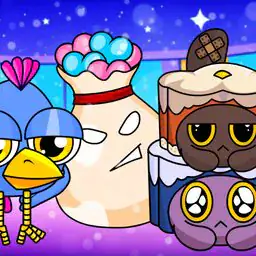
Sprunki Piano Explorer is basically a kid-friendly music toy dressed up as a game. You get this colorful, cartoon world where little Sprunki characters bounce around while you play piano notes on a virtual keyboard. The visual style is super bright and cheerful, all pastels and rounded shapes. It reminds me of those interactive flash games from the early 2000s but cleaned up for modern browsers. You can either freestyle and just hit keys to make sounds or follow along with preset songs. The guided mode is pretty straightforward -- notes fall down on screen like a simple rhythm game, and you press the corresponding key. No real pressure or fail state, which is nice. The sounds themselves are pianos with some added silly effects, like when you hit a specific Sprunki it giggles or makes a cartoon boing. That part gets old fast for adults, but for a younger player it's pure gold. The whole thing feels less like a serious music tool and more like a digital xylophone for toddlers. Who would get hooked? Probably younger kids who like bright colors and making noise, maybe four to eight year olds. Or someone looking for a quick five-minute brain break where you don't have to think. It's not deep, it's not challenging, but that's not the point. The point is just messing around with sounds in a friendly space.
About Sprunki Piano Explorer
Sprunki Piano Explorer isn't really about playing a piano in the usual sense. It's more like a rhythm puzzle game where you match notes to these cute little Sprunki characters that pop up on screen. The main screen has a colorful keyboard at the bottom, and notes fall from the top like in a simplified Guitar Hero, but instead of a fretboard, you've got these smiling Sprunki faces bouncing around. Each Sprunki represents a different sound effect, not just regular piano notes -- one might be a honk, another a chirp, some are even little spoken words. The game starts you off in "Melody Meadow" with only a few keys active, and the notes come down slowly, one at a time. You just click or press the corresponding keyboard key when the note reaches the target zone. It's super forgiving at first -- miss a note and the Sprunki just looks disappointed for a second, then moves on. No fail state in the early levels.
As you progress into "Rhythm Reef" and "Harmony Hills," things get trickier. Notes come in clusters, multiple Sprunki appear at once, and you have to hit two or three keys in quick succession. The game introduces "Sprint Keys" -- these are golden notes that, if you hit them perfectly, make all the Sprunki on screen do a little dance and give you a score multiplier. Missing a golden note doesn't break your streak, but you lose the bonus. Around world three, "Chord Canyon," you start seeing double notes -- two Sprunki land at the same time and you need to press two keys simultaneously. The game doesn't tell you this is coming; one level just throws a pair at you and you panic the first time.
The satisfying moments come when you nail a complicated sequence and the Sprunki all sing together in harmony, unlocking a little star burst animation. Each world has a boss Sprunki at the end -- a bigger, sparklier version that requires hitting a long sequence without mistakes. If you mess up, the boss just resets that section, not the whole song, which is nice. There's also a free play mode called "Compose Corner" where no notes fall and you can just click around making the Sprunki react to random keys. That's where people spend the most time, honestly -- the sound effects are genuinely fun to mess with. The difficulty plateaus around world five, "Fortissimo Forest," where the speed is consistent but the patterns get weird -- notes jump around instead of falling straight down. No upgrade systems exist, just unlocking more songs and Sprunki characters as you go. The whole thing takes maybe an hour to see everything, but the replay value is in trying for perfect scores on each level.
Tips & Tricks
The virtual keyboard is laid out like a real piano, so if you know where middle C is on a standard keyboard, that same key on your computer plays the same note. A mistake I kept making early on was hitting random keys expecting magic to happen, but the Sprunki characters actually react to specific notes in the song mode--playing the right sequence makes them dance. One trick that clicked later: the mouse works fine for free play, but for the guided songs, using the computer keys is way faster because you can hit multiple notes at once. I wish I'd known that the sound effects change depending on how hard you press a key--soft taps give a light tone, while a firmer press adds a playful bounce. If you get stuck on a song, try playing it at half speed in your head first; the game doesn't have a speed slider, so your brain has to compensate. Another thing: the guided songs are structured like real lessons, starting with simple patterns and adding complexity--don't skip ahead because missing the foundation makes the later parts frustrating. Finally, the free compose mode saves your last melody, so you can build on it, which is great for experimenting without losing progress.











Comments
Please login to leave a comment.