Scan to play on mobile
Wasteland Hunter: puzzle RPG
How to Play
Game Overview
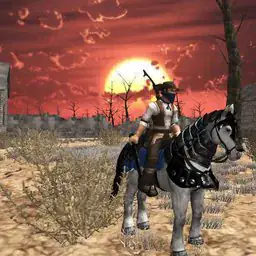
I picked up Wasteland Hunter expecting some generic puzzle RPG, but it''s weirder and way more interesting than that. The setting is a post-apocalyptic wasteland--think rusted cars, dusty roads, and broken buildings, all drawn in a clean, almost cartoonish pixel art style that feels nostalgic but not cheap. Combat is turn-based, but instead of picking attacks from a menu, you get these Tetris-like blocks that represent different gear: bullets, health packs, shields, grenades, and so on. You drag and drop them into a grid, trying to form lines or patterns that trigger special combos. It''s like if Tetris and a tactical RPG had a weird baby--and somehow it works. The vibe is scrappy survival mixed with puzzle solving; you''re constantly scrambling to make the best of whatever random blocks drop. Outside fights, you manage a survivor camp, rescue NPCs, and build new gear from blueprints. That part feels a bit like a mobile base builder, but it''s not too deep. The difficulty ramps up fast--enemies get smarter and block shapes get trickier. Who would get hooked? Puzzle fans who like a bit of strategy and don''t mind the post-apocalyptic theme. It''s not a hardcore RPG, but it''s clever and keeps you thinking. Controls are simple: mouse clicks on PC, touch buttons on mobile. Nothing fancy, just functional.
About Wasteland Hunter: puzzle RPG
So you're in a dusty, wrecked wasteland, and instead of just shooting stuff, you're fitting Tetris blocks together to fight. The core loop is: you walk into a fight, see a grid of enemy icons, and then you get these falling blocks that have stuff on them--bullets, medkits, shields, grenades. Your job is to arrange them so matching pieces touch and create combos. A row of three bullets? That's a burst of damage on a nearby scorpion. Stack shields next to each other? You get a barrier that lasts a turn. The satisfying click happens when you set up a chain--like a grenade block clears a path for a health pack row to reach your squad, or you deliberately leave gaps to make a bigger explosion later. Early levels are simple: plain bandits and radroaches that just charge at you. You're mostly learning to clear rows fast. But around the "Rusted Junction" area, the game throws in armored enemies that need two hits--so you have to think about stacking attack blocks in specific formations, not just any match. Then you get the "Toxifier" enemies that poison your blocks, forcing you to prioritize health or shield combos mid-fight. Difficulty ramps through new enemy types and larger grids--later fights have 7x7 grids and blocks that decay if you don't use them. Your brain is constantly scanning: what's falling next, where can I fit this, is it worth breaking a combo to survive. Between fights, you're back at your camp, which starts as a few tents. You rescue NPCs--like the engineer who lets you craft "Synth-Blocks" that count as any type for one match, or the medic who upgrades your health block drop rate. You also find blueprints for new gear--like the "Shockwave" upgrade that makes grenade blocks clear an extra row if you place them in the center. Managing the camp is basic but necessary: assign survivors to scavenge for block types or to heal your squad. The satisfying moments come when you execute a perfect cascade--say, a shield row triggers a shield explosion that clears debris, which frees up a bullet block for a full row clear, wiping out a sniper before it gets a shot. The game doesn't tell you everything; you figure out that some enemies telegraph their moves by the color of their icon border, so you can prep a block formation. Later, you unlock special blocks like "Mimic" that copy adjacent types, which changes how you set up. It's not neat--some fights you'll lose because a bad block rotation screws you, and you have to restart from the last saved camp. The camp rebuilding is slow but gives you permanent stat boosts, like a 5% faster block drop rate. The loop is simple to pick up but the depth comes from learning each enemy's pattern and adapting your block strategy on the fly.
Tips & Tricks
Getting stuck on a tough enemy? Try stacking your defense blocks first before your attack ones. I kept dying early on because I''d rush to clear lines, but surviving an extra turn often sets up a bigger combo later. Don''t ignore the order you place blocks -- putting a shield block on the leftmost column can protect a key health pack from disappearing when a line clears. Camp management is not just busywork; rescuing that engineer NPC early unlocks a blueprint for a turret figure that carries you through mid-game. I wasted hours hoarding blocks for a perfect combo, but sometimes clearing a messy board quickly is smarter -- it gives you fresh drops and keeps enemies from overwhelming you. The difficulty spike around world three is real, so save your grenade blocks for when a row of enemy blocks is about to hit your bottom line. One trick that clicked late for me: you can rotate blocks before placing them, which helps fit awkward shapes into tight gaps -- the game doesn''t shout this, but it''s a lifesaver. Finally, don''t sweat losing a battle; the meta-progression from camps means you always come back stronger.





Comments
Please login to leave a comment.