Scan to play on mobile
Wood Blocks Jam
How to Play
Game Overview
So Wood Blocks Jam is this puzzle game where you drag colored wooden blocks to matching gates on a board. The whole thing has this really chill, artsy vibe -- think smooth, tactile blocks that look like they''re made of real wood, set against a clean, almost zen-like background. No timers, no pressure, just you and these puzzles that start simple but gradually get more clever. I found myself getting hooked because it''s the kind of game where you can zone out for five minutes or get sucked in for an hour. The mechanics evolve as you go, introducing new twists like obstacles or blocks that need to be moved in a specific order, which keeps it from feeling repetitive. The visual style is minimalist but warm -- earthy tones, soft shadows, nothing flashy. It feels like playing with a physical toy, honestly. The sound design is subtle too, with gentle clicks and thuds when blocks snap into place. Who would like this? Anyone who enjoys logic puzzles like Sudoku or those mobile block-sorting games but wants something more relaxing. It''s not frantic or punishing; you can take your time and plan each move. That said, later levels do require some serious thinking -- I''ve definitely had to backtrack and restart a few times. If you''re into games that reward patience and pattern recognition without yelling at you, this is worth a look.
About Wood Blocks Jam
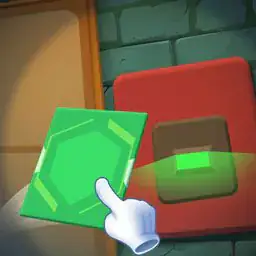
So Wood Blocks Jam is one of those puzzle games where you just slide blocks around until everything clicks. You start on a board with a bunch of colorful wooden blocks scattered around, and each one has to go to a specific gate that matches its color. The controls are dead simple: on phone you drag with your finger, on PC you click and hold the mouse button to pick up a block, then drag it to the right color gate. Your goal is to clear the board by matching every block to its gate. That''s the loop -- drag, drop, clear. But it gets way more interesting once you hit the first few levels.
The early puzzles are almost too easy, like level 1-1 just has three blocks and two gates. You feel smart for about ten seconds. Then around level 1-10 they start adding obstacles like wooden fences that block paths, or gates that only open after you match a specific block first. The game calls these "lock gates" and they force you to think about order -- you can''t just randomly shove blocks around anymore. Around world 2, you get conveyor belts that move blocks in one direction unless you hold them in place, which is annoying but actually adds a lot of planning. By world 3, there are these little saws that cut blocks in half if they touch them, so you have to route around them carefully. The satisfying moments usually come when you figure out a tricky sequence -- like moving a blue block through a maze of red gates to unlock a path for a green block -- and everything slides into place with that soft thud sound.
The difficulty builds unevenly too. Some levels are a breeze, then suddenly level 3-7 will throw three different conveyor belts, two lock gates, and a saw at you, and you''ll sit there for ten minutes trying to figure out which block to move first. There''s no timer, which is great because you can stare at the board as long as you want. The game also introduces little star bonuses for clearing in fewer moves, but those are optional -- you can just brute force it if you want. Later levels add color-mixing mechanics where you combine two blocks to make a third color, which is actually pretty clever. There''s no upgrade system, no enemies -- it''s just you against the puzzle. The wooden blocks have this nice grain texture that makes dragging them feel satisfying, and the background music is just gentle acoustic guitar. It''s not revolutionary, but for turning your brain off for a few minutes, it works.
Tips & Tricks
Gates that look identical can actually be different colors in disguise -- look close at the wood grain tint, not just the block hue, because I wasted moves matching by memory alone. Corners are tricky: blocks slide to the nearest open gate in a straight line, so a block in the corner might snap to a wrong gate if another path is blocked, which cost me a perfect streak once. The game adds locked gates that need a specific block type to unlock first -- save those special blocks for last, or you'll trap yourself with no way to clear the board. Those little wooden pegs? They're not decoration -- they block sliding paths completely, so plan a route around them before you start dragging, because I had to restart a level three times before I noticed. When new mechanics appear, the game doesn't explain them upfront -- just drop a block on a suspicious gate to see what happens, and you'll figure out the twist faster. Some levels have movable walls that shift when you match a block; trigger those early to open up the board, or you'll be stuck with no room to maneuver. Finally, don't rush the first few moves -- one bad placement can snowball into a dead end, and the undo button is hidden in the pause menu, which I only found after losing a level.
















Comments
Please login to leave a comment.