Scan to play on mobile
Bubble: Pop Balloons
How to Play
Game Overview
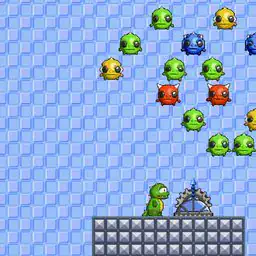
So I've been playing Bubble: Pop Balloons on my phone during commutes, and it's exactly what it sounds like--you tap groups of same-colored bubbles to make them pop. No timers, no pressure, just bubbles floating in this calm, pastel-colored space. The visual style is really clean and simple, almost like those minimalist wallpaper apps, with soft gradients behind the bubbles. Each pop makes this satisfying little sound effect, and when you chain a bunch together, there's a brief flash of light that feels nice without being overstimulating. The game doesn't rush you at all--you can sit there staring at the board for a minute figuring out your move. Controls are just clicking bubbles horizontally or vertically, but the twist is planning long chains to clear more area. Some balloons have little patterns or different sizes, which throws off your usual matching habits. Vibe-wise, it's like a digital fidget toy crossed with a light puzzle. People who liked those old match-three games but got tired of the pressure would probably get hooked. Also good for anyone who just wants to turn their brain off for five minutes without feeling like they're wasting time. The endless mode means you can stop whenever, and the scoring is generous enough that you don't feel punished for not being a genius. Honestly, it's just pleasant.
About Bubble: Pop Balloons
Bubble: Pop Balloons starts simple: you click groups of same-colored bubbles to pop them. Tapping one bubble in a cluster of three or more linked vertically or horizontally makes the whole group vanish with a satisfying burst. The goal is to clear the screen of balloons to rack up points, but there is more to it the longer you play. Early levels like "Cloud Nine" and "Pastel Plains" throw a few dozen bubbles on a grid, no time pressure, just pure pop-and-chill. Your brain starts by scanning for the biggest clusters, because bigger pops mean higher scores and chain reactions when balloons above fall down and match with others below. That falling mechanic is where the real fun kicks in -- you pop a group, the ones above drop, and sometimes they land on same-colored balloons, triggering an automatic chain that feels like a mini jackpot.
As you move into later zones like "Neon Nebula" and "Candy Cascade," the game introduces obstacles: wooden blocks that take multiple pops to break, steel bubbles that can only be removed by clearing everything around them, and rainbow balloons that count as any color but only last a few seconds before turning into a random color. There are also limited-move modes where each tap costs a point from your move counter, forcing you to plan rather than spam clicks. The difficulty climbs not by unfair tricks but by shrinking the grid, adding more colors, or stacking obstacles so you have to pop strategically -- sometimes leaving a single balloon of one color just to line it up with a falling group later.
Your hands stay busy: mouse or finger taps are precise, and you'll find yourself hovering over the grid, waiting for that perfect moment to pop a small cluster that sends three lines of balloons tumbling into each other. The satisfying moment is that high-pitched "ping" when a chain of four or five groups pops in sequence, and the score counter jumps with each step. Later, you unlock power-ups: a bomb that clears a 3x3 area, a color bomb that wipes all balloons of one color, and a freeze that slows falling speed for ten seconds. These are earned by hitting score thresholds in single levels, not bought with real money -- which is nice. The game also has a daily challenge mode called "Puzzle Pop" where each screen is a custom layout designed for a single solution, testing your ability to see chains before they happen.
No two sessions feel the same because the balloon colors shuffle each time, and the grid size varies from 8x8 in early stages to 12x12 in later ones. There is no end -- it just keeps going with harder patterns and new background themes like "Ocean Drift" and "Lava Flow." The sound is mostly bubble pops and a calming synth track, but after an hour it can get repetitive. Still, the loop is clear: pop clusters, trigger chains, clear the field, and watch your score climb. That is the whole thing.
Tips & Tricks
Starting out, I kept tapping the biggest groups first, thinking that was the obvious play. But the game actually rewards setting up longer chains -- if you pop a small group that makes two larger groups merge, the resulting explosion is way bigger than just popping those big groups separately. I learned this the hard way after several rounds where my score plateaued. Another mistake: ignoring the edges. Bubbles on the far left or right can trap you because they don't connect to anything new, so clear those early or you'll run out of moves. The clock is your enemy in later levels -- it ticks faster than you expect. Don't waste time analyzing; develop a rhythm. I found that tapping quickly but deliberately on obvious matches keeps the pace up without sacrificing combo potential. Also, that sound cue when a chain reaction starts? Listen to it -- it tells you if you've got a big cascade going, which helps you adjust your next tap. One trick that finally clicked: sometimes you want to pop a single bubble just to change the board layout, even if it seems wasteful. It can open up new matches that weren't visible before. And for god's sake, don't pop bubbles right next to each other unless they're the same color -- that's how you accidentally end your turn early.















Comments
Please login to leave a comment.