Scan to play on mobile
Fantasy Fish World Mahjong
How to Play
Game Overview
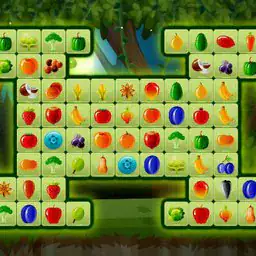
So I gave Fantasy Fish World Mahjong a shot, expecting just another mahjong solitaire clone, but it''s got this whole underwater theme that actually sticks. You''re matching tiles covered with cartoon fish--clownfish, angelfish, some weird sea creatures--against a backdrop of a pirate shipwreck with coral and seaweed waving around. The visuals are bright and cheerful, not trying to be realistic, more like a coloring book came to life. It''s relaxing at first because you just click or tap free tiles that aren''t blocked on both sides, then find their match to clear them. But then the layouts get tricky--some levels have stacked tiles that force you to think a few moves ahead. There''s a timer ticking, but it''s not punishing; you just lose a star if you''re slow. You start with hints and shuffles that recharge, so you''re never completely stuck. I found myself zoning out for an hour just clearing boards, chasing three stars per level--one for finishing, another for using no hints, and a third for beating the time. It''s the kind of game you play while listening to a podcast or waiting for something. Who''d get hooked? People who like casual puzzles but want a bit of challenge without stress. The fish designs are cute enough that it doesn''t feel generic, and the 4,000 levels mean you won''t run out soon. It''s not groundbreaking, but it''s solid and does its job.
About Fantasy Fish World Mahjong
Fantasy Fish World Mahjong is basically a standard Mahjong Solitaire game dressed up in fish costumes, but it works. You pick a level from a map that looks like an underwater treasure chart, each spot named something like Coral Reef or Shipwreck Cove. The objective is the same old matching: find two identical fish tiles that are free--meaning not blocked on their left or right side--and click them to remove the pair. Clear the whole board to win. That's the loop, and it stays that way for all 4,000+ levels.
Your hands are doing the clicking or tapping, but your brain is scanning the layout for matches that aren't trapped under other tiles. Early levels are simple pyramids with maybe 40 tiles, but by world three or four, they stack tiles on top of each other in weird shapes--ziggurats, spirals, even a layout shaped like a sea horse. Some tiles are harder to spot because the fish designs blur together; the clownfish and the angelfish look too similar when they're half-covered by a coral graphic. That's where the hint button saves you, though using it costs you a star.
The star system is straightforward: one star for finishing, a second if you never hit the hint button, a third if you beat the timer. The timer is generous on early levels but gets tight later--like 90 seconds for a 60-tile board. You learn to memorize tile positions quickly, because shuffling resets everything and you lose time scanning again. The magic color swap button changes tile colors, which is actually useful when your eyes start crossing from staring at the same fish faces.
What's satisfying is when you chain several matches in a row without pausing--just click, click, click, and the board thins out fast. Or when you clear a tricky corner that was blocking three matches underneath. The audio is bubbly, with little splashes when you match, and the background has a pirate shipwreck with seaweed swaying. It's relaxing until the timer starts ticking down and you realize you're stuck with two identical tiles but one is buried under five others. Then you shuffle and hope.
Difficulty doesn't ramp up with new mechanics--it's just more tiles, tighter layouts, and shorter timers. No enemy types, no upgrade systems, no power-ups beyond the three buttons. You unlock new level groups by earning stars, but that's it. The game doesn't change genres halfway through. Some levels have names like Jellyfish Jam or Treasure Chest Trouble but they all play the same. The satisfying moment is when you clear the last pair and the board explodes in bubbles and the star rating pops up. Then you click next and do it again.
Tips & Tricks
- **Tips & Tricks:**
One thing I wish I got sooner: don't just grab any open tile. Check the bottom layers first -- a tile sitting on top of a matching pair can block you for ages, and you'll waste hints. That star bonus for no hints is worth chasing, but only if you're patient with your picks.
When the board looks hopeless, use the shuffle button early. Too many players save it for the very end, but shuffling mid-game often reveals matches you missed and breaks up deadlocks. Same goes for the color swap -- it's not just cosmetic. Sometimes swapping colors makes a previously hidden match pop out against the busy coral background.
For timed levels, don't rush. Sounds backwards, I know, but frantic clicking leads to mismatched pairs and wasted moves. Instead, pause briefly to scan for chains -- a matched pair often frees up new ones, so plan two or three moves ahead if you can.
The hint button is your friend, but using it costs you a star if you care about that perfect score. So if you're farming coins, just use hints freely. I use them mainly to spot which tile I'm overlooking on a cluttered board.
One weird trick: focus on the edges first. Tiles near the border tend to be trapped by fewer neighbors, so clearing them creates space faster than attacking the center. Also, if you're stuck on a level, restart instead of brute-forcing -- the board layout is fixed, but your approach changes everything.
Finally, don't ignore the pause button. A quick breather helps you reset your brain, especially on those 4,000+ levels that start looking samey. Step away for a minute, then come back fresh.















Comments
Please login to leave a comment.