Scan to play on mobile
Mahjong Match
How to Play
Game Overview
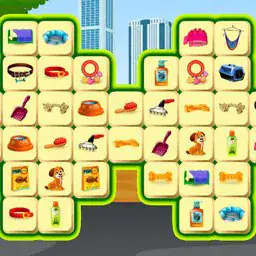
Mahjong Match throws the classic tile game into a weird twist -- instead of pairing identical tiles, you're grouping three of the same color. That threw me off at first. The board looks like a standard mahjong layout, with all those stacked tiles and familiar symbols, but the rules are different enough to mess with your head. Visually it's pretty clean, bright colors on a simple background, nothing fancy. The vibe is more casual puzzle than deep strategy. You tap a tile, then two more of its color, and they vanish. That's it. But the trick is planning your moves because tiles can block each other, and if you run out of matching sets, you're stuck. Some levels feel unfair with how tiles are stacked, forcing you to memorize positions early. It's not a fast game -- more of a slow burn where you stare at the board and think. I could see someone who likes Sudoku or solitaire getting hooked, especially if they want something that's not too intense. The sound effects are minimal, just clicks and a little jingle when you clear a group. Honestly, it's fine for killing ten minutes but not something I'd play for an hour straight. The difficulty ramps up weirdly -- some early levels are harder than later ones. If you're into tile-matching games and want a variation that makes you think just a bit more, this works.
About Mahjong Match
Mahjong Match isn't about pairs -- it's about triplets. You pick three tiles of the same color from the board, and they vanish. That's the whole loop, but the devil's in the details. The board starts simple in World 1, maybe 15 tiles arranged in a neat pyramid. You click one, then another, then a third, and poof -- they're gone. Your hands are just pointing and clicking, but your brain's working overtime: which three are safe to take now without blocking later tiles? Because some tiles are stacked on top of others, and you can only grab ones that aren't covered on both sides. That's the core tension.
Difficulty sneaks up on you. By World 3, you're dealing with "Locked" tiles that need a key -- but keys are just normal tiles you have to match first. There's also "Ice" tiles that freeze two of your picks if you touch them wrong, and "Bomb" tiles that explode and remove a chunk of the board if you match them last. One level called "Crystal Cavern" drops glowing tiles that only match with other glowing ones, which forces you to rethink your strategy mid-game. Another level, "Dragon's Lair," introduces a timer -- 90 seconds to clear all tiles, or you fail.
The satisfying moment comes when you clear a layer and see the whole board shift, revealing a perfect triplet you'd missed. Or when you chain three matches in a row because you planned it out. There's no upgrade system -- it's all about you getting better at reading the board. Power-ups exist, like a "Shuffle" button that rearranges everything once per level, and a "Hint" that highlights a valid triplet. But using them costs points at the end, so you only tap them when you're stuck.
Later worlds introduce "Mirror" tiles that reflect the color of whatever tile you matched last, adding chaos. "Gravity" levels make tiles fall into gaps when you clear ones below them. One level named "The Spire" is a tall stack of tiles with a single path through it -- one wrong move and you lose. The game never holds your hand. It just throws harder patterns at you until you either figure it out or hit the shuffle button in frustration.
What you're really doing is pattern recognition under pressure. Your eyes scan for clusters of three identical colors, but sometimes you have to sacrifice a match now to open up a better one later. The game doesn't tell you if a level is winnable from the start -- sometimes you just get a bad layout and have to restart. That's part of the fun. The music loops get more intense, the boards get bigger, and by the time you're in World 5, you're sweating over a 64-tile hexagonal mess.
No neat ending here -- just the promise of another level with another impossible-looking board.
Tips & Tricks
Don't just rush to match tiles you see first. The ones stacked on top or locked behind others can trap you. I learned that the hard way when I hit a dead end with only a few tiles left. Focus on clearing the highest piles early -- they open up the board fast. A trick I picked up: look for tiles that have both ends free, even if they don't match right now. That keeps your options open. Also, don't ignore the edges. Tiles hugging the border can be harder to reach later, so grab them when you can. The undo button is a lifesaver, but you only get a few uses. Use them to test a risky move instead of bailing out of a bad position. One mistake I kept making: matching three tiles just because they're there, without thinking about what it uncovers. Sometimes it's better to skip a match and wait for a better one. And here's the big one -- if you're stuck, start from the top layer and work down. That sounds obvious, but it's easy to get distracted by the bottom tiles. The game doesn't warn you about dead ends, so plan a route in your head. Finally, don't stress too much. Each restart is a chance to learn the board's layout.
















Comments
Please login to leave a comment.