Scan to play on mobile
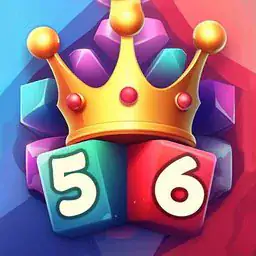
Master of Numbers
How to Play
Game Overview
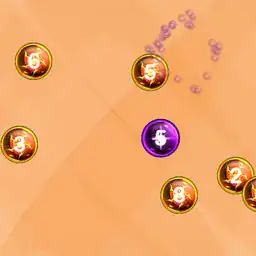
Master of Numbers is this weird hybrid where your brain has to do math while your fingers do platforming, and it's way more frantic than it sounds. You're this little number rolling through these blocky, neon-colored levels that look like they were built inside a calculator from the 80s. The whole thing has this arcade-puzzle vibe that feels like someone mashed together a typing tutor with a runner game and then poured math class over it. You start with a small number, and the goal is to grow it by absorbing blue numbers that are smaller than you, while red numbers that are larger will wreck you instantly. So you're constantly scanning the screen, doing quick comparisons in your head, and that part gets intense fast because the game throws sawblades and gaps and bridges at you too. The visuals are simple but bright -- everything glows against dark backgrounds, which helps you spot threats. Controls are keyboard-based, so you type numbers to absorb them, and that adds this weird rhythm where you're typing while dodging. It feels less like a math test and more like a panic puzzle where your reflexes matter just as much as knowing what's bigger than 47. Who would get hooked? People who like fast-paced puzzle games but also secretly enjoy doing arithmetic under pressure. It's not for someone who hates typing or gets stressed by timers -- but if you grew up on Flash games that demanded quick thinking and good hands, this scratches that itch hard.
About Master of Numbers
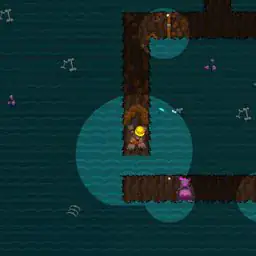
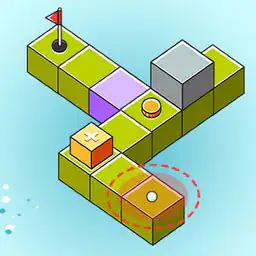
Master of Numbers has you running a little character through obstacle courses while typing numbers on the keyboard. The core loop is simple: you start each level with a number on your character--usually a 1 or 2--and you race to the finish line. Blue numbers scattered around the level are smaller than yours, so you run over them to absorb them, and your number increases by whatever value they had. Red numbers are bigger than yours, and touching one resets you back to 1, forcing a restart from the last checkpoint. So you're constantly scanning ahead, planning a path that avoids red while hoovering up blue. The satisfying moment is when you chain a bunch of blues in a row and watch your number jump from 3 to 15 to 42 in seconds. Your hands are on both the arrow keys for movement and the number row for typing--you actually have to type the number you want to use at certain gates. The game throws in gates that require a specific number to unlock, like a door that only opens if you type '37' exactly. If you have 40, you're too big, so you have to find a way to shrink--there are green power-downs that subtract from your number. Later levels introduce electric saws that follow set paths--they kill you instantly if they touch you, so you learn their timing. Bridges appear over gaps, but some are broken and require you to jump (spacebar) at the right moment. Ditches you can leap over, but they get wider in later worlds. The difficulty builds by increasing the density of red numbers and making blues rarer. By world 3, there are moving red numbers that chase you, and you have to bait them away from blues. The upgrade system lets you spend coins earned from completing levels to increase your starting number or add a shield that protects you from one red hit. There are also special levels called Number Gauntlet where you have to survive a wave of red numbers while collecting a set amount of blues. The finish line has walls you need to destroy by having a high enough number--if your number is less than the wall's value, you bounce off and have to find more blues. This creates a tense moment where you might be running back into danger just to boost your number by one more point. It's frantic, you're mashing numbers and dodging saws, and sometimes you'll die because you typed the wrong number at a gate. But when you nail the perfect run, it feels great.
Tips & Tricks
Blue numbers can trick you. They're safe when smaller than your current number, but if you let one get too close and it's actually bigger than you think, you might grab it by accident and lose everything. Always double-check the size before rushing in. Red numbers are obvious threats, but sometimes they spawn right next to a blue one, making you choose between two bad options. Best to clear the area around a red number before collecting anything nearby. The electric saws have a pattern--watch for a split second before crossing. They loop, so counting beats helps. I kept dying because I'd sprint straight into them without checking the timing first. Bridges are safe only if you're slow. Running makes you fall off the edge, which is embarrassing after you've built a big number. Walk across, then speed up again. Ditches need a jump button--don't try to run over them. That cost me a lot of runs early on. At the finish line, walls stack up big. You need your number to be massive to break through multiple at once. If you're just barely over the wall's value, you'll only destroy one and waste time. Plan your route to absorb as many blues as possible near the end. Missing one small blue can mean getting stuck on a wall you'd otherwise smash through. Also, sometimes it's better to skip a few blues to avoid a red that's parked right next to them. Patience beats greed in this game.
















Comments
Please login to leave a comment.