Scan to play on mobile
Merge 2048
How to Play
Game Overview
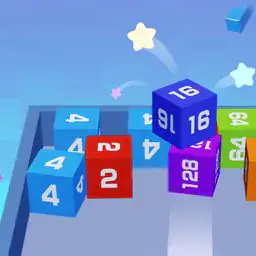
So I've been messing around with Merge 2048 for a bit, and it's basically that classic number tile game but with a few cool twists. You drop numbered blocks into a container, and when two of the same number touch, they merge into a bigger number. The goal is to hit 2048, obviously, but the container has a red line at the top--if your blocks pile up past that, it's game over. The visuals are pretty clean, kind of minimalist with smooth colors and rounded tiles, not flashy or anything. It feels satisfying to watch two 2s turn into a 4, then a 8, and so on. But here's where it gets different: there's a Classic mode and a Shape mode. Shape mode throws in blocks with different shapes instead of just numbers, which is weird at first but actually makes you think more about placement. The TNT block is a lifesaver--you can use it to blow up a tile when you're stuck, and trust me, you'll need it. The vibe is chill but tense; you're always one bad drop away from losing. Controls are drag and drop on both desktop and mobile, which feels natural. Who'd get hooked? Anyone who likes quick puzzle fix--like waiting for coffee or on the bus. It's simple to start but gets brutal once you're pushing for higher numbers. The score tracking and unlockable titles give you a reason to keep trying, even when you fail. It's not revolutionary, but it's solid.
About Merge 2048
Merge 2048 has you dragging numbered blocks into a vertical container, and the core loop is as simple as it sounds: drop same numbers together to combine them into higher values. You're working toward the 2048 block, but honestly, just seeing a 128 or 256 pop up feels pretty great. The container fills up fast, so you're constantly scanning ahead, trying to figure out where to place that next 4 or 16. Classic mode is the standard experience--just numbers, no frills, and the pressure builds as the container gets closer to the red line. That red line is the hard limit: if any block crosses it, the game ends. No second chances. Shape mode throws in tiles that aren't just circles with numbers--they're actual shapes like squares, triangles, and hexagons, which changes how you merge because you have to match both the number and the shape. It's weird at first, but once you get a feel for it, it's a fresh kind of brain workout. The TNT block shows up when you're really stuck--it clears a small area of blocks around it when you drop it. But you can't just spam it; they appear randomly, so you have to hold onto it for the right moment. There's also a score tracker that counts your merges, and you unlock titles like "Number Guru" or "Shape Shifter" as you hit milestones. The difficulty doesn't ramp up gradually--it hits you in waves. Some runs you'll cruise to 512, others you'll choke at 32 because you misjudged a drop. The satisfying moments come when you chain merges: dropping a block that triggers two or three combinations in a row, clearing a bunch of rows and buying yourself breathing room. Desktop controls are drag-click and release, mobile is the same but with touch. No timing mechanics, no power-ups beyond TNT, just pure placement strategy. The game doesn't hold your hand after the first minute, and that's fine. You learn by losing. Some titles require specific achievements, like completing a game without using TNT, which forces you to play smarter. The clean visuals help--you can see numbers clearly, and the container has a faint grid that makes alignment easier. It's the kind of game where you say "one more round" and suddenly an hour's gone. The loop is addictive because every drop matters, and there's always a better way to place that block. You'll find yourself staring at the screen, mentally tracing paths, then messing up anyway. That's the charm.
Tips & Tricks
Don't just drop blocks as fast as they appear -- that's the quickest way to fill the container and lose. Pause a second to scan where each number lands best, especially when you're juggling several high-value tiles. The TNT Block is a lifesaver, but save it for emergencies; wasting it on a single low tile you could've merged anyway stings later. In Shape Mode, those awkward shapes can wedge into gaps in ways you don't expect -- sometimes a weird angle creates a perfect merge chain. I learned the hard way that ignoring the red line until it's blinking is a mistake; keep an eye on the fill level and plan a few moves ahead. Classic 2048 rewards stacking similar numbers vertically, but in Shape Mode horizontal spreading works better because of the uneven pieces. One trick that clicked for me: when you have two matching high numbers far apart, drop a lower matching block between them to pull them closer -- the merges cascade and clear space fast. Track your score not just for bragging but to notice patterns -- if you keep hitting the same wall, change your approach. The clean visuals help, but don't get hypnotized; quick decisions based on the column width matter more than perfect alignment. And honestly, sometimes you just need to deliberately drop a block off-center to set up a future combo -- playing it safe every time loses you opportunities.













Comments
Please login to leave a comment.