Scan to play on mobile
Merge number up
How to Play
Game Overview
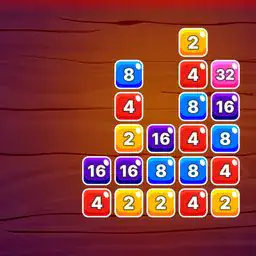
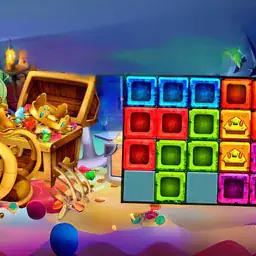
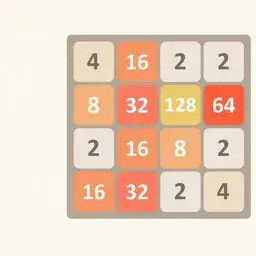
I've been playing this Merge Number game and honestly it's way more absorbing than I expected. The screen is just a grid of colorful numbered tiles, nothing fancy -- bright blues, greens, and reds that pop against a dark background. You tap on groups of connected same-number tiles, and they combine into a bigger number, then new tiles rain down from above. The feeling is kind of hypnotic at first, but then the board fills up fast and you start panicking. There's no story, no characters, just you and this growing pile of numbers that demand attention. The visual style is clean and almost arcade-like, with smooth animations when tiles merge and drop. What gets you hooked is chasing that big combo -- tapping four or five tiles at once feels great, and the score multiplier makes you want to chain merges together. But the real tension comes when the board gets crowded and you've only got bad options left. You'll find yourself staring at the grid, planning moves a few steps ahead, trying to avoid dead ends. I think anyone who likes quick puzzle games like Threes or 2048 would sink hours into this. It's not deep, but it's smart about making you feel clever one moment and completely stuck the next. The vibe is chill until it's not -- perfect for short bursts when you're waiting for something.
About Merge number up
So you tap groups of connected tiles that share a number -- two or more of them touching side by side. They merge into one tile with the next number up. Say you tap four 2s stuck together, they become a single 3. Then new tiles tumble in from the top to fill the empty spaces. That's the core loop: tap, merge, watch the new ones drop, repeat. Your brain is constantly scanning the board for clusters, planning moves ahead, because you want to chain merges in one action. The bigger the group you tap, the more points you get -- tapping seven 5s feels great because the score jump is noticeable and the board clears more space. But the difficulty ramps up fast. Once numbers hit 8 or 9, the tiles start acting differently -- some become "locked" and need two taps to break free, which is annoying but forces you to think about order. Later levels introduce "stone" tiles that don't merge at all and just take up room until you clear around them. By level 15, there's a special "bomb" tile that, when merged, destroys a small cross-shaped area -- super satisfying when you plan it to open up a clogged corner. The game doesn't explain these mechanics upfront; you just encounter them and figure it out, which I actually like. Your high score is the main goal, but there are also star ratings on each level -- three stars for clearing before a move limit, which pushes you to be efficient. The board size stays the same throughout, so it's not about getting more space but about managing what you have. Some levels have a "color zone" where only certain numbers can be placed after merges, which gets real tricky when you're stuck with a 11 and the zone only accepts evens. The satisfying moments come when you pull off a long chain -- tap a group, they merge into a 12, which was already touching another 12, so that group auto-merges, then a tile drops and triggers another. The sound effect goes up in pitch each time, and the screen shakes a little. It's not a deep game, but it has enough wrinkles to keep you coming back for one more try. The "infinite mode" after beating all 50 levels is where the real addiction hits -- no win condition, just keep merging until the board fills up and you lose.
Tips & Tricks
Start by focusing on one corner of the board. If you try to clear everything at once, you'll end up with scattered single tiles that are hard to pair. I lost tons of games this way early on. Another thing that took me forever to notice: new tiles fall from the top after each merge, so watch where those gaps are. Leaving a big empty space under a cluster of high numbers is asking for trouble -- they'll drop down and break your combos. When you see a bunch of 2s or 3s clustered together, resist the urge to tap them all immediately. Instead, look for a path that lets you chain merges across multiple turns. The scoring multiplier loves big groups, but a single 8 is worthless if it's isolated. My biggest mistake was ignoring the edges. Tiles against the wall are harder to connect later, so clear those first before they get buried. Also, don't waste moves merging pairs of 2s into 4s if you're sitting on a group of five 4s already -- save the big combo for later. Eventually, you'll learn to count tiles fast, but until then, just pause and scan the board before tapping.













Comments
Please login to leave a comment.