Scan to play on mobile
Organization Master
How to Play
Game Overview
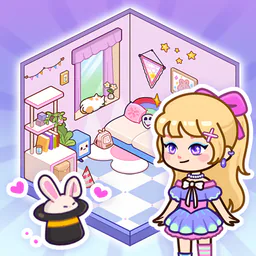
Organization Master is basically a game where you sort through messy rooms and put stuff where it belongs. It''s not some high-octane action thing -- it''s slow, methodical, and oddly satisfying. The visuals are clean and cute, like a cartoonish dollhouse vibe with pastel colors and soft lighting. You''re given a cluttered space -- a desk piled with papers, a closet with clothes everywhere, a kitchen counter full of dishes -- and you have to drag each item to its correct spot. There''s a timer sometimes, but it never rushes you; it''s more about precision than speed. The puzzles start easy, like a single shelf, then get wild -- think six drawers, three cabinets, and a rug hiding secret compartments. What really hooked me is how it makes your brain work like a real-life organizer: you spot patterns, group similar things, and figure out the most efficient path. The sound design helps too -- soft clicks and a little chime when you nail it. It''s weirdly calming, like ASMR for your desk. Who''d get into this? Honestly, anyone who''s stressed about their own mess or loves logic puzzles. It''s not a deep story game -- there''s no plot -- but the progression of levels keeps it fresh. You start with a bedroom, then a living room, then an office, and each one has its own quirks. I''ve seen people compare it to a digital Marie Kondo session, and yeah, that fits.
About Organization Master
So here's the thing about Organization Master -- it's less about 'decluttering your mind' and more about sorting digital junk into the right bins, which is honestly way more fun than it sounds. Each level drops you into a messy room with items scattered everywhere. Your job is to drag each object to its correct spot, but it's not just about matching shapes like a simple puzzle. Early on, levels like 'Living Room Chaos' or 'Kitchen Spill' teach you the basics: put books on shelves, cups in the sink, shoes in the closet. You click and drag items with your mouse or finger, and the game snaps them into place with a satisfying *click* sound. That click is the main dopamine hit -- every time something locks in perfectly, it feels good. The first few worlds are easy, maybe 10-15 items per room, and you can brute-force it by trying every spot until one works. But around world three, things shift. New mechanics show up, like 'tiered sorting' where you have to stack items by size or color before placing them. Some objects have 'hidden properties' -- a mug might need to be washed first, which means dragging it to a sink before the cabinet. There's a 'time pressure' mode that appears in world four, with levels like 'Midnight Panic' where items keep spawning until you clear them fast enough. Enemies? Sort of. There are 'clutter gremlins' in later levels that move items around if you're too slow, forcing you to prioritize. Upgrades come between worlds: you can buy a 'magnetic hand' that attracts items from farther away, or a 'sorting assistant' that highlights misplaced objects for a second. The satisfying moments are when you nail a complex sequence -- like a kitchen level with 40 items, all needing to go to different bins, and you finish with seconds to spare. Difficulty builds gradually, but it spikes hard around world six, where levels have multiple rooms connected by doors, and you have to remember which object goes where across spaces. The loop is simple: pick up, place, click, repeat. But the brain work comes from pattern recognition -- learning that lamps always go on nightstands, that books are sorted by spine color in later levels, that some items are decoys meant to trick you. There's a zen mode too, for when you just want to sort without pressure. The game doesn't pat you on the back much, which I like -- it just gives you the next level and trusts you'll figure it out.
Tips & Tricks
- **Tips & Tricks**
I spent way too long on level 4 because I kept grabbing the wrong item first. The game doesn't tell you this, but objects in the pile can sometimes be moved aside without being placed -- try nudging them with a quick tap instead of dragging them to a spot immediately. That little trick saves you from restarting when you misclick.
Another thing that clicked for me: the order you place items matters more than you think. Some levels have a hidden sequence -- placing a book on a shelf before clearing the desk might block a later spot. I'd pause and scan the whole room before grabbing anything, which felt slow but actually sped up my clears.
A mistake that cost me a perfect score: ignoring the timer completely. It's not just for bragging rights -- finishing under a certain time unlocks alternative layouts or bonus items in later levels. So don't be lazy with the first few easy stages; practice quick scanning there 🔍.
One tip that feels obvious but isn't: rotate objects before dragging them. I kept dropping lamps upside down until I realized a two-finger twist works mid-drag. The game never mentions this, and it's a lifesaver for weird-shaped clutter.
Color-matching helps more than shape-matching in early worlds, but later levels shift to texture or pattern cues. I wish I'd noticed that sooner instead of forcing every blue vase into a blue spot.
Finally, if you're stuck on a level for more than five minutes, just walk away. I've come back after a break and spotted the solution in seconds. There's a mental block that forms when you stare too long ⏱️.




















Comments
Please login to leave a comment.