Scan to play on mobile
MERGE THE NUMBERS
How to Play
Game Overview
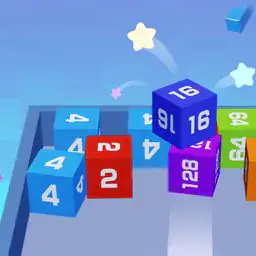
So MERGE THE NUMBERS is basically 2048 meets Threes but with a more aggressive pace. The screen is this clean grid where numbered tiles sit, and they have this soft pastel color scheme that shifts as numbers get bigger--low numbers are pale blues and greens, high ones get into oranges and reds. You drag a tile onto its matching twin, they slam together with a satisfying little pop, and the number doubles. It feels good. The tension kicks in because after every move where nothing merges, a whole new row of tiles slides in from the top, pushing everything down. The grid fills up fast if you''re not careful. I''ve had runs where I''m sweating over a single move, trying to chain merges to clear space before the next wave. The high score chaser crowd will love it--it''s all about risk and reward. Do you play safe and merge low numbers, or gamble on holding out for a big combo? The vibe is minimalist but not boring; the sound effects are subtle clicks and pops, and the background is this calm gradient that makes the numbers pop. It''s the kind of game you play on the bus and suddenly realize you missed your stop. Anyone who liked the original Threes or wants a quick mental workout will get hooked. It''s not deep story-wise, but the loop is tight and punishing in a good way.
About MERGE THE NUMBERS
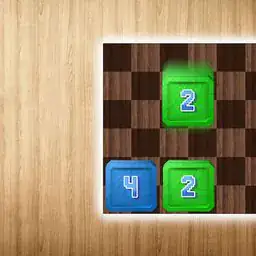
So MERGE THE NUMBERS throws you into a grid -- 4x4 at first, but it gets tighter later on. You start with a handful of tiles showing small numbers like 2, 4, or 8. Your only move is dragging one tile onto another that shows the same number. They combine into a single tile with the sum, so 2 and 2 become 4, 4 and 4 become 8, and so on. That's your whole action. Each merge frees up one space on the grid, which is crucial because after every move -- whether you merge something or not -- a new row of tiles slides in from the bottom. If the grid fills up completely and you can't make any merges, the game ends.
The brain part is figuring out which merges to prioritize. Do you go for small combos to keep breathing room, or save big numbers for a potential chain reaction? Later, you unlock the "Double Tap" mechanic -- if you merge four tiles of the same value in a single turn (like two pairs of 8s), you get a bonus tile that starts one step higher, which feels great. There's also a "Shuffle" power-up you earn every 10 merges, letting you rearrange tiles without losing progress. Around level 15, the grid expands to 5x5, but new "Blockers" appear -- grey tiles that can't merge and take up space until you clear them by merging adjacent tiles into them. That's annoying but forces you to think sideways.
The satisfying moments hit when you chain several merges back-to-back, watching the numbers climb from 64 to 128 to 256 in seconds. The game tracks your highest tile and total score, and there's a leaderboard for each grid size. Difficulty spikes when you reach 512 -- the game starts feeding you fewer matching pairs, so you have to plan three or four moves ahead. One wrong move and the board fills up fast. There's no pause, so it's frantic. Some people hate the random tile spawns, but I think the chaos keeps it interesting. You never know if the next row will save you or screw you.
Tips & Tricks
The early game is all about keeping the board open. If you rush to merge small numbers without planning, you'll end up with a clogged mess around turn 15. Focus on merging tiles near the bottom rows first, as new blocks always appear from the top. There's a nasty habit of chasing two matching tiles across the grid, but that often leaves a trail of orphans. Instead, try to build clusters of the same number, like a little family reunion, so merges chain smoothly. A mistake I made constantly was ignoring the sides -- those corner spots fill up fast and become dead weight. Keep the middle rows clear, because once a tile gets trapped against the wall, it's game over territory. Another trick that clicked later: don't always merge the first pair you see. Sometimes waiting one turn lets three identical tiles appear, and then you can chain them for a bigger multiplier in one move. That feels like cheating, but it's not. Watch out for the row that slides in when you fail to merge -- it always targets the most inconvenient spot, so try to leave some slack in your layout. Finally, aim for the 2048 tile, but don't stress if it takes practice -- each run teaches you something about spacing that the tutorial never mentions.



















Comments
Please login to leave a comment.