Scan to play on mobile
Move Emoji
How to Play
Game Overview
Move Emoji is one of those puzzle games that looks deceptively simple until you actually try it. The whole thing is just a grid filled with different emoji faces--smiling ones, winking ones, the crying-laughing one--and you swipe them around to make three-in-a-row matches. But here''s the catch: every level gives you a strict move limit, and if you run out before clearing the board, you lose. The visual style is bright and cartoony, with lots of pastel colors and bouncy animations when emojis pop. It doesn''t take itself seriously at all, which is nice. The music is this cheerful little tune that''s catchy but not annoying. Playing it feels like a mix between a match-three game and a chess puzzle, because you really have to plan your swipes. You can''t just blindly shuffle emojis around--each move costs you, and sometimes you''ll undo a swipe three times trying to find a better path. The difficulty ramps up faster than you''d expect; by level 20, some puzzles feel almost unfair, but in a satisfying way. I think anyone who likes word games or logic puzzles would get hooked, especially people who enjoy squeezing the most out of limited moves. There''s no story or lore here--just you, a grid of emojis, and a number that slowly ticks down. It''s stressfully fun, kind of like a brain workout that doesn''t feel like work.
About Move Emoji
Move Emoji is one of those puzzle games that sounds simple until you're staring at a board full of mismatched faces and trying to figure out how to untangle everything in exactly seven moves. You swipe emoji tiles around a grid--up, down, left, right--and when three or more of the same kind touch, they pop and vanish. The satisfying part is that little burst of color and the number counter ticking down. Each level has a move limit, and if you run out before clearing the required emojis, you have to restart. Early levels are generous, maybe ten or twelve moves for a small board, but soon you hit stages like Fruit Frenzy or Animal Kingdom where the board is bigger and the types are mixed. Around level twenty, locked tiles appear--those gray squares that need two adjacent matches to break free, which changes how you plan. Later, there are 'sticky' emojis that cling to the grid unless you match them twice in a row. The game doesn't explain all this upfront, so you learn by failing. One frustrating mechanic is the 'joker' tile that can replace any emoji, but it only appears after you've matched five in a row, which is rare. The loop is simple: swipe, match, watch the board collapse, repeat. But the thinking part is about sequencing--sometimes you need to move a tile away from a match to set up a bigger chain later. Your brain is constantly counting: will this use two moves or three? Can I afford that? The satisfying moments come when a chain reaction starts and clears half the board in one go, or when you finish a level with exactly one move left. The difficulty ramps unevenly--some levels are brutal puzzles, others feel like breathers. There's no upgrade system or power-ups; just you and the board. The game relies on you learning patterns, like how certain layouts always require a specific first move. The last few levels are named after emotions like Rage and Joy, which is fitting because you'll feel both. Controls are just swiping--tap and drag a tile in any direction, and it swaps with whatever's there. The grid doesn't shift unless you make a match, so you can pause and think. No timers, no pressure except your own countdown of moves. It's a game about patience and spatial reasoning, and sometimes luck when the new tiles drop in after a match.
Tips & Tricks
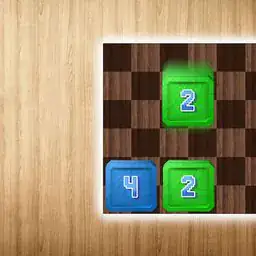
Planning a few moves ahead is a lifesaver here. I kept losing levels early on because I'd just swipe randomly without thinking about where the next pieces needed to land. Try to visualize the board after a couple of swaps before you even touch it. Another thing that clicked for me: the edges are your friends. Emojis that get stuck on the border are harder to move, so focus on clearing those first if you can. It's tempting to match the first pair you see, but that's a mistake I made too often. Sometimes leaving a pair alone for a moment lets you set up a bigger chain reaction. Also, don't forget you can slide a box into an empty space even if it doesn't match anything yet -- this repositions things without costing you a wasted move if you're careful. I found that keeping a mental note of which emojis are most common on the board helps prioritize. And here's a specific one: if you're down to your last few moves and the board looks messy, look for patterns that are one swipe away from matching -- those quick clears save the day. The game doesn't tell you this, but sometimes it's better to break up a potential match to create a better one later. It's a risk, but it pays off when you're stuck. Lastly, don't panic when the move counter gets low -- rushing leads to bad swipes. Take that extra second to scan.










Comments
Please login to leave a comment.