Scan to play on mobile
Octopus Memory Card Match
How to Play
Game Overview
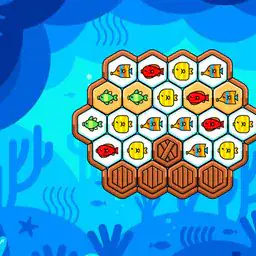
Octopus Memory Card Match is basically a memory card game with a sea creature theme. You flip over tiles to find matching pairs of octopuses, treasure chests, and other ocean stuff. The visuals are bright and kind of cartoony, not photorealistic -- think cheerful underwater doodles. You pick a difficulty at the start, which just changes how many cards are on the board. Higher difficulty means more pairs to remember, so your brain actually gets a workout. The game itself is pretty chill. There's no timer screaming at you, no music that gets on your nerves. It's just you and the cards. You flip one, memorize the image, flip another. If they match, they disappear with a little animation. If not, they flip back and you try again. What's nice is that the game doesn't punish you hard for forgetting -- you just keep trying until you find all pairs. The feeling is satisfying when you nail a match, especially after a few wrong guesses. It's one of those games you can play while listening to a podcast or waiting for something. Who would get hooked? People who like brain teasers but don't want stress. Kids would enjoy the cute art, and adults might use it to keep their memory sharp. It's not groundbreaking, but it does what it sets out to do cleanly. The ocean theme is just window dressing, but it makes the whole thing feel less dry than plain cards.
About Octopus Memory Card Match
Octopus Memory Card Match drops you into a straightforward memory game with an ocean theme. You pick a difficulty level from a simple menu--higher numbers mean more cards on the grid. The board shows face-down cards, and your goal is to flip two at a time to find matching pairs of marine life. There are octopuses, treasure chests, starfish, and other sea creatures drawn in a colorful, cartoonish style. Your first flip reveals an image; your second flip either matches it (and both cards vanish with a little splash animation) or fails (they flip back face-down). The game keeps track of your attempts and time, but there's no penalty for wrong guesses--just the frustration of forgetting where that shiny pearl card was. As you clear pairs, the grid shrinks, and the final few matches feel tense because you're juggling multiple remembered positions. Difficulty scales purely by card count: easy has 12 cards (6 pairs), medium has 20 (10 pairs), hard has 30 (15 pairs). No new mechanics unlock later--it's the same loop end to end. The satisfying moment comes when you chain multiple matches in a row, feeling like your brain is firing on all cylinders. The visuals are simple but pleasant--rippling water effects and soft blue backgrounds. Sound effects are minimal: a click for flips, a chime for matches. Controls are just tap or click on cards, nothing complex. One thing I noticed: the game doesn't penalize you for speed, so you can flip frantically if you want, but that usually leads to more mistakes. It's a low-pressure game you can play while half-watching TV. The difficulty jump from medium to hard is noticeable--12 cards to 20 feels manageable, but 30 cards starts to strain your memory unless you're really focused. There's no progression system, no levels to unlock, just a single session per game. You reset to choose a new difficulty each time. The whole thing feels like a digital version of those plastic memory games you played as a kid, but with nicer art. It's not trying to be more than that--just a clean, functional memory trainer with an underwater skin. If you want something that ramps up gradually or throws curveballs, this isn't it. But for what it is, it works fine for short bursts.
Tips & Tricks
Start with the easiest difficulty first, even if you think you're a memory pro. The beginner board has fewer cards, and it helps you get a feel for how the flipping animation works -- it's not instant, and there's a tiny delay that can mess with your timing if you rush. I kept jumping into hard mode and losing because I didn't account for that rhythm.
Pay attention to the edges of each card. The octopus images all look similar at first glance, but the treasure chests and shells have specific color tints or patterns that are easy to mix up. One mistake I made was ignoring the background details -- they''re actually consistent per pair and act like a cheat code once you notice.
When you flip a card and it''s not a match, don''t just flip another random one. Use the brief moment both cards are visible to scan the whole board for the matching image. It sounds obvious, but I wasted moves by focusing only on the two flipped cards instead of looking around.
The game doesn''t punish you for taking your time between flips. So after a wrong guess, pause a second before clicking again. Your brain needs that tiny break to store the image. I used to click frantically and forget everything instantly 🔍.
Try to create a mental map in groups of four cards. For example, remember positions of octopus cards in quadrants rather than memorizing every single spot. That trick helped me clear medium difficulty in half the tries.
When you get down to the last four cards, don''t stress. The game flips them back quickly, but if you track pairs from earlier guesses, you can often finish without any mistakes. I''ve had rounds where I forgot the last pair and had to guess, but that''s rare if you stay patient.



Comments
Please login to leave a comment.