Scan to play on mobile
Zen Master - 3 tiles
How to Play
Game Overview
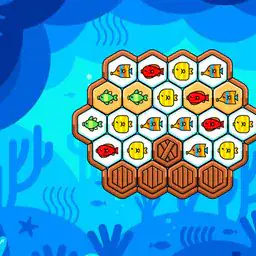
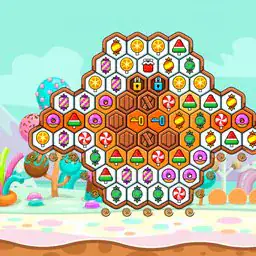
So this game is basically Mahjong but you match three tiles instead of two, and it's way more chill than the classic version. The tiles are all these colorful pictures--flowers, animals, little symbols--laid out in stacks on a board. Some are free, some are trapped under others, and you've got to pick three identical ones to clear them. There's a bar at the bottom that holds up to eight tiles, and if it fills up because you're grabbing stuff you can't match yet, that's game over. The visual style is soft and calm, like watercolors on a rainy day. Backgrounds are these peaceful scenes--gardens, temples, lakes--that unlock as you win levels, which gives you a reason to keep going aside from just clearing boards. No timers, no pressure, which is nice if you're winding down. It feels like a brain massage, honestly. You're scanning for patterns, planning a few moves ahead, but it's not frantic. The difficulty ramps up slowly--early levels are a breeze, later ones have more layers and trickier tile arrangements. Who'd get hooked? Anyone who likes puzzle games without the stress. Sudoku fans, Mahjong people, Match-3 players who want something slower. It's good for playing while watching TV or waiting for something. Not groundbreaking, but solid and relaxing.
About Zen Master - 3 tiles
So you're staring at a board full of tiles with pictures on them -- cats, fish, flowers, that kind of stuff. The basic loop is dead simple: pick three matching tiles and they vanish. But you can't just grab any tile. Tiles need to be free -- meaning nothing stacked on top of them and at least one side open. There's a bar at the bottom that holds up to eight tiles. If that bar fills up before you clear the board, it's game over. That bar is basically a timer, and it creates pressure even though there's no clock ticking.
The satisfying moment comes when you spot a triple buried under layers and carefully clear the path to it. Sometimes you'll chain removals where freeing one tile reveals another match right away -- that feels great. The game starts with simple layouts where most tiles are accessible and matches are obvious. You'll breeze through early levels like "Bamboo Garden" or "Morning Dew."
Then around level 20, things get mean. Tiles start stacking in three or four layers. Some tiles are locked behind special tiles that require a specific booster to break. You'll see "Crystal" tiles that need two matches before they count. There's a "Stone" tile that blocks everything below it until you match it three times. The game introduces "Mystery" tiles that shuffle every few seconds -- those are annoying because you can't plan around them.
Your hands are mostly clicking or tapping. On mobile you drag tiles to the bottom bar to queue them, which is actually faster than tapping them individually. On PC you just click. The brain work is figuring out which matches to prioritize -- go for the ones that unlock more tiles, not just the easy ones. There's a hint button, but it costs coins you earn from completing levels.
Boosters become essential later. The "Shuffle" booster mixes up the bottom bar if you're stuck with mismatched tiles. "Hammer" breaks any single tile. "Swap" exchanges one tile on the board with one in the bar. You earn stars for completing levels with extra time or moves left -- three stars per level is the goal. Stars unlock new location sets like "Cherry Blossom Temple" or "Moonlit Pagoda." Each set has its own tile art and background music, which is nice.
The game also has daily challenges with special rules -- like "no boosters allowed" or "only matching pairs of tiles, not triples." Those mix things up. The difficulty curve is real: levels 1-40 are a tutorial, 41-80 demand real planning, and 80+ require near-perfect use of the bar and boosters. There's no story, just progression through themed worlds. The satisfying part is when you clear a dense board with one move left and that victory animation plays.
Tips & Tricks
Start by scanning the board for tiles that have only one match -- those are your biggest threats. If a tile only appears twice total, you need to pair it with its twin before you accidentally block it. I lost more than a few runs because two identical tiles were buried under others and I couldn't reach them in time. The bottom bar only holds eight tiles, so don't just grab every match you see. Sometimes it's smarter to leave a pair alone until a third shows up, especially if the board is crowded. That bar fills up fast if you're not careful. Boosters are rare, so save them for levels where the layout is truly awful -- like when three same tiles are all trapped under different layers. One trick that clicked for me: focus on clearing tiles that sit on top of others first. Removing a single tile can free up three matches underneath, which changes the whole game. Also, the game tracks which tiles are "free" based on nothing covering their top half, but edges can be tricky -- double-check by tapping before committing. On mobile, the touch controls work fine, but on desktop, I found using a mouse is slower, so practice the rhythm. Finally, don't rush. There's no timer, so take a moment to mentally map out your next three moves. That pause saved me dozens of times.



















Comments
Please login to leave a comment.