Scan to play on mobile
Polygon Puzzle
How to Play
Game Overview
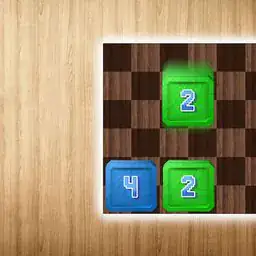
So I''ve been messing around with Polygon Puzzle, and it''s basically a block-filling game with a twist. The visual style is clean and colorful, lots of bright geometric shapes on a dark background--it looks sharp, not cluttered. You get a grid with weird angles and a set of polygonal pieces that have to fit perfectly. No gaps, no overlaps. It feels like Tetris if Tetris took a chill pill and let you think forever. Each level is a standalone puzzle, so there''s no timer breathing down your neck. The early ones are almost too easy, just sliding triangles and squares together, but around level 20 they get mean. Pieces have weird notches and curves, and the grids are uneven shapes like stars or diamonds. You''ll rotate a piece and realize it could only go in one spot, but spotting that spot takes a while. The vibe is calm but tense--you''re just sitting there, staring, maybe muttering to yourself. When you finally slot the last block, there''s this satisfying little animation, and it feels earned. Who''d get hooked? Anyone who likes puzzles that don''t rush you, like Sudoku or jigsaws, but with more visual payoff. It''s not flashy, just solid. I''d say it''s perfect for playing while listening to a podcast or winding down at night.
About Polygon Puzzle
So you pick up Polygon Puzzle and it looks simple enough at first -- a blank grid, some oddly shaped blocks off to the side, and a goal to fill every square. Your mouse or finger drags a piece over, tries to rotate it with a tap or scroll wheel, and slots it in. The game gives you a satisfying little snap sound when it fits perfectly. That''s the basic loop: grab, rotate, place, repeat until the grid is full. But the trick is, you''ve got exactly the right number and shapes of blocks for each puzzle, no extras. So every piece matters. Miss a corner early and you''ll be staring at a gap later that nothing fits into. You learn to plan ahead, sometimes undoing a move with the back button -- which the game lets you do freely, thank goodness.
Difficulty ramps up slowly. Early levels like "Warmup" have maybe six pieces on a small 4x4 grid, simple rectangles and L-shapes. By world three, you hit "Spiral" and "Cracked Hex" where grids have holes in the middle or weird bumpy edges. Some levels introduce blocks that aren''t connected -- like a shape that''s three squares with a gap in the middle, which throws off your mental model. Later, around level 40, there are "double-layer" puzzles where you place blocks on two overlapping grids at once, swapping between layers with a button. That''s when your brain starts hurting in a good way. There''s no timer, no penalty for wrong moves, just the quiet satisfaction of watching the last piece lock into place and the whole grid flash a quick color burst. The game keeps track of your moves per puzzle but doesn''t shame you -- it''s more for your own curiosity.
What''s nice is the variety in grid shapes. Not just squares but hexagons, irregular blobs, even a level called "Donut" that''s a ring shape. Blocks range from 2-square dominoes to weird 7-piece monsters that look like Tetris nightmares. Rotating them feels responsive, and you can flip them horizontally too, which some puzzles require. The satisfying moment is when you''ve been staring at a mess for five minutes, then suddenly see the sequence -- place that T-shape first, then the zigzag fills the gap, and everything clicks. No points, no stars, just that private victory. The game doesn''t overexplain itself, which I appreciate. You just keep solving.
Tips & Tricks
Start by looking for the biggest blocks first -- they''re the least flexible, so placing them early stops you from painting yourself into a corner later. I lost count of how many times I shoved a small piece somewhere random, only to realize the big L-shaped block needed that exact spot. The grid''s edges are your friends: align blocks against borders to create natural boundaries, which helps you see where the next piece might fit. Rotating blocks isn''t just for show -- some shapes fit only one way, and spinning them reveals hidden alignments that aren''t obvious at first glance. Color coding on the blocks corresponds to zones on the grid, which the game never explicitly says; matching them early reduces guesswork by a ton. When you''re stuck, try working backward from the last empty space -- imagine what shape could fill it and trace its possible positions. That trick clicked for me halfway through level 30, and suddenly puzzles I''d been banging my head against opened right up. One more thing: don''t ignore symmetry. The playing field often has mirrored sections, so placing one half''s blocks can instantly tell you where the other half''s go. It''s not always obvious, but once you spot it, the game feels less like guesswork and more like solving a puzzle you actually understand.






Comments
Please login to leave a comment.