Scan to play on mobile
Pool Shoot Tournament
How to Play
Game Overview
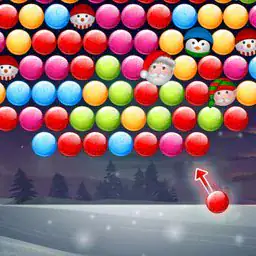
So Pool Shoot Tournament is basically Bubble Shooter but with a pool table theme, which is a bit silly but it works. The game looks like someone took a real pool table, flattened it into a 2D grid, and then filled the top with colorful balls that slowly march down toward you. The visual style is clean and bright, not trying to be realistic or fancy -- just readable. You aim with your mouse or finger, and a little line shows where the ball will go, including bounces off the walls. That ricochet mechanic actually matters more than I expected, because sometimes you can bank a shot off the side to hit a cluster that's hard to reach directly. The vibe is super casual, like something you'd play while waiting for coffee or during a podcast. It's not intense or stressful until the balls start getting dangerously close to the bottom line, then the pressure picks up. What really matters is grouping three or more same-colored balls to pop them, which sounds simple, but the trick is planning your shots to cause chain reactions. You want to hit a big clump that's already close to others, so the whole section breaks apart. If you just plink single balls, you'll lose fast. The game feels like a puzzle more than a test of reflexes -- you have time to aim, but not infinite time. Who'd get hooked? Anyone who likes Bubble Shooter or had fun with old Flash games like this, or someone who wants a chill scoring challenge that doesn't demand perfect hand-eye coordination. The mobile controls work fine, but on desktop with a mouse it feels a bit more precise.
About Pool Shoot Tournament
Pool Shoot Tournament isn't really pool at all -- it's bubble shooter action with a sports coat on. You aim and fire colored balls upward at a ceiling full of matching ones, trying to group three or more of the same color to pop them. The core loop is simple: line up your shot, click or tap to launch, watch the cluster break apart. What makes it different from your standard bubble shooter is the scoring system rewards chain reactions and ricochets. Hitting a wall to bank a shot into a tight cluster feels great, especially when it triggers a cascade that clears half the board. The game calls these "combo shots" and they're where the real points come from.
Early levels are relaxed -- the ceiling is low, colors are few, you can take your time. Around stage 15, things shift. They introduce "lockdown" balls that turn gray and won't pop until you hit them directly with a matching color. Then come "spinner" bubbles that rotate every few seconds, changing which color they need. These force you to think ahead or risk wasting shots. By level 30, you're dealing with "frost" bubbles that require two hits to break, and the ceiling drops faster. The tension builds because the bottom line creeps down relentlessly -- touch it and you lose. On mobile, touch controls are fine but precision suffers on fast shots. Desktop mouse aiming is way more accurate, especially for those bank shots.
The satisfying moments come when you set up a big play. There's no upgrade system -- your only tool is the cannon and your aim. But you earn stars based on score thresholds each level, and those unlock new table backgrounds and ball skins. The music is forgettable, but the sound of a massive pop chain is oddly rewarding. Difficulty spikes hard around world 3 -- I've seen players stuck on "Crystal Cave" for days. It's not a deep game, but the loop of 'one more try' after a close loss keeps you clicking. The hand-eye coordination required ramps up once you're trying to predict ricochet angles while the ceiling is three rows from the bottom. That's when it stops being casual and becomes a real reflex test. Some levels feel unfair with ball placement -- you'll get a row of eight colors and only one matching shot available. But that's the challenge: making every shot count. No ranking system, no leaderboards, just your personal best score per level. It's pure arcade pressure, and that's fine.
Tips & Tricks
The ricochet is your best friend and worst enemy. I lost way too many matches early on by ignoring how the ball bounces off walls to hit clusters from the side -- that's often the only way to clear tricky corners. Watch for the ball's color before you shoot, because matching three is just the start; you want to set up chain reactions where one shot knocks loose a bunch of others. A mistake I kept making was rushing to shoot the closest group. Slow down and look at the ceiling -- sometimes the balls above are connected to the ones below, so hitting one weak spot drops the whole chain. If you're stuck, try aiming for the edges where two colors meet, because a direct hit there can separate both colors at once. The impending wall is brutal -- it creeps down faster than you think. I started aiming for the middle of the board to slow that drop, since clearing center balls gives you more room. Another trick: don't always go for the biggest group. A small cluster near the bottom can buy you time if it's about to hit the line. Finally, practice the angle shots in the early levels -- they teach you how the ball curves slightly after a wall bounce, and that curve saved me in later tournaments. It's all about patience and reading the layout before you shoot.



Comments
Please login to leave a comment.