Scan to play on mobile
Pop It! Nums
How to Play
Game Overview
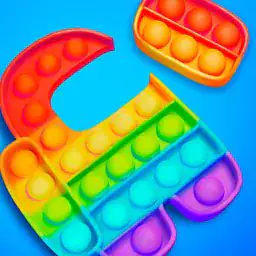
Pop It! Nums is one of those games that sounds ridiculous until you try it and suddenly an hour's gone. You've got this colorful fidget board on screen, those silicone poppers everyone had a phase with, but instead of just making noise each bubble has a number in it. The game shows you a target digit, and you have to pop only the bubbles with that number, nothing else. Touch the wrong one and it's game over, which adds a nice little tension to something that feels calming at first. The visual style is bright and toy-like, almost like someone dropped a stress toy into a math worksheet. There are 20 levels and they do get trickier, mixing in more numbers, bigger boards, and faster target changes. What it actually feels like is that satisfying pop sensation mixed with a memory game where you can't hesitate too long. I found myself getting hooked because it's low commitment but demanding in small bursts. The vibe is chill but focused, like a puzzle you can play while listening to a podcast. Anyone who likes those brain training apps or just enjoys popping things on screen would get into this. It's not deep, it's not trying to be, but it's weirdly addictive once you start chasing perfect clears.
About Pop It! Nums
Pop It! Nums is a fidget popper game that makes you do math, which sounds weird but works. You get a board full of those silicone bubble popper circles, each with a number printed on it. The goal is to pop only the numbers that match whatever the level tells you -- like "pop all the 5s" or "pop numbers greater than 3." It starts simple: a board with mostly 1s and 2s, and you just tap the matching ones. Your finger clicks each bubble, and they make this satisfying little pop sound and flatten out. Miss one and you fail the level, so you have to be careful.
As you get into it, the boards get bigger and the numbers get mixed up more. You'll see level names like "Prime Time" where you only pop prime numbers, or "Even Stevens" for even digits only. Around level 5, they throw in timer challenges -- you have 30 seconds to clear the board, which makes your hand move faster and your brain scramble. There's also "Double Trouble" levels where you have to pop two different number sets at the same time, like all 3s and all 7s. The game doesn't tell you this in advance, so you learn by failing once and going "oh, that's what they meant."
Later levels add patterns like "Ascending Order" where you must pop numbers from smallest to largest, which really messes with your rhythm because you can't just tap randomly. One level called "Color Coded" changes the bubble colors to match number ranges -- red for 1-3, blue for 4-6, yellow for 7-9 -- so you're using visual cues too. The hardest ones mix all these mechanics: timers, specific digits, order restrictions, and color rules all at once. You'll fail a lot on level 17 or 18, but each retry teaches you to scan the board faster.
The satisfying moments come when you pop a whole row of matching numbers in a quick sequence, and the bubbles make a rapid popping sound like bubble wrap. The game also gives you a star rating per level based on speed and accuracy -- three stars means you popped everything without mistakes under a certain time. There's no upgrade system, just levels that get harder. No power-ups or coins to collect. It's pure pop-it action with a math brainteaser layered on top. You use a mouse or touch to tap each bubble, and the feedback is immediate: wrong pop ends the level instantly with a buzz sound, right pop gives a cheerful little ding. The boards are colorful, mostly pastel pinks, blues, greens, and yellows, so it looks like a toy. For some reason this works really well for short play sessions -- five minutes here, ten there -- because each level takes maybe 30 seconds to a minute once you know what to do. Difficulty ramps up fast though, so you won't breeze through all 20 in one sitting 💥.
Tips & Tricks
The first few levels are easy, but around level 8 the game starts throwing in numbers that look almost identical to the target, like a 6 and a 9. I lost a run because I popped the wrong one without double-checking--so take that half-second to confirm. Red numbers are traps; they look urgent but popping them ends your streak instantly, and the game doesn't warn you about this until you mess up a level. One mistake I kept making was rushing on the bigger boards, where the target digit is small and in a corner--slow down on those, because the timer isn't as strict as you think. The vibration feedback when you pop a wrong number is subtle, so turn up your device's haptics if possible--it saved me on later levels where I couldn't always see the screen clearly. I found that focusing on one row at a time works better than scanning the whole board randomly, especially when the board is cluttered with similar digits. Also, if you're stuck on a level for a while, try taking a break--returning with fresh eyes helped me spot patterns I was missing. Finally, don't ignore the background color changes; some levels use low contrast to hide the target number, which is annoying but learnable.


















Comments
Please login to leave a comment.