Scan to play on mobile
Pop Lab
How to Play
Game Overview
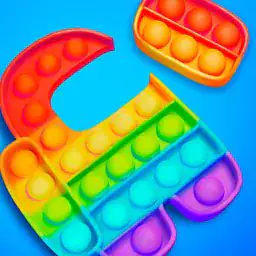
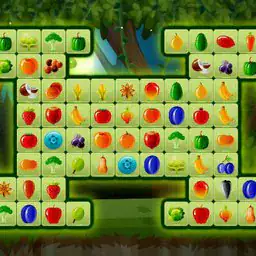
Pop Lab is one of those puzzle games that feels like it was designed by someone who really loves bubbles and bright colors. You're basically in this weird, cheerful laboratory where everything is made of these glossy, candy-like blocks. The visual style is super clean and almost toy-like, which gives it a relaxing vibe even when the puzzles get tricky. Each level has a specific goal--maybe you need to clear all the red blocks, or connect a certain number of yellow ones. The mechanic is simple: you click on groups of same-colored blocks to pop them, and they need to be connected. But the challenge comes from the layouts and special blocks that act differently. Some blocks are locked and need a key block popped nearby, others are like bombs that clear a whole area. The game doesn't explain much, so you learn by messing up. That's actually fine because the levels are short and restarting is instant. The soundtrack is this chill, lo-fi beat that keeps you in a flow state. Who would get hooked? Honestly, anyone who liked games like Bejeweled or Puzzle Bobble but wants something with more strategy than just matching. It's perfect for killing time on a commute or winding down before bed. The difficulty ramps up gradually, but there are some real head-scratchers later on that make you stop and plan. It never feels unfair, just demanding. The sense of progression is nice too--clearing a stage unlocks new areas in the lab, which are just different colored themes but it's satisfying.
About Pop Lab
Pop Lab is one of those arcade puzzle games that starts simple and then sneaks up on you. You control a little lab assistant character using the keyboard -- arrow keys to move, spacebar to interact with things. The core loop is straightforward: each level has a goal, like collecting a certain number of colored blocks or reaching a specific switch, and you have to figure out the order of actions to pull it off. Blocks appear when you solve mini-puzzles within the level -- matching patterns, pushing boxes onto pressure plates, or hitting targets with projectiles. Your hands are busy tapping directions and timing jumps, while your brain is mapping out the sequence.
The satisfying part comes when you chain together actions. Say you roll a block onto a button that opens a door, then you dash through before it closes, grab a key, and that unlocks a dispenser for more blocks. The game calls these sequences "reactions" and they get longer as you progress. Early levels like "Test Tube Tumble" teach you basic movement and block pushing. By the time you hit "Catalyst Cascade," you're juggling three different colored switches, moving platforms, and enemies that follow patterns. The enemies aren't smart -- they just patrol or chase if you're near -- but they force you to plan routes.
New mechanics show up around every ten levels. There's the "Gel Pads" that bounce you to higher platforms, "Vacuum Nodes" that suck in blocks from across the room, and "Phase Shifts" that make certain objects intangible for a few seconds. The difficulty builds unevenly -- some levels are a breeze, then one will stump you for twenty minutes because you forgot about a hidden block dispenser. The game doesn't hold your hand much past the first world.
Your progress unlocks new areas in the hub, which is this weird lab with rooms named things like "The Centrifuge" and "The Spectrometer." Each area has its own visual theme -- the Cryo Lab is all blues and ice textures, the Pyro Lab glows orange with heat. There's no upgrade system, really, just new tools per level. The satisfying moments are when you solve a puzzle in one smooth run after failing ten times, watching everything click into place. The blocks clink as they stack, the doors hiss open, and the level complete jingle plays. It's clean and direct 🔍.
Later levels introduce timing-based puzzles where you have to activate switches in rhythm with moving platforms. The game calls these "Sync Trials" and they're brutal. One level, "Resonance Rift," took me over an hour because the timing window is tiny and one mistake resets the whole sequence. But beating it felt great.
Tips & Tricks
Don''t just grab blocks in the order they appear -- that''s a trap. The game rewards you for clearing patterns in a sequence that chains reactions, and I wasted a lot of moves before realizing that. Look at the whole board before touching anything; sometimes a single block in the corner will unlock everything if you pop its neighbors first. I kept failing a level until I noticed that certain colors only appear after you move a specific tile -- that''s a hint, not a decoration. The timer is generous, so stop rushing. One mistake I made repeatedly was ignoring the edges -- blocks on the border can''t be swapped into dead ends, so keep them for later. Also, the lab''s secret rooms aren''t random; they appear when you clear a puzzle without using a hint, which is a pain but worth it for the extra stars. If you''re stuck, try the opposite of what you think -- I once solved a level by matching colors I thought were useless. Pop Lab''s logic is sneaky, so expect the unexpected. Last thing: don''t hoard power-ups, they stack, but using them early often breaks tough spots. This game loves to punish overthinking, so trust your gut after a quick scan.











Comments
Please login to leave a comment.