Scan to play on mobile
Raft World
How to Play
Game Overview
So you start on a tiny little raft in the middle of nowhere, just you and a hook to grab floating junk. The water is this endless blue that goes on forever, and there's a weird mix of calm and dread because something could pop up at any time. The visual style is pretty straightforward -- bright colors during the day, but the nights get dark and the sharks get active, which actually makes you paranoid about falling in. You spend a lot of time just sorting through debris, catching fish, and trying not to die of thirst while you figure out what to build first. The crafting system makes you actually think about space management because your raft starts so small. I found myself constantly rearranging things, trying to fit a grill next to a water purifier without tripping over everything. It feels like a survival game where the tension comes from resource scarcity and the ocean itself, not from some big bad boss chasing you. The vibe is lonely but in a good way -- like you're this tiny speck figuring things out with no help. People who like games where you build something from nothing and manage resources carefully will get hooked. It's not about flashy action; it's about that slow grind of turning garbage into a floating home, and that satisfaction when you finally get a decent setup going.
About Raft World
So you start on a tiny raft, just a few planks of wood floating in an endless blue ocean. The first thing you notice is that you're hungry and thirsty, so you're immediately grabbing plastic, scrap, and palm leaves floating by. You build a simple purifier and a grill, and that's your first real loop: grab junk, turn it into water and food, survive another day. But the raft itself is just a square at first. You hammer down foundations to make it bigger, and that's where the building part clicks. You place a sail to move, an anchor to stop, and a net to catch more stuff automatically. It feels good when your raft starts sailing on its own while you cook or craft.
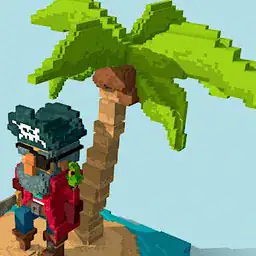
The difficulty ramps up in stages. Around day five or six, the shark shows up. Bruce, they call him. He'll circle and smash your foundations if you don't patch them quick. You learn to build reinforced armor on the outer edges, and that changes everything. Later, islands appear--small sandy ones with palm trees and rocks. You swim to them with a hook, grab clay, sand, and metal ore. But the shark is still there, so you have to time your dives. That tension is real.
Mid-game introduces the receiver and antenna system. You build three antennas on your raft, each at a certain height, and the receiver shows blue dots on a screen. Those are story locations: a radio tower, an abandoned ship, a city of skyscrapers underwater. Each one has new blueprints--like the engine, the steering wheel, or the advanced grill. The engine is a big moment because now you can sail against the wind. No more drifting. You manage fuel from honey and potatoes, and that becomes a new resource loop.
Later enemies include the warthog and the giant rat that charge at you. You get a bow and arrows, then a metal spear. Fighting feels clunky but satisfying when you finally take down a boar for its hide. The satisfying moments are when you automate things: sprinklers water your crops, the battery charger runs from wind turbines, and your raft becomes a massive floating base with rooms, stairs, and plants growing in pots. You can even paint walls. It's not a story game--you just keep sailing, upgrading, and surviving. The ending is there if you follow the receiver signals, but most people just build forever. That's the real draw.
Tips & Tricks
Early on, that plastic isn't just for building -- you'll need a ton for smelting metals later. I spent hours thinking I was hoarding smartly, then hit a wall when my furnace sat idle. Anchor your raft when you see a big island; drifting past rare resources because the current caught you off guard is a pain nobody warns you about. The shark's annoying, but killing it once gives a brief window to gather underwater without panic -- just watch your oxygen meter, which I definitely forgot. Don't bother upgrading the sail past the first tier until you've got a grill and a water purifier; staying alive beats speed every time. Researching scrap into bolts felt wasteful initially, but those bolts unlock the advanced smelter, which is a game-changer for making metal bars faster. One trick that clicked for me: you can stack multiple small chests on a single foundation tile, saving space for more important stuff like the engine. Oh, and that seagull dropping feathers? Use them for arrows early -- they're lighter than metal for hunting boars on islands. Finally, if you're stuck on finding the receiver parts, check every floating barrel near the bigger wreckages -- they're easy to miss but always spawn there.













Comments
Please login to leave a comment.