Scan to play on mobile
Road Racer
How to Play
Game Overview
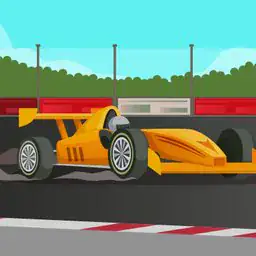
Road Racer is one of those arcade racing games that feels like it was ripped straight out of a late-90s arcade cabinet, but in a good way. You're in a sporty car, and you're on a highway that just keeps going, with traffic coming at you from all sides. The visual style is all bright colors and flat, angular cars--kind of like a pop art version of a traffic jam. There's no story, no pit stops, just you and the road. What gets me is how simple it starts: you're dodging a few cars, feeling like a hotshot. Then three minutes later, you're white-knuckling the controller because there's a wall of cars ahead and a turn that comes out of nowhere. The game doesn't ease you into anything. It just keeps adding more cars, faster speeds, and tighter curves until your brain is basically on fire. The controls are twitchy in a way that feels deliberate--tap the stick too hard and you're spinning out, but feather it just right and you're weaving through gaps that look impossible. There's no brake button for some reason, which is annoying at first, but you learn to let off the gas and use the momentum. The vibe is pure adrenaline, but also a little frustrating because you'll crash a lot. Who would get hooked? People who like games where you can blame yourself for every mistake, not the game. If you liked old OutRun or any of those 'just one more try' arcade racers, this is your jam. It's not deep, but it's honest.
About Road Racer
Road Racer isn't about story or flashy cutscenes -- it's about that moment when traffic parts like the Red Sea and you thread the needle at 180 mph. The core loop is simple: pick a car, hit the highway, and survive as long as you can while beating your personal best distance. Your left thumb steers, right thumb handles accelerate and brake, and the triggers let you do a quick lane shift -- it's your only dodge move. That lane shift is crucial because once you're past the first couple minutes, the road gets packed with four types of enemies: the Granny (slow, unpredictable swerve), the Hauler (a semi that takes up two lanes and spawns traffic behind it), the Racer (a rival that speeds up and tries to box you in), and the Drifter (spins out sideways without warning). Difficulty builds in waves -- every 30 seconds you hit a new Zone, and each Zone adds a new bad habit to the traffic. Zone 3 introduces the Drifter, Zone 5 doubles the Granny count, Zone 7 makes the road narrower with barriers on both sides. Your car handles worse as you take damage -- a cracked windshield blurs your view, a busted tire makes steering sluggish. The satisfying moments come from chain Near Misses -- passing a car with inches to spare fills your Boost meter. Full boost lets you activate Nitro for a few seconds of invincibility and speed, which is great for clearing a jam but also risky because you can't steer as sharply. Between runs you spend points on upgrades: better tires, a reinforced frame, or a turbo that charges faster. There's no cash shop -- you earn everything by driving clean. Later levels like Midnight Run and Rush Hour change the lighting and traffic patterns -- Midnight Run has headlights that blind you if you ride too close to oncoming cars. The game never stops throwing new curveballs, and your best run might end because you blinked at the wrong moment. That's the hook.
Tips & Tricks
Early on, I kept slamming into the same red sports car that weaves across lanes. The trick is to tap the brake just before they cut over -- it triggers a slight slowdown that lets them pass cleanly, and you can accelerate through the gap they leave. Sound cues matter more than you'd think: that rising engine pitch means a pack of three cars is about to appear around the next curve, so ease off the gas and prepare to dodge. I wasted too many runs trying to drift through sharp turns, but the game actually punishes that. Instead, just lift off the accelerator for a moment and steer -- the car handles the corner without losing speed. Don't bother with the nitrous boost on the first few tracks; it's a trap. Save it for the highway sections with long straightaways, because using it during traffic-heavy segments just makes you crash harder. The rearview mirror is useless at high speeds, but glancing at it during brief straight stretches can reveal which rival is about to pull alongside and ram you. One thing that clicked late: the best line through any turn is actually wider than you expect -- hugging the inside wall clips your bumper and costs time. Finally, when the screen starts flashing red, that's not just visual flair. It means your tires are losing grip, so let off the accelerator until the flash stops, otherwise you'll spin out on the next bend.



















Comments
Please login to leave a comment.