Scan to play on mobile
Short backgammon
How to Play
Game Overview
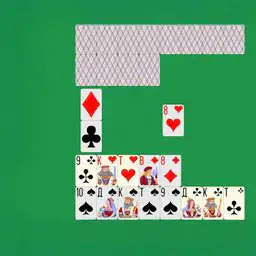
Short backgammon is basically the classic board game stripped down to its most tense, fast-paced version. I played it on a dark wooden board with cream and burgundy chips, and the pieces click satisfyingly when you move them. The whole feel is like sitting in a quiet cafe with a friend, just staring at the dice and plotting your next move. It's not flashy--no animations or flashy effects--just clean lines and a lot of brain work. The game is about racing your fifteen chips around the board into your home quadrant while trying to block the other player. Dice rolls decide your move options, but the strategy comes from choosing which chip to move and whether to play aggressive or play safe. Sometimes you'll get a double roll and suddenly you're flying across the board. Other times you'll leave a chip alone and watch your opponent smash it back to the start, which is annoying but keeps things intense. The vibe is calm but competitive--there's no timer, so it feels deliberate. People who like chess or checkers but want something with more randomness will get hooked. Also anyone who enjoys casual tabletop games with a friend on a lazy afternoon. It's old-school but not outdated--it just works.
About Short backgammon
Short backgammon is a two-player board game where you and an opponent race to get all your checkers off the board first. You start with fifteen checkers placed on specific points, and each turn you roll a pair of dice. The numbers tell you how many points you can move your checkers, but you can't just move anywhere--each move goes from higher-numbered points to lower ones, and you can only land on a point if it's open, meaning it has zero or one of your opponent's checkers on it. If a point has two or more enemy checkers, it's blocked. This is where the tension starts, because blocking key points can trap your opponent's pieces, forcing them to waste turns.
Your hands are clicking or tapping checkers to move them, but your brain is constantly calculating odds and risk. Every dice roll forces a decision: do you play aggressively, hitting your opponent's lone checkers and sending them back to the start, or do you play safe, building walls of two or more checkers to slow them down? The double rule kicks in when you roll doubles--say double 4s--giving you four moves of 4 instead of two, which can be a huge swing if used well.
Difficulty builds as the game progresses. Early on, you're mostly trying to avoid getting hit and building your own position. Mid-game, you might start a blitz, aiming to hit multiple exposed enemy checkers. Late game, it's about bearing off--removing checkers from the board once all fifteen are in your home board. That moment when you finally roll the exact number to take the last checker off? It's satisfying because every move mattered, and luck had a hand but not the whole story.
There aren't level names or enemies here--it's pure backgammon, so the only mechanics are movement, hitting, blocking, and bearing off. The real depth comes from the doubling cube, which isn't in the basic rules but shows up in standard play. It lets you offer to double the stakes mid-game, adding a layer of psychological warfare. Your opponent can accept or resign. If they resign, you win early. If they accept, the game gets twice as intense. Some matches are over in five minutes, others drag out for twenty because every roll feels critical.
The satisfying moments aren't just winning--they're pulling off a last-second hit that sends your opponent's checker back, or rolling a double that clears your home board in one turn. The game doesn't hold your hand; it just gives you two dice, fifteen checkers, and an opponent. You figure out the rest.
Tips & Tricks
Early on, I kept trying to build a wall of checkers on my home board before anything else. That's a trap. You'll leave your back checkers stranded and vulnerable. Instead, focus on making your own board safe first--blocking points that matter. A common mistake is moving your back checkers too quickly. Sometimes it's smarter to leave one sitting on the opponent's one-point to slow them down. That single checker can be a real pain for the other player, forcing them to waste rolls hitting it or leaving gaps. Doubles are gold, but don't waste them. When you roll double sixes, sure, you can move four checkers forward, but consider using two to hit an opponent's blot if there's a chance. That aggressive play can shift the whole game. The doubling cube is your friend, not a toy. I used to ignore it until I was already way behind. Offer it when you have a clear advantage--like after you've secured your home board and have checkers in position. It pressures the opponent into risky decisions. Another trick that clicked: watch your opponent's blots like a hawk. If they leave a single checker exposed, don't always hit it. Sometimes leaving it there makes them waste future moves fixing it. But if hitting opens a path to your own security, go for it. Finally, don't rush the bear-off. Throwing checkers off too fast can leave you with gaps and bad timing. Plan which checkers to remove first based on future dice rolls. Patience pays off.






Comments
Please login to leave a comment.