Scan to play on mobile
The Lost Joystick
How to Play
Game Overview
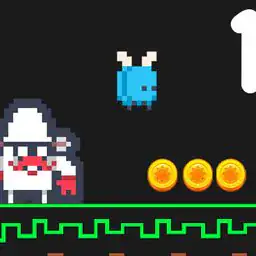
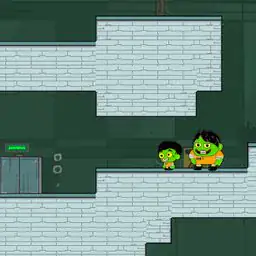
So I spent a weekend with The Lost Joystick, and it''s exactly as dumb and fun as it sounds. The premise is that some pixelated punks stole your arcade joystick, so you chase them through this trippy, neon-drenched world that looks like a fever dream from 1988. The art style is all chunky sprites and colors that hurt your eyes in a good way--everything glitches and warps as you move, which fits the whole retro-revenge vibe. Levels are these maze-like platforms with coins scattered everywhere, keys hidden behind fake walls, and enemies that range from bouncing eyeballs to weird snakes that pop out of nowhere. It''s not a hard game once you get the timing down, but the traps are mean--spikes blend into backgrounds, moving platforms have fake safe spots, and sometimes the floor just vanishes. What got me hooked was the pacing; you''re never stuck for long because checkpoints are generous, but you''ll die a lot trying to grab that one coin on a ledge over a pit. The music is this chiptune soundtrack that''s surprisingly catchy, though after an hour it starts drilling into your skull. Who''d like this? Anyone who grew up on NES platformers or enjoys a quick challenge without grinding. It''s not deep or emotional--it''s just running, jumping, and cursing at floating platforms. The joystick revenge plot is silly, but that''s the point.
About The Lost Joystick
So you''re after your joystick. The Lost Joystick starts you in a neon-drenched world called Pixelglade, which looks like someone spilled a 90s arcade cabinet. You play as Joystick Jones--yeah, that''s the name--who''s basically a pixelated action hero with a permanent scowl. Your hands are on WASD: W to jump, A and D to move, and S does nothing useful until later. The loop is simple at first: run right, jump over gaps, collect shiny coins that float in patterns. Coins unlock keys, keys open gates. There''s no handholding, which is fine because the first level, "First Byte," is a joke. You''ll clear it in thirty seconds and think you''re hot stuff.
Then comes "Glitch Gulch" and the difficulty spike hits like a brick. Platforms flicker in and out of existence. You''ll die to disappearing floors a lot. The game introduces "Void Spinners" here--spiky tops that chase you if you stand still. You learn fast: never stop moving. Your brain''s job is to map jump arcs and time those vanishing blocks. Later, around world three, "The Circuit," you get the "Charge Boots" upgrade. Hold S for a second, then release to do a ground slam that breaks cracked tiles and stuns enemies. That changes everything. Now you''re scanning floors for cracks, planning slams, and intentionally baiting enemies into stunned positions so you can bounce over them.
Enemies get weirder. "Byte Bats" hang from ceilings and drop on you. "Syntax Serpents" snake along walls and require you to jump over their heads at an angle. There''s a boss in "Neon Nexus"--a giant corrupted arcade cabinet called "The Overlord" that shoots patterns of bullets shaped like old game sprites. You have to slam the floor to break its shield, then jump on its head three times. It took me twelve tries.
Satisfying moments? Finding a secret room in "Retro Rift" that gives you a permanent coin magnet for two levels. Or chaining a ground slam into a triple jump over a pit of "Glitch Spikes"--the game doesn''t tell you that works, but it does. The difficulty doesn''t just climb; it twists. One level, "Pulse Pathway," has moving walls that force you to jump in rhythm with a soundtrack that speeds up as you go. Miss a beat, you''re crushed. Later upgrades include "Spring Heels" for higher jumps and "Phase Boots" that let you walk through certain colored walls for about two seconds. The game never explains the timing well, so you just trial-and-error it.
There''s no health system--one hit and you''re back to the last checkpoint. This means frustration, but also focus. You''ll memorize enemy spawns and platform patterns like it''s your job. The final world, "The Server Room," throws everything at you at once: moving platforms, constant enemies, disappearing floors, and a timer for each key. It''s mean. But when you finally grab that joystick from the final boss--a smug pixelated fox called "The Scrambler"--the game just ends. No credits, just a screen that says "Now what?" and a new mode called "Insanity" unlocks. That''s where the real challenge starts.
Tips & Tricks
The glitching platforms aren't random -- they follow a pattern. Watch for the brief flash before they disappear, that's your cue to jump. I died at least ten times before I noticed. Hidden coins often mark the location of a key, so if you see a coin floating in a weird spot, check the surrounding walls for a hidden door. The monsters have predictable paths, but the ones that shoot projectiles only fire when you're directly in their line of sight. Hug a wall and they'll ignore you. There's a trick with the jump mechanic: holding the jump button gives you a tiny bit of extra airtime, which matters for those gaps that seem just out of reach. I spent an hour on one jump before figuring that out. Pause often in the later levels -- the background has visual clues for secret passages that change color for a second. Miss it and you'll be hunting blind. The thieves' hideout has a fake wall on the second screen from the left; it's obvious once you know, but I wasted two hours searching everywhere else. Also, don't hoard extra lives. Use them to test risky jumps because checkpoints are rare after world three. One more thing: the final boss has a tell -- a slight twitch before his attack pattern shifts. Watch his left eye, not his whole body.
















Comments
Please login to leave a comment.