Scan to play on mobile
Tile 2 match
How to Play
Game Overview
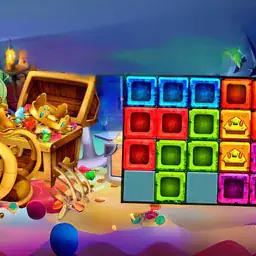
Tile 2 Match is one of those puzzle games that looks simple at first glance but gets your brain working in unexpected ways. The idea is that you've got a board full of colorful tiles -- they're these bright, chunky squares with different patterns on them, kind of like a mix between dominoes and geometric art. You tap a tile to select it, then find its matching pair somewhere on the board. What makes it tricky is that tiles can be blocked by others or locked behind obstacles, so you can't just mindlessly tap away. The visual style is clean and modern, with a lot of neon colors against dark backgrounds -- it feels like playing inside a retro arcade machine but with a polished touch. Playing it feels like a mix of relaxation and panic. In timed mode, the clock ticks down and the pressure builds fast, which is great if you like speed challenges. But there's also an endless mode where you can just sit back and think things through, which I actually prefer. The sound effects are satisfying little pops and clicks when you make a match, nothing too flashy. Who would get hooked on this? Honestly, anyone who likes games like Bejeweled or Two Dots but wants something that feels a bit more tactical. It's not just about speed -- you've got to plan your moves ahead, especially in later levels where the board is a mess of overlapping tiles. The difficulty ramps up gradually, so you never feel like you hit a wall too early. I've lost a few hours to this without even noticing.
About Tile 2 match
So Tile 2 Match is a matching game, but not the kind where you just tap two identical pictures and call it a day. The board is full of colorful tiles -- circles, squares, stars, some with patterns -- and your job is to connect pairs that are identical. Here''s the twist: you can only match tiles if there''s a clear path between them. That path can''t have more than three straight lines, and it can''t pass through other tiles. So your brain is constantly scanning for routes, checking if the gap between two tiles is open. It starts simple -- four by four grids, maybe one obstacle like a blocked tile you have to clear first. By level 20, you''re on seven by seven boards with walls, locked tiles that need a key tile matched nearby, and teleport nodes that warp your path. The game calls these "Warp Corners" and "Ice Blocks" -- ice blocks freeze a row until you match two adjacent fire tiles. Annoying but satisfying to break.
Your hands are just tapping tiles -- tap one to select it, it glows, then tap the second tile you think is a valid match. If the path is clear, both tiles vanish with a little chime and a quick flash. If not, the game shakes the tile and you lose a few seconds in timed mode. The loop is: scan the board for the easiest pair, tap them, new tiles cascade down from the top to fill gaps, then you repeat until the board is empty. Sometimes new tiles come with patterns that force you to rethink your path -- a "Mirror Tile" flips your path direction, which messes with your muscle memory. The satisfying moment is when you chain matches in a row -- four or five pairs in under ten seconds -- and the board clears with a burst of particles. There''s no upgrade system, but levels have names like "Portal Panic" and "Frozen Falls" that hint at the gimmick. Difficulty ramps up by adding more tile types -- you start with four colors, later there are eight, plus striped and dotted variants. The clock in timed mode starts at 90 seconds and shrinks to 45 by world three. Endless mode just throws random layouts with increasing tile density, no timer, but your score multiplier drops if you stop matching. The sound effects are a soft pop for each match and a louder ping when you clear a full row. One thing that bugs me: sometimes a tile gets stuck behind an ice block and you have to match a fire tile from across the board, which feels like a U-turn in your thinking. Not every level is fair, but that''s part of it.
Tips & Tricks
Don't just tap tiles randomly--plan your pair before you start. Early on I kept losing because I'd grab a tile without spotting its match first, then the board shifted and I was stuck. Look for tiles that are isolated or on the edges; clearing those first often opens up cascading matches. The timer in timed mode is brutal, but pausing for a split second to scan the whole board actually saves time in the long run. I learned that the hard way rushing through level 47. Some obstacles like lock tiles require a specific order--you can't just smash through them. Focus on unlocking those before hunting pairs near them, or you'll waste moves. There's a trick with the shuffle button: don't use it immediately when you're stuck. Wait until you've mentally mapped every possible pair, because reshuffling mid-thought can kill your rhythm. Also, the game's hint system is generous but using it too often costs points in score-based levels. Save it for when you're genuinely clueless, not just impatient. One thing that clicked for me around level 80: color grouping matters more than shape grouping sometimes. On crowded boards, matching two same-colored tiles that are far apart is often safer than forcing a shape match that risks blocking future moves. Finally, don't ignore the sound effects--a distinct chime plays when a tile is about to lock into place, which gives you a fraction of a second to change your mind. That saved me from at least a dozen mis-taps.









Comments
Please login to leave a comment.