Scan to play on mobile
Austrian domino duel
How to Play
Game Overview
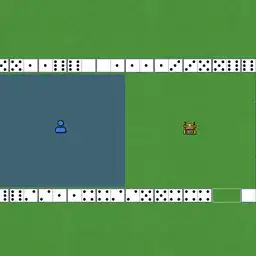
So, Austrian Domino Duel is basically a digital version of this old Vienna coffeehouse game that's nothing like the dominoes you're used to. You get a 36-chip set from a double-eight game, and it's all about blocking and outsmarting your opponent. The setting is these cozy, dim-lit Viennese cafes with marble tables and that old-world vibe, and the visual style is clean but warm--think browns and golds, like looking at a vintage photograph. What's it feel like? It's slower than you'd expect, more strategic. You're not just matching numbers; you're counting, planning, and trying to force the other player into picking from the bazaar until it's empty. The AI is pretty decent for practice, but the real fun is playing against a friend. You can set winning scores like 50 or 100 points, and rounds can end quick or drag on if someone's stuck. Who'd get hooked? Anyone who likes games with a bit of history and a lot of thinking--like cribbage or backgammon players. It's not flashy or fast, but there's a nice tension when you're one move away from winning and the opponent grabs a tile from the bazaar. The sound of the tiles clicking is satisfying too. Honestly, it feels like a real coffeehouse game, just on a screen.
About Austrian domino duel
So you're sitting across from someone -- or an AI -- in a Viennese coffeehouse setup, and the game's got this nice warm color palette that feels like old wood and dim lamps. Austrian Domino Duel isn't your regular domino game where you just match pips. The big difference is the set: 36 chips derived from a double-eight game, so you've got tiles with numbers from 0 to 8, but not all combinations exist. You start each round with 10 dice in your hand -- that's a lot to keep track of. The bazaar in the middle is where you draw from if you're stuck.
First round, whoever has the highest double (like 6-6 or 8-8) leads off. After that, the winner of the previous round starts. Your first move can be any tile, which is nice flexibility. Then you take turns slapping down tiles that match one of the open ends. The satisfying click sound when you place a tile feels good. The real thinking happens when you're trying to block your opponent from playing -- you watch what numbers they're picking from the bazaar, and you try to make both ends show numbers you know they don't have. If you can't play, you draw from the bazaar until you can or until it's empty. That part gets tense because the bazaar shrinks fast in a 2-player game.
Scoring is neat: the round ends when someone empties their hand. That player gets points equal to the sum of all the opponent's remaining dice. So you're not just trying to finish first; you want to saddle them with high-number tiles. The game goes multiple rounds until someone hits a target score you set before starting -- options are 50, 70, 100, or 120. Against the AI, the difficulty scales with three levels: 'Kaffeehaus Novice' barely puts up a fight, 'Meister' actually blocks and plays defensively, and 'Grossmeister' is brutal -- it seems to remember what tiles you've drawn and predicts your hand. Online multiplayer is simple but functional; no lag issues I noticed.
The most satisfying moment is when you set up a double-sided trap -- both ends showing the same number you have three of in your hand, so your opponent has to keep drawing. Also, the game tracks your win streak, which becomes a personal challenge. There's no upgrade system or levels to unlock, which is fine because the core loop is pure strategy. The only real frustration is that the AI on higher difficulties sometimes takes a second longer to think, which breaks the rhythm.
Tips & Tricks
Don't gamble on the bazaar too early. I once grabbed bones hoping for a perfect match and ended up stuck with a high-score hand that cost me the round. Hold out if you can play from what you've got. The opening move matters more than you think. Playing a high-value chip like a double-six first can backfire if your opponent has matching tiles and you're forced to draw later. Sometimes leading with a mid-range chip keeps your options open. Watch what your opponent picks from the bazaar. If they're grabbing tiles repeatedly, they might be fishing for specific numbers, so block those ends if you can. I learned the hard way that leaving a 5-end open when they've picked three 5s is asking for trouble. Scoring isn't just about going out first. A round where you dump all your low-score tiles early but leave yourself with a heavy double can still lose you points if the opponent finishes. Plan your hand to shed high points first, even if it means breaking a chain. The 36-chip set changes things from normal dominoes. There are fewer duplicates, so once a number is played out, that end is dead. Count played tiles in your head -- it's dry but it works. I kept losing until I started mentally tracking which numbers were gone. The bazaar can be your enemy. If you're forced to draw with two tiles left and both match nothing, you're handing your opponent momentum. Sometimes passing is smarter than drawing, especially near the end of a round when the bazaar is thin. Winning a round gives you first move next round, which is huge. Use that advantage to set a slow pace with numbers you control, not the ones your opponent likes.












Comments
Please login to leave a comment.