Scan to play on mobile
Biome Conquest
How to Play
Game Overview
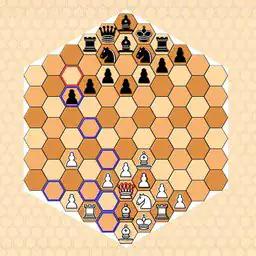
Biome Conquest is basically a digital board game where you and another player fight over a grid by dropping down environment tiles. The visual style is clean and colorful, like a nature documentary mixed with a minimalist strategy map. You pick from a hand of tiles--volcanoes, forests, mountains, deserts--each with a number that shows its strength. To take over an enemy's tile, you place a higher-numbered tile next to it, and the old one flips to your color. It sounds simple, but the trick is that every placement also changes the board's layout, opening or blocking paths for your opponent. The vibe is more thoughtful than frantic--you're constantly scanning the board, counting numbers, trying to predict where they'll strike next. Playing against a friend is where this game really shines; you'll both be trash-talking and second-guessing each other's moves. The AI opponents are okay for practice but feel a bit predictable after a few rounds. Who'd get hooked? Strategy fans who like short, punchy matches, or anyone who enjoys games like Splendor or Hive but wants something with a nature twist. The game doesn't overstay its welcome--rounds take maybe 15 minutes--and there's a satisfying tension as the board fills up and your options shrink. It's not groundbreaking, but it's solid, and the tile-flipping mechanic feels genuinely clever once you get the hang of it.
About Biome Conquest
So you pick a map -- something like 'Volcanic Rift' or 'Frozen Tundra' -- and it''s this grid of territories, each one owned by you, the AI, or neutral. You get a hand of biome tiles: Forest (strength 3), Desert (4), Tundra (5), Volcanic (7), Mountain (9). These numbers aren''t just for show -- they''re how you capture stuff. Place a tile next to an enemy territory that has a lower number, and that territory flips to your color. But if you put down a 5 next to their 7, nothing happens. You have to think ahead.
The core loop is simple: you draw tiles, you place tiles, you try to surround enemy territories or cut off their expansion. The satisfying moment is when you chain captures -- drop a Volcanic (7) next to three enemy tiles that are all 5s or lower, and you flip them all at once. That crunch sound and the territory flashing feels great. But the AI isn't stupid. On Easy, they just place randomly. On Normal, they start targeting your weak spots. On Hard, they set up traps -- like leaving a low-value tile exposed to bait you into a position where they can surround your high-value tile on the next turn.
Later maps introduce obstacles -- like 'Crystal Caverns' has impassable crystal walls that split the battlefield, forcing you to pick a side. 'Corrupted Marsh' has tiles that randomly swap numbers every few turns, which is chaos and I hate it but also love it. There''s an upgrade system where you earn points after each match to boost your starting hand -- like giving all your Desert tiles a +1, or letting you see one extra tile in your draw pile. Some upgrades are specific to biome types, so you can lean into a Volcanic rush strategy or a slow Mountain wall build.
The AI opponents have names like 'General Frost' who plays defensively, or 'Ember' who spams high-number tiles early and tries to overwhelm you. Playing against a friend is where the real mind games happen -- you can bluff by pretending to go for one side of the map while actually setting up a pincer move. The difficulty builds gradually because the AI learns from your patterns on harder settings, and the map variety keeps you from relying on one trick. It''s not a game you master in one sitting.
Tips & Tricks
Start with the Volcanic tiles if you can grab them early. Their high numbers let you swallow weak enemy tiles fast, but they leave you exposed because they don't add defense. I learned this the hard way--placed one on a flank, and the AI just rolled two Mountains around it next turn. That stung. Don't get tunnel vision on expanding. I spent whole games chasing territory only to realize the opponent was quietly stacking numbers in a corner, then they took half my board in one move. Watch for those clusters. The AI loves to bait you into spreading thin. If you see three tiles of theirs with low numbers but surrounded by empty space, it's a trap. They'll counter with a high card and snatch your new tile back. Play tight and keep your numbers high near your borders. Another thing: the turn order matters more than I thought. Going second lets you react, but going first means you set the pace. If you're first, force fights early--don't let them build a wall. Finally, the Mountain tiles are your best friends for defense, but they're slow. Use them to lock down a key zone, then let Volcanic or Forest tiles do the attacking. One mistake I kept making was ignoring the edges of the map. Tiles on the edge only have three neighbors to worry about, making them easier to hold. Push your high numbers there and let the opponent waste moves attacking a fortress.



















Comments
Please login to leave a comment.