Scan to play on mobile
Hexagonal chess
How to Play
Game Overview
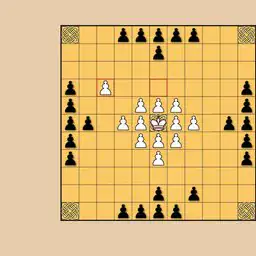
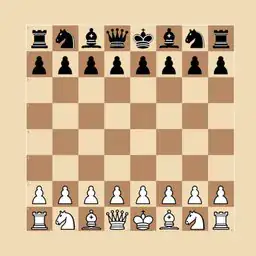
So Hexagonal Chess is basically what happens when someone decides the original game isn't weird enough and slaps a hex grid on it. And honestly, it works way better than it sounds. The board is this big honeycomb of 91 hexagons in three alternating colors, which looks kind of like a futuristic mosaic or something out of a sci-fi tabletop setup. Pieces slide along six directions instead of four, so bishops suddenly have real teeth and knights become these unpredictable little monsters. I spent my first few games just staring at the board like an idiot because every move felt like it opened three more possibilities -- the spatial awareness required is no joke. Visually it's clean and minimal, not flashy, which I actually like because you need to focus on the angles. The vibe is more thinky and meditative than regular chess; there's a slower burn to the tactics because you're constantly recalibrating what a 'diagonal' even means. Who gets hooked? People who've played so much standard chess they can see the matrix and want something that messes with that. Also masochists who enjoy losing to AI because of one dumb pawn move they didn't see coming from five hexes away.
About Hexagonal chess
Hexagonal Chess isn't your grandfather's chess -- it's a whole different animal. The board is this honeycomb of hexagons, 91 of them, and each piece suddenly has six possible directions instead of four. Your brain has to unlearn everything about diagonals and ranks. The first few matches feel like learning to walk again, except you're also getting stomped by the AI because you keep forgetting bishops now have twelve movement lines instead of four. The game gives you six rule variants: Glinsky, Saffron, De Vasa, Bruski, McCooey, and Star. Each one tweaks pawn moves, castling, or piece placement. You're not just playing one game -- you're learning six different flavors of chaos.
You start by picking a variant and a difficulty. The AI has multiple levels, and even the middle ones will punish a lazy opening. Your hands are just clicking or tapping pieces on a hex grid -- the controls are clean, thank goodness. But your brain is on fire trying to visualize attacks from six angles. The satisfying moments come when you finally pull off a fork on an opponent's queen and rook because you exploited the extra adjacency. Or when you castle in De Vasa's variant and it actually saves your king from a weird diagonal pawn rush. In Star Chess, you place your pieces manually behind pawns at the start, which turns the opening into a mini-game of positioning. That variant feels like a totally different game -- no standard openings exist, so you're making up strategy on the fly.
The difficulty builds not just through AI skill, but through rule complexity. Glinsky is the most normal -- you can ease into it. Then Saffron introduces pawns that move diagonally like bishops, which breaks your brain. McCooey makes pawn captures literally copy bishop movement. You start thinking in hexes. Online multiplayer adds real pressure -- facing a human who knows the McCooey pawn tricks is rough. There's also a spectator mode where you can suggest moves to players, which is weirdly fun because you get to kibitz without commitment. The game doesn't hold your hand -- no tutorials, just rules text. You learn by losing, which is how real chess works anyway. The board's three colors help with orientation, but you'll still misclick sometimes. The hex grid makes endgames especially tense -- kings have more escape routes, so checkmate patterns are all different. It's messy and brilliant.
Tips & Tricks
Stick with one rule set at first. Jumping between Glinsky and Star Chess will wreck your spatial sense because pawn moves change completely. I lost five matches in a row before realizing I was still moving pawns diagonally in McCooey when they should go like bishops. The hex grid makes bishop paths tricky -- in Glinsky, that middle bishop is a monster because six directions open up instead of four. Don't ignore pawn structure early; in Saffron, pawns move like bishops, so a chain can lock down huge swaths of the board. I got crushed by an AI that just pushed pawns in a wave. Castling rules vary wildly -- De Vasa allows both short and long, but in Star Chess there's no en passant, which changed my opening entirely. Spectating live games helped more than playing AI because I saw real players exploit the extra hex connections. One trick that clicked: in Bruski, controlling the center hexagon gives your queen insane reach -- it's like owning a highway. Watch out for piece placement in Star Chess; I once put my knights too close to the edge and they became useless. The AI is no joke on higher difficulties, so practice against it with a specific rule set until the hex movement feels natural. Those three-colored squares matter more than you think -- bishops stay on same color, so plan your attacks around that limitation.




Comments
Please login to leave a comment.