Scan to play on mobile
RedPool Legend - 2 Player
How to Play
Game Overview
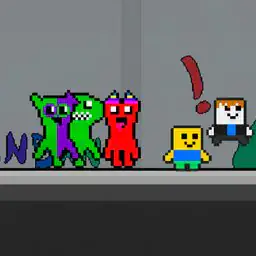
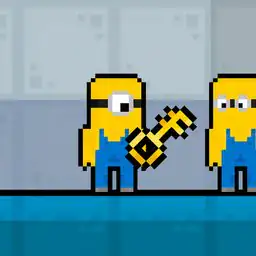
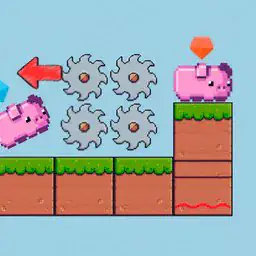
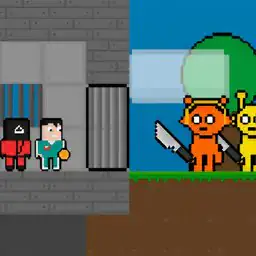
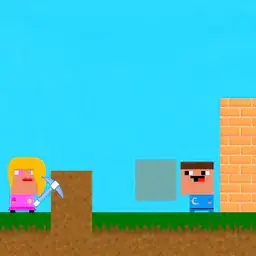
So RedPool Legend is this co-op platformer where you and another person control these two little blob characters, one red and one yellow. They're supposed to be siblings, which is cute. The whole game is about moving through these puzzle-filled levels together. The red character leads and the yellow one has to follow, but if you get separated or one of you falls behind, it's basically game over. You have to collect all the coins in a stage to open up an invisible door that takes you to the next level. The visual style is pretty simple and colorful, like a cartoon from the early 2000s, with bright backgrounds and lots of traps and moving platforms. The vibe is less about action and more about careful coordination. You'll be shouting at your partner a lot, like 'wait for me' or 'jump now,' because the timing has to be perfect. There's a double jump for both characters, which helps with some of the trickier gaps. The controls are basic: one player uses WASD and the other uses arrow keys. It also works on mobile with touch controls, which is decent but not as precise. This game would hook people who love playing with a friend or family member and enjoy yelling at each other in a fun way. It's not a hardcore challenge, but it does test your patience and communication. If you liked games like Fireboy and Watergirl, you'll probably get into this. The levels get more complex over time, adding moving blocks, spikes, and switches that one player has to hold while the other dashes through. It feels good when you finally nail a tough section together, but frustrating when one tiny mistake resets the whole level.
About RedPool Legend - 2 Player
So you pick RedPool Legend with a friend, and that's the only way to play it -- no solo mode, no AI partner. You're the red character or the yellow one. Red moves with WASD, yellow with the arrow keys. That's your first challenge: your brain has to split between your own movement and keeping track of someone else's. The core loop is simple enough: get through each level, collect all the gold coins, and reach the invisible door that only shows up when you've grabbed everything. But nothing plays out the way you expect.
The first few worlds ease you in. The Meadow of Beginnings has flat ground, some floating platforms, and a single basic enemy -- a walking mushroom that just patrols back and forth. You learn that both players have a double jump, and that certain platforms crumble after you stand on them for two seconds. The satisfying moment here is when you and your partner nail a sequence where Red jumps first, Yellow follows, and you both land on a tiny platform together without pushing each other off. That's a real win.
Then World 2, the Crystal Caverns, introduces spikes that shoot up from the ground in patterns. You learn to watch the shadows. World 3 is the Lavafall Temple, where you get the first real mechanic set: pressure plates that only stay pressed if both characters stand on them. One player has to hold the plate while the other runs through a timed gate. If either moves, the gate closes. You start shouting at each other. This is where the difficulty curves upward sharply -- not because enemies get tougher, but because you have to synchronize every action.
Later levels add moving platforms that require one player to activate a lever while the other rides the platform across a gap. Enemies evolve too: floating eyes that track your position, stone golems that chase whichever player is closest, and those stupid bouncing slimes that split into smaller versions when you jump on them. There's no upgrade system or power-ups -- no health bars either, actually. One hit from anything sends you back to the start of the room. So the challenge is entirely about pattern recognition and timing between two people.
The invisible door is the objective of every stage, but some levels hide it behind puzzles that require both players to stand on specific tiles or hit switches in sequence. One level in World 5, The Clockwork Maze, has a rotating gear bridge that you have to cross in opposite directions while dodging saw blades. That level took my friend and me forty minutes. When we finally got both coins and the door appeared, we just sat there for a second. The game gives you a star rating at the end of each world based on how many coins you missed or how many times you died, but there's no real reward for three stars except bragging rights.
Mobile touch controls exist but are awful for precision platforming -- you'll want real keys. The game doesn't hold your hand at all. No tutorial text after the first screen. You just figure it out by dying. That's the loop: fail, communicate, try again, sometimes succeed together. The best moments are when you both somehow survive a chaotic room without speaking, just knowing what the other will do.
Tips & Tricks
The invisible door at the end of each level is triggered by collecting all coins, but here''s the catch: the red sibling has to be the one to touch it first. Yellow can walk right through if red isn''t nearby. That cost us a few restarts early on. Double jumps are crucial, but they reset when you land or grab a ledge, not after a set time. Abuse that for tricky gaps. The yellow sibling''s movement mirrors red''s basic controls, but yellow can also wall-jump off certain surfaces that red can''t. We wasted an hour not noticing that. Obstacles like spikes have a hitbox that''s slightly bigger than they look--giving them extra space saved lives. Mobile touch controls are decent, but the arrow keys on keyboard let you do tighter corner turns. If one sibling lags behind, the screen doesn''t scroll ahead, forcing you to wait. That''s intentional; rushing leaves yellow stuck. Hidden coins sometimes flicker in the background--check corners where the lighting shifts. And honestly, the biggest tip: talk out loud. Saying "jump now" or "stop" beats hoping your partner reads your mind. This game punishes silence hard.








Comments
Please login to leave a comment.