Scan to play on mobile
Classic chess
How to Play
Game Overview
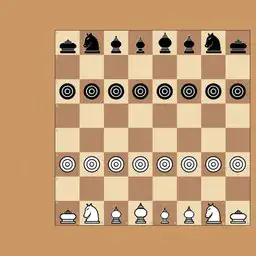
Classic Chess is exactly what it sounds like -- the same game people have been playing for centuries, just on a screen now. The board is clean, maybe a bit wooden-looking if you pick that skin, and the pieces are the standard Staunton design. No fancy animations or particle effects here, which honestly fits the vibe. It feels like sitting down at a park table with a friend on a quiet afternoon, except that friend could be in another country. What gets me is how quiet it is -- you make a move, then you wait, and that silence is where the real action happens, inside your head. You start second-guessing everything after move ten. Did I leave my bishop hanging? Was that pawn push too aggressive? The AI is decent enough to punish mistakes, but it doesn't feel like playing a computer; it feels like playing someone who's been doing this for years. Who gets hooked on this? People who like puzzles, honestly. If you've ever spent an hour staring at a sudoku grid, you'll understand why chess players can stare at a position for fifteen minutes just deciding where to put a knight. It's not flashy. It's not fast. But there's a reason it hasn't changed much in over a thousand years. The checkmate feels earned, not given. That's the whole appeal.
About Classic chess
So you''re staring at that 8x8 grid. Sixty-four squares, sixteen pieces each. The game''s been around forever, right? But when you actually sit down to play Classic Chess, it''s not about memorizing openings--it''s about that moment when you spot a weakness and pounce. You click a piece, it highlights its legal moves, then you click a square to move it. That''s the loop. Your brain is doing all the work: calculating threats, imagining three moves ahead, deciding if sacrificing that bishop for a pawn storm is worth it. Hands are just moving a mouse or tapping a screen.
The objective is simple: trap the enemy king so it can''t escape--checkmate. But getting there? That''s where the fun lives. Early on, you''re learning piece values: pawns are cheap, queens are precious. The AI on low difficulty makes dumb mistakes, leaving pieces undefended. You grab them, feel clever. Then you crank it up. Suddenly it''s defending its king with subtle pawn structures, forking your rook and knight with a sneaky knight of its own. That''s the difficulty curve--it doesn''t throw new mechanics at you, just smarter play. No level names, no upgrades. Just you and the opponent''s growing cunning.
The satisfying moments? Forking two major pieces with a knight--that little horse hops in and suddenly your opponent has to lose either a rook or a queen. Pinning their queen to their king with your bishop, so they can''t move it without exposing checkmate. Castling at the perfect time, tucking your king behind a wall of pawns while your rook joins the attack. Late-game, when you''ve traded down to king and pawn endgames, and you push that pawn to the eighth rank, promoting it to a second queen. The opponent resigns before you even finish the promotion animation.
Online multiplayer is where it gets real. You face strangers with weird opening traps--the Fried Liver Attack, the Queen''s Gambit declined. You''ll lose games in ten moves because you forgot to develop your pieces. Then you spectate a match, and someone suggests a move in the chat that you didn''t see at all. That''s when you realize how deep this thing goes. No two games are the same. Sometimes you win with a brilliant sacrifice, sometimes you grind out a win by forcing a draw when you''re losing. It''s not about flashy graphics--it''s about that internal click when a plan comes together.
Tips & Tricks
Here's what I've learned from getting wrecked in Classic Chess more times than I'd like to admit. First, don't just develop your knights early -- that's obvious. But the real trick is to use them to fork your opponent's queen and rook. That one move can swing the game immediately. I lost so many matches because I moved the same piece twice in the opening. Castle early, seriously. Your king is a sitting duck in the center, and rooks get active once connected. Another mistake that cost me: pushing pawns in front of my king too soon. They create permanent weaknesses that opponents exploit with bishops. On the flip side, learning to control the center with pawns rather than pieces is huge -- a pawn chain can choke your opponent's mobility. Here's a sneaky one: when your opponent's queen is active, don't just attack it with pieces they can capture. Use your own pawns to chase it around and waste their tempo. That's how you gain development. Also, don't overlook the power of a passed pawn late game -- even a single pawn can promote if you clear the path. Finally, watch out for discovered attacks. I've been on the receiving end of a bishop sliding out to reveal a rook check, losing my queen instantly. It's brutal. The best advice? Practice with a timer -- it forces you to spot these patterns faster.





Comments
Please login to leave a comment.