Scan to play on mobile
Pskov checkers
How to Play
Game Overview
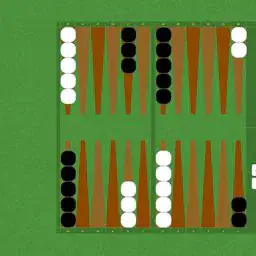
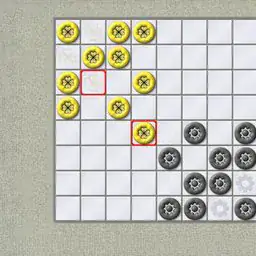
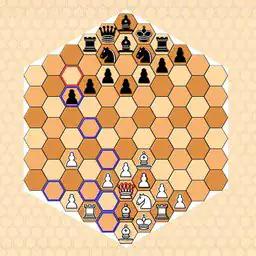
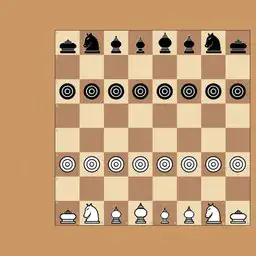
Pskov Checkers takes the classic game and spins it on its head by rotating the board so the corners face the players. That changes everything about movement. Instead of just sliding diagonally, your pieces can now move forward in three directions and capture in all six, which feels wild at first but makes total sense once you get used to it. The game offers two board sizes: a small 37-cell version for quicker matches and a big 61-cell one for real strategy sessions. Each player starts with 13 or 24 checkers depending on the board, so games can get pretty intense. The visual style is clean and minimal, with a dark board and bright colored pieces that pop, giving it a modern, almost puzzle-like vibe. Captures are mandatory, and you have to finish a capture chain once you start, but you get to pick which branch to follow if there are options, which adds tactical depth. Kings only appear in the opposite corner and become long-range queens, but they can't capture on the same turn they land, so timing matters. The whole thing feels like a spatial puzzle where you're constantly rethinking angles. I could see chess fans loving this because it rewards forward planning, but it's also great for casual players who want something fresh. The AI is decent for practice, and local or online multiplayer lets you test new strategies against friends or strangers. Watching matches and suggesting moves adds a fun community layer too. It's just a clever, well-executed twist on a classic that keeps you guessing.
About Pskov checkers
Pskov Checkers takes the classic game and tilts it sideways -- literally. The board is rotated so the corners point at you, not the edges. This tiny change breaks everything you think you know. Suddenly your checkers can move forward in three directions instead of two, and they can capture in all six. It feels wrong at first, like the game is glitching, but once it clicks, it's hard to go back.
You pick between two board sizes: the small one has 37 cells and each player gets 13 checkers, the large one has 61 cells with 24 checkers each. The small board is fast and brutal, games end in ten minutes. The large one takes longer and forces you to actually plan ahead. Most people start on small to get used to the weird movement.
The core loop is simple: move your checkers forward in three directions, jump over enemy pieces to capture them, and try to make it to the opposite corner -- but only that one specific corner, which is the kinging field. Your checker becomes a king there, but the turn ends immediately, so you can't chain a capture into a promotion. The king then moves like a long-range queen, sliding any number of spaces in any direction. That's where the real chaos starts.
Captures are mandatory, and if you have multiple capture paths, you get to pick which one to follow. This is where the game gets nasty. You might see a juicy triple jump, but taking it leaves your king exposed. Or you might sacrifice two checkers to set up a trap. The AI, if you play against it, gets aggressive around mid-game. It starts baiting you into bad captures, especially on the large board where the extra space lets it set up diagonal walls. Online matches against real people are a different beast -- they'll exploit the three-direction movement to crowd your side and force you into impossible choices.
Satisfying moments come when you chain a capture that clears half the board in one turn, or when you slip a checker into the kinging corner while your opponent is busy elsewhere. The game also lets you spectate live matches and suggest moves, which is weirdly fun -- you can troll a friend by spamming bad suggestions, or genuinely help a stranger pull off a comeback. Difficulty builds naturally as you face better AI or human players who've learned to use the rotated board's blind spots. There's no upgrade system, no power-ups. Just you, the board, and the constant threat of missing a forced capture.
Tips & Tricks
Early on, I treated the three forward moves like a minor tweak--big mistake. It's a whole new geometry, and you have to unlearn diagonal thinking. On the large board, don't get attached to your back row; those corner-adjacent spots are prime for setting up multi-capture chains. I lost my first few games by ignoring how the king promotion field works--it's only the far corner, so plan your deep pushes carefully. Capturing is mandatory, but you pick which branch to follow--use that flexibility. I'd always rush to take the most obvious piece, but sometimes skipping a capture to set up a better position later pays off, even if it feels wrong. The six-direction capture range for simple checkers is huge; I once got wiped because I thought a checker was safe three squares away. On the small board, the 37-cell layout gets cramped fast--control the center and force your opponent into edges where their options shrink. Don't overlook spectating matches online; watching someone else suggest moves taught me tricks I'd never spot alone. Also, long-range kings are terrifying, so bait them into useless positions rather than trying to block them. One thing that clicked: alternating pressure between both boards if playing multiple rounds, because the layouts demand different rhythms. It's chess meets checkers with a board that hates you--learn to love the disorientation.







Comments
Please login to leave a comment.