Scan to play on mobile
Baby Sitter: Merge 2
How to Play
Game Overview
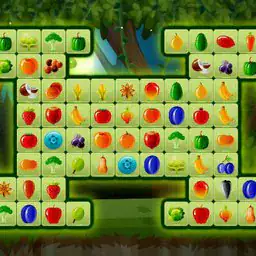
Baby Sitter: Merge 2 is one of those tile-matching games where you help a mom sort out her baby''s nursery, but really you''re just connecting identical tiles. The whole thing has this bright, pastel color scheme that feels like a cartoon version of a baby shower. Tiles are covered in stuff like bottles, rattles, and pacifiers, and when you match them, they disappear with a little chime. The game doesn''t rush you--there''s no timer or pressure, which is nice if you just want to zone out. Connecting tiles works like a classic link game: you pick two matching tiles, and the game checks if there''s a clear path between them that can bend no more than twice. That path can even loop outside the board, which saved me a few times when things got cluttered. The nursery decoration bit is pretty minimal--you unlock a few items like a crib or a mobile after clearing levels, but it''s not a big focus. Visually, everything is soft and round, almost like a mobile game from ten years ago. Who would get hooked? Probably anyone who likes Mahjong or those old Jewel Quest games but wants something more chill. It''s not deep, but it''s satisfying in a brain-off kind of way. The baby in the corner occasionally cries or giggles, which is either cute or annoying depending on your mood. I''d say it''s a solid time-waster for commutes or waiting rooms.
About Baby Sitter: Merge 2
Baby Sitter: Merge 2 is one of those tile-matching puzzle games that looks simple but sneaks up on you. You're helping a mom tidy up a nursery by connecting identical tiles on a grid. The basic loop is straightforward: click a tile, then click another matching tile. If there's a clear path between them -- no obstacles, just a straight line with at most two turns -- they vanish with a pop and maybe a little star burst. That's the satisfying click-clack of progress.
But the pathfinding is where your brain actually works. The game draws a mental grid from tile to tile, and you have to trace it yourself. Each step must be in the same row or column, adjacent cells only. Outside the playing field? That counts too, which is a neat trick for tight spots. Early levels like "Messy Room" throw you a simple 6x6 grid with pairs scattered around. You can chain a few matches and feel clever.
Around level 10, things shift. "Baby's Playtime" introduces obstacles -- locked tiles that need a key item, or blocks that only clear after matching an adjacent pair. Then there's the "Timer" mechanic: some tiles are cursed and start pulsing. If you don't match them fast enough, they spawn a ghost tile that blocks a random cell. That's annoying but keeps you moving.
The game throws in special tiles too. A "Star Tile" clears a row when matched. A "Bomb Tile" explodes in a cross pattern, which is great for breaking up clusters. There's also a "Joker" tile that can match with anything -- but it only appears once per board usually, so you save it for desperate moments. Upgrades come from coins you earn per level: you can buy extra time in timed modes, expand the grid size, or unlock new nursery decorations that don't affect gameplay but are cute.
Difficulty ramps unevenly. One level might be a breeze with obvious pairs, then the next is a nightmare of alternating patterns where you have to map out the path three moves ahead. The satisfaction comes when you clear a board just before the timer runs out, or when you chain a bunch of matches in a row and watch the nursery slowly fill with toys and furniture. The mom character has little reactions too -- she smiles or claps, which is oddly motivating.
Later levels like "Bedtime Chaos" mix all the mechanics: cursed tiles, locked blocks, and a shrinking board. You're clicking fast, planning paths, and praying you don't misclick. There's no undo, so one wrong tap can ruin a run. But that tension is part of it. The game never explains the path rules well upfront -- you learn by failing a few times. And that's fine because the loop is quick: fail, retry, adapt.
Tips & Tricks
The path doesn't have to stay on the board -- you can route connections around the outside edges. This is huge for clearing clusters near the border. I wasted way too many moves trying to zigzag through the middle. Watch out for tiles that form long horizontal or vertical lines; they're your best friends for chain reactions. If you spot two matching tiles on the same row with only empty cells between them, that's a freebie. Don't get tunnel vision on obvious pairs. Sometimes the smart move is to clear a tile that blocks a better match later, even if it isn't a direct connection. The path-finding algorithm is strict -- any tile in the way breaks it, so plan around obstacles. I kept losing when I'd ignore a single blocking tile thinking the path could bend funny. Another thing: the game doesn't warn you about dead ends, so if you have two matching tiles but they're surrounded by others, you might need to remove a neighbor first. Prioritize matching tiles with the fewest blockers. Also, remember you can connect tiles that are far apart if the path loops outside -- that trick saved me on tight boards. Eventually you'll memorize which tile shapes are rare and hoard connections for them. Mistakes happen when you rush; take a second to scan the whole field before clicking.
















Comments
Please login to leave a comment.