Scan to play on mobile
Balls: Pixel Art
How to Play
Game Overview
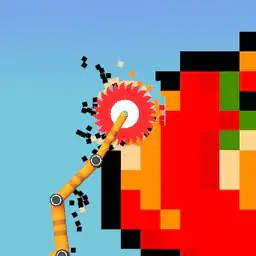
So Balls: Pixel Art is this weirdly satisfying arcade game where you shoot balloons at pixel art pictures to break them apart. The whole thing feels like a cross between a carnival shooting gallery and one of those ASMR destruction videos. You get this cannon on the left side of the screen, and the picture sits on the right -- usually something retro-looking like a dragon or a spaceship, all blocky and chunky. The art style is super lo-fi, with big visible pixels and bright colors that pop against a plain background. It''s not trying to impress you with graphics; it''s more about that tactile thrill of watching chunks fly off. Each level gives you 16 balls per shot and 15 total attempts, which sounds generous until you realize some pictures are massive and have tricky gaps. The physics are what really sell it -- balloons bounce off surfaces, push into the pixel blocks, and sometimes chain reactions happen where one good hit takes out half the image. That feels great. The game doesn''t hold your hand, so you''ll figure out angles and ricochets by trial and error. It''s the kind of thing you''d play during a coffee break or while waiting for something, because rounds are short but you''ll keep saying "one more try." People who like puzzlers with a physical twist, or anyone who enjoyed games like Peggle or Angry Birds, will probably get hooked. It''s not deep, but it is addictive in that simple, brain-off way. The only downside is some later levels feel like luck over skill when the camera angle hides key blocks. Still, the core loop of shooting and watching things crumble is hard to put down once you start.
About Balls: Pixel Art
Balls: Pixel Art is one of those games where you look at the screen and think, "I''m just breaking a picture with balls?" but then twenty minutes vanish and you''re still trying to figure out how to crack that one stubborn pixel cluster. The core loop is simple: you get a cannon that fires sixteen balls per shot, and you have fifteen shots total to completely shatter a pixelated image. Every level is a different picture -- early ones are things like a simple apple or a star, but later you''re facing full-on portraits of cats or landscapes with gradients. The trick is that the balls bounce off the edges of the screen, so it''s not just aim-and-fire; you have to bank shots off walls to reach pixels tucked behind others. The cannon has a crosshair that moves in a half-circle arc, and you can adjust the angle by tapping or dragging, which feels a bit loose at first but becomes second nature after a few levels.
The satisfying moment comes when you line up a shot that ricochets through a chain of pixels, taking out six or seven in one go. Each pixel has a health bar -- some are tougher, like the ones in the center of the picture or parts that form the main subject''s eye. The first few levels are almost boring because everything breaks in two or three shots. Around level 8 or 9, things get meaner. The game introduces "armored pixels" that need three hits, and they''re usually clustered in shapes that protect the rest of the picture. You also get special balloons that explode on contact with a certain color -- red balloons pop red pixels instantly, but you have to save those for the right moment. There''s no upgrade system or currency, which is kind of refreshing; you just get better at reading the pixel layout and planning your shots.
Later levels have names like "Pixel Mona Lisa" and "Neon Cityscape" -- those are brutal because the colors blend together, making it hard to see which pixels are which. Your brain has to switch between spotting weak points and calculating bounce angles. You''ll often waste two or three shots just testing a wall bounce before you commit. The game punishes you for rushing; if you miss a pixel in a corner, you might need four shots to reach it again. Some levels have moving obstacles -- like floating blocks that shift after each shot -- which mess with your ricochet paths entirely. I died on level 14 three times because a single pixel kept hiding behind a moving barrier. The end screen just shows your shattered picture with a score based on remaining shots and pixels left. It''s not flashy, but that last shot that finishes the image? That''s the hook. You know you''ll just start the next level the second it''s over.
Tips & Tricks
The cannon has a fixed angle on first fire, but you can adjust by tapping the screen before the shot. That tiny nudge can mean the difference between a clean pixel break and a wasted volley. Save your 16-ball loads for when you've already thinned out a cluster--spamming early just spreads pixels too wide to chain. I lost count of how many attempts I threw away trying to hit the center of a picture first. Actually, work from the edges inward; the sides often break away in bigger chunks and leave the middle exposed for easier hits. Some images have hidden weak spots where a single ball can shatter a whole row. Look for lines of connected pixels that are lighter in color--they're not just decorative. The timer between shots matters less than you think, so take a breath and aim. If a level feels impossible, try a completely different angle--like aiming at the top corner instead of straight on. One trick that clicked late: bouncing balls off the walls can reach pixels behind foreground blocks. That's how I beat that annoying castle picture. Remember, each of those 15 attempts is precious, so if your first shot scatters badly, just restart--it's faster than fighting a messy board.















Comments
Please login to leave a comment.