Scan to play on mobile
Mahjong Slide & Merge
How to Play
Game Overview
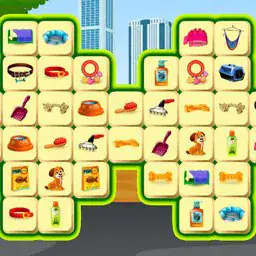
I picked up Mahjong Slide & Merge expecting the usual tile matching, but it''s way more interesting than that. The board starts out looking like a standard mahjong layout -- those little tiles with flowers and symbols -- but you don''t just pick them off. Instead, you slide entire rows of tiles around like a sliding puzzle. It changes everything. You can push a tile left, and the whole line shifts, which might free a trapped tile or accidentally bury one you needed. The visual style is clean and calm, with soft colors and a zen garden vibe -- there''s even a bamboo border. No timers, no pressure, just you deciding where to shove things. The core loop is: find two identical tiles, then slide one or a group so they end up adjacent or in a line with nothing between them, and poof, they vanish. But here''s the catch -- you have to plan ahead because moving one thing messes up five others. I caught myself staring at the board for minutes, tracing possible chains. It feels like a cross between mahjong solitaire and those block-sliding puzzles from old flash games. Who''d get hooked? People who like slow-burn logic puzzles, or anyone who enjoys rearranging furniture in their head. Not a fast game, but a satisfying one.
About Mahjong Slide & Merge
**Mahjong Slide & Merge** takes the old tile-matching idea and adds a sliding puzzle layer that changes everything. Instead of just tapping matching tiles, you drag entire rows or columns around the grid. Your hands swipe left, right, up, or down, moving one tile or a whole line of them until they click into place. The goal is still to clear the board by pairing identical tiles, but now you're also managing space like a sliding block puzzle.
Matching happens when two identical tiles end up next to each other horizontally or vertically, with no other tiles between them on that line. They vanish, and the board shifts to fill the gap. That's the core loop: slide, match, clear, repeat. But the trick is that tiles can be blocked by others, so you have to slide groups around to free up trapped ones. Early levels like 'Green Meadow' give you plenty of room, so you can just slide willy-nilly. But by 'Bamboo Garden,' the grid gets tighter, and you start seeing locked tiles that won't budge until you match a key tile nearby. That's when the brain work kicks in.
Later on, you unlock special tiles like 'Wildcards' that can match anything, but they're rare and often placed awkwardly. There's also a 'Chain Bonus' mechanic where clearing four or more pairs in quick succession triggers a cascading clear that feels incredible. The satisfying moment is when you plan a series of slides, moving a whole column up to line up three pairs at once, then watch them pop off one after another with that little chime sound.
Difficulty doesn't just add more tiles -- it introduces obstacles like 'Stone Blocks' that can't be moved until you match a 'Hammer' tile, and 'Mirror Tiles' that reflect your slide direction, messing with your plans. The upgrade system lets you earn coins from clearing levels to buy power-ups like 'Undo' or 'Shuffle,' but they're limited, so you don't want to rely on them. The real satisfaction comes from those moments when you slide a tile across the whole board, setting up a chain reaction that clears half the grid in one go. It's not always obvious what to do, and sometimes you'll get stuck staring at the board for a minute before spotting the right move.
Tips & Tricks
I kept losing because I''d panic-slide tiles into corners. Pause first. Look at what''s blocking a pair before shoving stuff around. Groups matter more than you think -- sliding a whole row can free up three matches at once. There''s a nasty trap where you isolate a tile on one side of the board with no duplicates nearby. Avoid that by scanning the whole grid before committing. Chain reactions are where the real fun is. If you slide a tile that clears a pair, sometimes the stuff behind it collapses into another match automatically. I once cleared half the board in one move by accident. That''s the goal. Another thing: tiles that look far apart might be one slide away if nothing''s in between. Check lines, not just adjacency. I wasted turns trying to nudge tiles next to each other when I could''ve slid a whole column. And here''s the big one -- don''t hoard pairs. If you see a match, take it unless it blocks something obvious later. Holding out for a perfect combo usually backfires. The board gets crowded fast, and trapped tiles are a death sentence. One more: when stuck, slide everything one direction to reset sightlines. It''s not cheating, it''s learning what moves exist.






















Comments
Please login to leave a comment.