Scan to play on mobile
Number Quest
How to Play
Game Overview
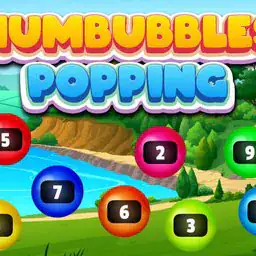
Number Quest is this arcade counting game where you stare at a screen full of stuff--balloons, cars, fruit, whatever--and have to quickly figure out how many there are before time runs out. The visual style is bright and cartoonish, like something you'd see in a mobile ad that actually delivers. Everything pops with solid colors, and the objects bounce around a bit, which makes counting harder than you'd think. It's not trying to be deep or tell a story; it's pure reflex and mental math under pressure. The vibe is casual but frantic once the timer starts ticking. You're not just chilling--you're racing your own brain. Who gets hooked? Probably people who like quick puzzle games like Tetris or those brain-training apps, but with less pretension. Kids might like the colorful stuff, but adults will find the speed challenge addictive too. The controls are dead simple--click or tap the right number--so anyone can pick it up. But mastering it means training your eyes to scan fast and ignore distractions. Some rounds feel unfair when objects overlap, but that's part of the fun. You'll screw up, get frustrated, then try again because the rounds are short. It's the kind of game you play on a bus or waiting for coffee, and suddenly half an hour's gone. Not life-changing, but solid for what it is.
About Number Quest
Number Quest drops you into a simple premise that gets meaner over time. You see a cluster of objects on screen -- balloons, cars, fruits, whatever -- and a set of numbers at the bottom. Click or tap the right one. That's the core loop. It sounds easy until the timer starts ticking and the objects start moving or overlapping. Your brain has to count fast and accurately while ignoring distractions like similar colors or shapes that nearly match. The first few levels are gentle. You get clear groups of, say, five apples or three bouncing balls. But by stage 4, things shift. Objects start appearing in motion -- a flock of birds that scatter, or a row of speeding cars that flash across in half a second. You're not just counting; you're tracking moving targets. The game calls these "Blitz Counts" and they force you to estimate or snap-judge. If you get three in a row right, a multiplier kicks in, which feels great. There's a satisfying "ding" sound and your score jumps. But mess up and the multiplier resets, which stings. Later levels introduce "Horde Packs" where objects are crammed together so tightly you have to mentally pick them apart. The difficulty curve isn't linear either -- some stages are named "Maze of Numbers" or "Flash Freeze" and they add new rules. In Flash Freeze, objects freeze and unfreeze randomly, so you only get a clear view for a split second. That's when the game becomes less about counting and more about pattern recognition. You start noticing that certain shapes or arrangements are always the same count, which is a trick the game doesn't tell you about. Upgrades appear after every few levels -- you can unlock a "Focus Boost" that slows time for two seconds once per round, or a "Double Check" that lets you confirm your answer before submitting. These aren't handed out freely; you earn coins by hitting combo streaks. The control is just clicking or tapping, nothing fancy. But your hands work fast while your brain does the heavy lifting. The final stages throw in "Boss Counts" where a giant object obscures smaller ones, and you have to count what's hidden. It's stressful but rewarding when you nail it. Leaderboards track your best runs, and there's a daily challenge called "Speed Trial" that rotates the object set. The game doesn't hold your hand after the first few levels, which I actually like. You figure out your own strategies -- like ignoring colors and focusing on shape outlines, or counting in groups of two. There's no story to follow, just pure number crunching under pressure. The sound of a correct answer chimes, and the screen flashes green for a moment. That little burst of satisfaction keeps you going. But when you're stuck on a level for ten tries, it can get frustrating. Still, the variety in object types -- from bouncing balls to spinning tops -- keeps each round feeling slightly different. You'll never see the same arrangement twice, so there's always something new to mentally parse.
Tips & Tricks
Those early levels feel easy, but they're lying to you. The game speeds up faster than you expect, and groups of objects start overlapping in ways that make counting a real headache. I lost a ton of runs because I tried to count every single balloon individually while the timer was breathing down my neck. Instead, scan the whole screen first and group similar colors in your head--it's way faster than tallying item by item. Another thing: the bouncing animation on objects like cars and stars actually makes them harder to track, so focus on the static background elements for reference points. Don't trust your first glance when objects are clustered together; I've misclicked because two different groups looked like one big blob. Pause for half a second before clicking to double-check if something's really part of the set you're counting. For mobile players, tapping the answer is fine, but use your non-dominant hand to steady the screen if your phone moves--cost me a few points when the timer ran out while I fumbled. The absolute worst mistake? Letting a wrong answer slide. Each error resets your multiplier, and that's what kills your score on the leaderboard. If you're unsure, risk a guess rather than staring too long, because hesitation costs more than a miss. Practice the first three worlds until you can do them with your eyes closed--they repeat patterns, and that muscle memory saves you later when the chaos really kicks in.










Comments
Please login to leave a comment.