Scan to play on mobile
Pillar checkers, duel
How to Play
Game Overview
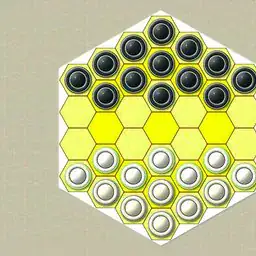
So Pillar Checkers: Duel is checkers, but not the version you remember from a dusty board at your grandma's house. The big twist is that when you capture a piece, instead of removing it from the board, you just stack it underneath your own checker. Suddenly your regular piece becomes a little tower, and that tower moves as a single unit. The top piece's color decides who owns the whole stack, and if that top piece is a queen, the entire tower moves like a queen. It feels weirdly satisfying to build these columns, like you're constructing an army rather than just eliminating one. The visual style is clean and modern, with a dark board and glowing pieces that look like polished stone or glass. There's no heavy atmosphere or dramatic music -- it's pretty straightforward, which I actually prefer. You just focus on the board and the stacking. Who'd get hooked? People who like abstract strategy games but want something fresh, or anyone who found regular checkers too simplistic. The stacking adds a ton of depth because towers become both offensive weapons and defensive liabilities -- you don't want to leave a tall tower vulnerable since a capture can flip control. Playing against the AI is decent for practice, but local multiplayer with a friend is where it shines because you can see their face when you snatch a four-high tower. Online multiplayer exists too, though I haven't tried it much. The rule about stopping captures if you land back on a beaten checker is a bit clunky at first, but you get used to it. Honestly, it's checkers remixed into something that feels almost like a different game entirely.
About Pillar checkers, duel
So you''ve played regular checkers, right? Pillar Checkers: Duel takes that old game and stacks it -- literally. Every time you capture an opponent''s piece, instead of removing it from the board, you slide it under your own checker. That builds a tower. The top piece''s color decides who controls the whole stack. If you''ve got a red on top, that tower moves for you. A stack can move like a regular checker (diagonally forward one square) or, if it''s got a queen at the top, it slides diagonally any number of open squares in any direction. Capturing works differently too -- when you jump over an enemy, that piece goes under yours, not off the board. But here''s the kicker: if you''re mid-capture chain and your tower lands on a square where you''ve already placed a captured piece, the whole chain stops. That forces you to plan your multi-jump routes carefully. The goal isn''t to eliminate all enemy pieces -- it''s to cover or block every single one of them so they can''t move. So you''re not just trying to take things; you''re trying to trap your opponent''s remaining checkers by surrounding them with your towers. This changes everything about how you think about positioning. Difficulty piles up fast. Early levels against the AI are simple -- the computer makes obvious mistakes. But around level 5 or so, the AI starts using multi-capture chains smartly, and you''ll have to watch for towers that suddenly grow massive in one turn. There''s no upgrade system or skill tree -- the game is pure, cold strategy. The satisfying moments come when you set up a chain of captures that builds a three-story tower, and then that tower becomes a queen on your next turn, letting you sweep across the board. Or when you block your opponent''s last piece with two towers pinning it from both sides, and they have no moves left. Local two-player mode is the real test -- nothing beats watching your friend''s face when they realize their stack of five pieces is now yours because you slipped a red checker on top. The controls are simple: tap a tower to select it, then tap a valid landing square. If there''s a capture, you''ll automatically chain if possible, but you can also choose between multiple capture paths when the game gives you options. That choice matters because taking a different route might leave you vulnerable afterward. There''s no timer, so you can sit and stare at the board for minutes -- and you will.
Tips & Tricks
Towers feel like strength, but they''re actually giant targets. I learned the hard way that a tall tower is slow and predictable--your opponent will bait it into a trap, and losing a tower hurts way more than losing a single piece. Keep your towers short unless you''re sure they''re safe. That stacking mechanic where captured pieces go under? It''s a double-edged sword. Early on, I''d grab any capture I could, but that just handed my opponent a pile of my own pieces to use against me later. Be picky about what you take. The queen in this game is a monster because it can move any distance diagonally. But here''s the kicker: if a queen captures, the captured piece stacks under it, making the queen taller and actually weaker--since taller queens can''t slide through gaps as easily. Don''t let your queen get fat. The rule about stopping capture if you return to a beaten checker''s square is brutal. I once lost a winning streak because I thought I could zigzag back through my own captures--nope, the game just ends your turn. Plan your multi-capture path in advance, not on the fly. Blocking the opponent''s pieces is the win condition, not jumping them all. I kept trying to wipe the board and got stalled. Instead, corner their towers so they have no legal moves--that''s the real checkmate. Finally, local play with a friend is where this game shines because you can argue about rules and see the strategy unfold. Online, people play like they''re speedrunning; take your time.

















Comments
Please login to leave a comment.