Scan to play on mobile
Puzzle block
How to Play
Game Overview
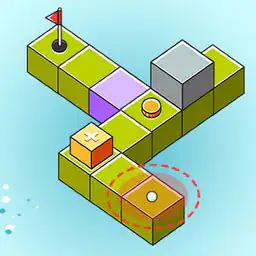
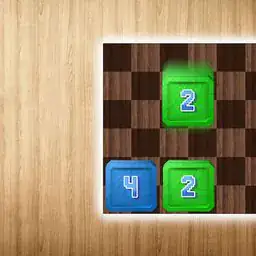
Puzzle Block is one of those games that looks super simple but will quietly eat up an hour of your time without you noticing. The whole thing is just a grid and some oddly shaped pieces -- think Tetris but without the panic of things falling. You drag each block onto the board, and the catch is that every piece has exactly one spot where it actually fits. Miss that spot and it won't snap into place, which forces you to really look at the shapes and the gaps. There's no timer, no music that speeds up, just a calm little puzzle where you rotate pieces in your head before putting them down. The visual style is clean and almost sterile -- pastel colors on a white background, nothing flashy. That minimalism works because it keeps you focused on the logic. It feels less like a game and more like sorting out a jigsaw puzzle on a coffee table while you listen to a podcast. Who gets hooked? People who liked those old block-pushing puzzles on flash game sites, or anyone who enjoys rearranging furniture in their head. It's not adrenaline-pumping -- it's that satisfying click when a piece finally locks in. The difficulty ramps up slowly, so you never feel lost, but later levels have these weird L-shaped pieces that force some real planning. I found myself muttering "okay, that goes there" a lot.
About Puzzle block
Puzzle Block drops you onto a grid with a handful of oddly shaped pieces scattered around. Your job is to drag each one into its correct spot to complete the picture--think of it like a jigsaw, but every piece is a geometric block that snaps into place. The early levels are simple: maybe a star or a house outline, with pieces that fit together like a basic tangram. You drag, rotate, and drop, and the game chimes when you nail it. That first perfect fit feels good, like clicking a lock shut. The loop is straightforward: pick a piece, examine the board, find the groove, place it. No timer, no pressure--just you and the shapes. But around level 10, things shift. The game introduces "Locked Fragments"--pieces that can't be moved once placed, forcing you to plan ahead. Suddenly, you're not just placing blocks; you're solving a puzzle within a puzzle. Mess up the order, and you hit a dead end, needing to restart the level. That's where the brain work kicks in. Later, "Mirror Mode" flips pieces horizontally, and "Rotation Lock" on some levels means you can't spin them--you have to find the exact orientation by trial and error. The satisfaction comes from those moments when everything clicks: a complex shape like "The Spiral" or "The Labyrinth" finally comes together after a dozen attempts. No upgrade system here, but the difficulty curve is real--levels are named things like "Crossroads" and "Cascade," each introducing a new gimmick. The minimalist design keeps you focused; there's no clutter, just the grid and the blocks. What you're doing with your hands is simple dragging and tapping, but your brain is juggling spatial reasoning, sequence, and patience. The game doesn't hold your hand--it lets you figure out the logic yourself. And that moment when you place the last piece and the whole image reveals itself? That's a genuine little rush. It's not flashy, but it hooks you because every level is a new riddle to crack.
Tips & Tricks
The game loves to throw in pieces that look like they fit but don't actually lock into place -- take a second to really trace the outlines before committing. I wasted a good ten minutes on one level because I kept forcing a T-shaped block into a spot that needed an L shape rotated differently. Rotating pieces is your best friend, but don't just spin them randomly; look for corners or notches on the board that match the block's quirks. A mistake I made early on was ignoring the edges -- start by placing pieces along the borders where the shape is usually more defined, then work inward. Some puzzles have pieces that seem identical but have subtle color hints or slight gaps that tell you which side faces up; I missed those for way too long. If you're stuck, don't keep trying the same spot -- step back and check if another piece might fit first, because forcing it can break your whole strategy. Later levels sneak in pieces that rotate in only one direction, which caught me off guard -- test each piece's rotation range before you plan too far ahead. One trick that clicked: sometimes leaving a small gap is fine if it matches the final picture's silhouette, so don't panic over empty spaces until you've placed everything you can.


Comments
Please login to leave a comment.