Scan to play on mobile
Red Hide Ball
How to Play
Game Overview
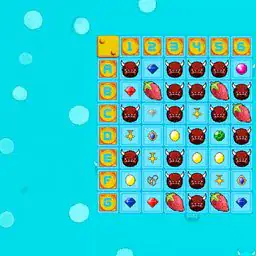
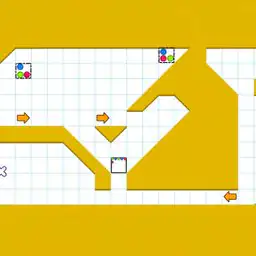
Red Hide Ball is one of those puzzle games that looks simple but sneaks up on you. The whole thing is set on a grid board with little colored balls, blocky obstacles, and these ugly monster sprites that shuffle around. Visuals are basic -- think early Flash game vibes, flat and clean, with a pastel palette that doesn't hurt your eyes after an hour. You start with a good ball you need to protect, and the monsters want to eat it or something. The goal is to drag or tap the ball behind walls or into safe zones before the monsters catch it. It feels like a cross between chess and those old sliding tile puzzles -- you have to plan a few moves ahead because the monsters move predictably but fast. Some levels have blockers you can activate or paths that shift, which adds a layer of "oh no I messed up" tension. The difficulty ramps up gradually; early levels are almost too easy, then around level 20 you hit a wall where you actually need to think. Who would get hooked? People who like Sokoban or games where losing means you try the same level ten times in a row. It's not flashy or dramatic -- just solid puzzle logic with a cute but mildly threatening monster theme. The satisfaction comes from that one perfect move that saves the ball, not from any story or fancy graphics. Perfect for killing time on a bus when you want your brain mildly engaged but not overwhelmed.
About Red Hide Ball
Red Hide Ball starts simple enough. You get a board with a few colored balls, some static blockers, and a monster that moves in a straight line. The goal is to slide the good ball into a safe zone before the monster reaches it. Tapping a ball sends it rolling until it hits something, and that's where the thinking begins. Each level has a limited number of moves, shown as little footprints in the corner. Run out and you restart. The first ten or so levels are gentle -- monsters only patrol one path, and safe zones are obvious. You learn quickly that pushing a ball without checking the monster's route ends badly. The satisfying part early on is watching your ball tuck behind a wall just as the monster passes. Level 15, "Double Trouble," introduces two monsters moving in opposite patterns. That's when you start planning three moves ahead instead of one. Later, blockers appear that only work once -- they snap closed after a single use. There's also "spike tiles" that destroy any ball rolling over them, so you need to redirect carefully. Level 27, "The Maze," gives you a labyrinth with multiple good balls to hide before any monster reaches them. The monsters themselves get smarter: "sentries" pause and reverse direction when they spot a ball in their line of sight. "Hunters" follow the most recent ball movement, which means you can bait them away. A notable mechanic is the "swap gate" that exchanges positions of two balls when one enters it -- useful for moving a good ball to safety while the decoy takes the heat. Difficulty ramps unevenly. Level 34, "Timed Escape," adds a countdown that forces fast decisions. No save system between moves, so mistakes cost you the whole puzzle. The most satisfying moments come from those last-second saves: your good ball slides into the goal while a hunter snaps its jaws a tile away. There's no soundtrack to speak of, just a click sound for moves and a chime for level clears. Some later levels require hiding multiple good balls in sequence, which means orchestration more than individual moves. The game never handholds after the first tutorial. You figure out monster vision cones and blocker durability through failure. And that's fine -- the loop is tight. Each failure teaches you one more thing about the board's timing. You keep tapping, rolling, and hiding until the pattern clicks.
Tips & Tricks
The early levels let you get away with sloppy moves, but around level 15 the game punishes that hard. One trick I learned the hard way: watch the monster pathing before you move anything. If you drag a blocker into place while a monster is already halfway down a corridor, that monster might just walk around the other side. Timing matters more than positioning.
Another thing that clicked for me was using the corner tiles as bait. Sometimes you can leave a decoy ball in plain sight to draw the monster away from your real target. The game never explains that monsters prioritize the closest ball, so that little exploit saves you on crowded boards.
I wasted a lot of moves trying to block every possible path. You don't need to. Sometimes the best move is to just hide the good ball behind a single blocker and let the monster patrol a dead end. Overcomplicating things is the biggest mistake.
Check the level's goal before you start dragging stuff around. Some levels want you to reach an exit instead of just hiding, and the controls work differently for that--tap the ball once to select, then tap the destination. Forgetting that cost me several restarts.
If you get stuck, try the opposite of what feels obvious. I spent ten minutes on a puzzle where the solution was to push a blocker toward the monster, not away from it. Counterintuitive, but it worked because the monster changed direction.
Finally, don't ignore the pause button. The game doesn't pause between moves--monsters keep moving while you think. Hit pause to plan without pressure, especially on levels with multiple monsters crossing paths.










Comments
Please login to leave a comment.