Scan to play on mobile
Shogi: Japanese Chess
How to Play
Game Overview
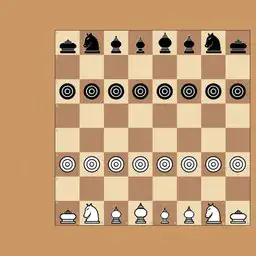
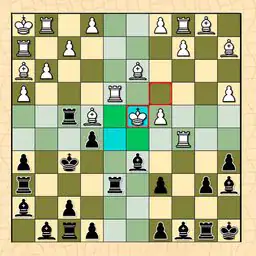
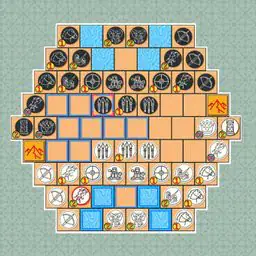
Shogi is basically Japanese chess, but with a wild twist that makes it feel like a completely different animal. You've got your standard king and rook and bishop, but then there are generals and lances and knights that move in specific, rigid ways. The board is a simple grid, usually with kanji on the pieces to show their type and which side they belong to--it looks understated, almost like a calligraphy practice sheet. The real chaos comes from the drop rule: any piece you capture becomes yours to place anywhere on the board on your turn, even right next to the opponent's king. That changes everything. One moment you're carefully advancing a silver general, the next your own captured pawn gets dropped behind enemy lines to fork two pieces. It feels brutal and clever at the same time. The visual style is clean, nothing flashy--mostly wood textures and clear lines. The vibe is intense but not frantic; it's more like a knife fight in a quiet dojo. You'll spend a lot of time staring at the board, trying to figure out if dropping that rook is a trap or a win. People who already like chess will get hooked because it's familiar but deeper. Anyone who enjoys tactical puzzles, or games where you can flip the board's momentum in one move, will love it. It's not for the impatient--games can drag on, but every turn matters.
About Shogi: Japanese Chess
Shogi doesn''t play like Western chess at all. The board is 9x9, and both sides start with twenty pieces each. But the big thing is the drop rule: when you capture an opponent''s piece, it becomes yours. You can then place it back on any empty square as your own unit, with its original movement and promotion rules intact. This changes everything. You''re not just thinking about what''s on the board--you''re tracking what''s in your opponent''s hand and what you''re holding. The game loop is: move, capture, promote, drop, and repeat. Your hands are busy flipping promoted pieces over to show the upgraded side, sliding captured pieces into your reserve tray, and dropping them back in weird places to cause chaos. The brain work is constant--you''re always asking, "If I take that piece, where can he drop it next turn?"
The difficulty ramps up fast because the AI isn''t messing around. There''s no easy mode where it plays dumb forever. By the third or fourth match, the computer starts setting up traps with knights and silver generals. Later on, you''ll see the AI use drops to fork your king and rook simultaneously, which is brutal. The promotion mechanic kicks in when you move a piece into the enemy''s camp--the last three rows. Most pieces become gold generals, which move one square in any direction except straight back. The rook turns into a dragon king, which keeps its rook moves but also gains diagonal movement. The bishop becomes a dragon horse--same deal, adds orthogonal movement. These promoted pieces are absolute monsters. The satisfying moment is when you drop a captured pawn right in front of the enemy king, delivering checkmate from your hand. Or when you sacrifice a silver general to open a path, then promote a rook and start tearing through their ranks.
There''s no upgrade system or level names--it''s just match after match. But the game does have different difficulty tiers for the AI, labeled things like "Beginner" through "Expert." The enemy types are the same pieces you use, but higher difficulty AI just calculates deeper. The most annoying thing is how the AI will stall with its king, running it around the board while setting up a counter-drop. You learn to control the center and keep your pieces connected. Long games feel like a slog, but short ones are over in minutes if you blunder. The drop mechanic means no piece is ever truly gone--you''ll see your own lance used against you later. That''s the real hook.
Tips & Tricks
Dropping captured pieces back onto the board is Shogi's biggest game-changer, but it's a double-edged sword. My early mistake was dropping pawns too casually -- you cannot drop a pawn to deliver checkmate directly, and dropping one into a column that already has your unpromoted pawn creates an illegal move. That lost me a few matches before I memorized the rule. Another trick that clicked late: dropped pieces act like they're promoted already if you place them in the enemy camp, but they don't actually promote until after they move again. So dropping a silver general deep can be risky if you forget it's still vulnerable. The rook and bishop are powerful but scream 'target me.' I used to push them forward early and lose them to a simple gold general trap. Now I hold them back until pawns create openings. Gold generals are your defensive backbone -- they move in every direction except diagonally backward, which makes them perfect for protecting the king. Keep one nearby always. Promotion isn't always the right call. A silver general's ability to move diagonally backward is lost if you promote it to gold, so sometimes keeping it unpromoted in the defense zone is smarter. I also learned the hard way: attacking the king directly with a piece your opponent can capture for free is suicide unless you have backup. Check your drops before you commit -- one misplaced pawn can block your own retreat. Patience wins more games than flashy moves in the opening.













Comments
Please login to leave a comment.