Scan to play on mobile
Simulator GT Motorsport
How to Play
Game Overview
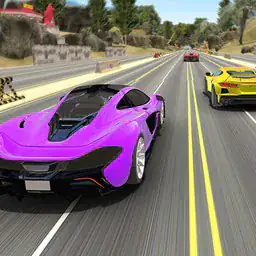
So I spent a bunch of time with Simulator GT Motorsport, and honestly, it's a mixed bag that leans hard into being a proper sim. The game drops you into this cockpit view of a bunch of high-end GT cars, and the first thing you notice is the visuals. They're not flashy or hyper-realistic, but there's this clean, almost sterile look to the tracks and cars that feels like a no-nonsense racing game from the early 2010s. The lighting is decent, but don't expect ray tracing or anything. What matters is how the cars handle. The physics are surprisingly weighty -- you really feel the car's mass when you brake late into a corner or power out of a hairpin. The manual transmission with E and Q is a nice touch if you're into that, though the automatic works fine. Driving feels tense, especially in the rain or at night, because the wheelspin and understeer are unforgiving. The career mode throws you into a series of races and time trials on tracks that feel vaguely inspired by real circuits -- there's one that screams Spa, another that's basically a narrow Suzuka. The boost mechanic with Shift can save you if you're behind, but using it wrong just sends you into a wall. Who'd get hooked? People who liked older Forza Motorsport or Gran Turismo but want something more stripped back and challenging. It's not for casuals who want arcade drifting -- this thing punishes mistakes. The soundtrack is mostly generic rock, which gets old, but the engine sounds are satisfyingly raw. Overall it's a solid, focused racing sim that doesn't try to be everything at once.
About Simulator GT Motorsport
Simulator GT Motorsport drops you onto the track with a simple goal: cross the finish line first. Your hands will be on the arrow keys or WASD for acceleration and steering, space bar for braking--which you'll need way more than you think--and shift for a temporary boost that recharges slowly. There's a manual gearbox too: E shifts up, Q shifts down. Early on, you can ignore it and let the automatic do its thing, but by the time you hit the Tuscany Grand Circuit, you'll need to time your shifts perfectly to shave off those tenths of a second. The game starts you in the entry-level GT Sprint series, where your main opponent is just learning the tracks. The first few races feel forgiving, almost like a tutorial disguised as competition. But then it throws you into the Endurance Cup. That's when you realize the weather system isn't just for show. Rain slicks the asphalt, and your tires lose grip on corners I'd taken flat-out before. You'll fishtail into barriers, curse the AI driver who brake-checks you, and learn to feather the throttle through turns like the Nürburgring's Carousel. The upgrade system is straightforward: earn credits from race placements, then spend them on engine tuning, suspension kits, and tire compounds. Each upgrade changes how the car feels--stiffer suspension makes cornering sharper but punishes bumps, while softer tires grip better in rain but wear out faster during long races. The satisfying moment comes when everything clicks: you nail the braking point on the Monza chicane, shift down perfectly, boost out of the apex, and leave the pack behind. There's no fanfare, just a split-second where the car feels alive under your fingers. Later modes add pressure: in Knockout Qualifying, the slowest driver every two laps gets eliminated, so you're constantly glancing at the standings. The AI gets aggressive too--they'll defend positions, take tighter lines, and force errors. Your brain has to juggle gear selection, fuel management if that mode is on, and reading the track ahead. The horn button (H) is basically useless except for taunting, but the camera toggle (C) helps you spot traffic from the cockpit view, which is the only way to play once you're serious. Reset your car with R if you spin out--and you will, a lot. Simulator GT Motorsport doesn't hold your hand. It expects you to learn the hard way, and that's what makes every victory feel earned.
Tips & Tricks
For this game, treat the brakes differently than you'd expect. I kept locking up on the first hairpin until I realized that a quick tap of space is way better than holding it -- you'll hold your line through the corner and lose less speed. The boost isn't just for straights; using shift mid-exit on a long curve actually pulls you out faster if the tires aren't already screaming. Manual shifting with E and Q matters more than you think -- I spent hours in automatic mode and couldn't figure out why I was losing time on the uphill sections. You want to short-shift up before the revs peak to keep the rear planted. Repositioning with R is a lifesaver after a spinout, but don't spam it mid-race because it resets your throttle position and you'll lose a second. The horn (H) seems like a joke, but I've used it to time my braking points -- it's a stupid trick that actually works. Camera switching (C) between hood and chase view helps on different tracks; the hood cam is better for precision on twisty circuits, while chase view helps you spot traffic in championship races. Weather changes are brutal -- rain makes the curbs slippery, so avoid them entirely. One mistake I kept making was fighting the wheel when it wobbled; just ease off the gas and let the car settle. Start with the slower cars in time trials to learn the tracks before touching the GT beasts.










Comments
Please login to leave a comment.