Scan to play on mobile
Tavreli: Russian Chess
How to Play
Game Overview
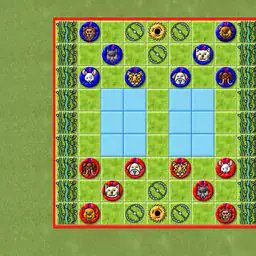
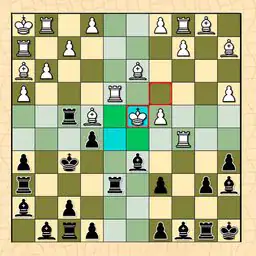
So Tavreli is this chess variant that takes the classic game and throws a wild stacking mechanic into the mix. The visual style is clean and almost medieval-fantasy with these ornate pieces that look like little warriors and mages instead of standard chessmen. When you capture something, that piece doesn't disappear--it gets placed under your own piece to form a tower. That tower then moves based on whatever piece is on top, which flips the whole strategy on its head. It feels like you're constantly managing these little armies within an army, and the board gets crowded fast in a way that's actually fun rather than confusing. The vibe is surprisingly tactical but also chaotic; you can't just rely on normal chess patterns because towers can split apart or be liberated later. I'd say anyone who likes chess but wants something fresher and more aggressive would get hooked, especially if they enjoy games where the board state keeps evolving unpredictably. The AI is decent for practice, but playing against a friend locally is where it really shines--there's a lot of shouting and pointing when your carefully built tower gets dismantled. The online multiplayer works fine too, though I found spectating matches with move suggestions a bit gimmicky. Overall it's chess with a twist that actually changes how you think about every capture and sacrifice.
About Tavreli: Russian Chess
So Tavreli: Russian Chess takes the classic game and throws a massive wrench in it. The core loop is still chess--you move pieces, you try to trap the opponent's king. But here's the thing: when you capture a piece, it doesn't leave the board. Instead, it stacks under your own piece, creating a tower. That tower moves according to the top piece's rules, so a rook with a bishop underneath still moves like a rook. But if that top piece gets captured, the bishop pops out and becomes active again. This changes everything. You're not just thinking about material advantage; you're thinking about what pieces are buried where.
The difficulty ramps up because you have to track these stacks. Early on, you might just stack pawns on each other to make a multi-layered tower that can move like a pawn but has more staying power. But later, you realize the real power is in building a tower with a queen on top and a bishop underneath--that thing can dominate diagonals and straights. The game calls the most powerful structure a 'helga' tower, which is two bishops, a queen, and a helga piece (which is like a special piece that appears from pawn promotion) all stacked. Getting that is a satisfying moment, but it's risky because if someone captures the top piece, the whole thing falls apart.
You're constantly deciding when to split a tower. During your turn, you can break a tower into two parts in any ratio. Say you have a tower of three pieces--you can split it into a single piece and a two-piece tower. The new tower becomes active immediately, which can lead to surprise attacks or defenses. The game also has this weird rule about pawns--they're called warriors here--that transform when they reach the last rank, but if they get buried under another piece during an exchange, they revert to a regular warrior and have to march back to promote again. That's annoying but adds depth.
The satisfying moments come from pulling off a multi-step plan. Like, you bait a capture that stacks a bishop under your knight, then later split the tower to free that bishop for a checkmate. The AI in single-player is decent, but local play against a friend is where it shines because you can see the confusion on their face when you split a tower they forgot about. Online multiplayer lets you spectate matches and suggest moves, which is weird but fun for learning. There's no real level system or upgrades--it's just chess with extra rules. The endgame gets chaotic because towers can have multiple pieces, making checkmates harder to spot. You win by checkmating the opponent's king, which they call the Magus. No pieces can stack on the king, so he's always a single target, but protecting him becomes a nightmare when every other square is filled with stacked pieces 🔍.
Tips & Tricks
Stacking a pawn on top of a tower early is a trap I fell for too many times. That warrior becomes useless until you march the whole stack to the last rank, which paints a target on it. Instead, keep your towers low until mid-game -- a single piece on top gives you more flexibility for movement and division. I learned the hard way that a tower with a bishop on top moves diagonally, which can be killer for controlling the center, but a rook on top locks you into straight lines. Mix up the top piece based on what you need right now, not what you hope to do later. Dividing a tower is your get-out-of-jail card when you're pinned. Say you have a stack threatened by a queen -- split it into two smaller towers, and suddenly your opponent has two problems instead of one. The new tower activates immediately, so you can even use the half to check their king on the same turn. That saved me more than once. Watch for those moments when a warrior (pawn) sits on top of a tower on the last rank -- it transforms into whatever piece lies under it. I once turned a stalled stack into a second queen this way, which flipped an endgame I was losing. Don't forget your opponent can liberate captured pieces too. If they take one of your towers and stack their piece on top, that unit isn't gone -- it's just asleep. A sneky player can later split their tower and free your old piece to attack you. Checkmating the magus (king) is the only win condition, so never expose him. You can't stack anything on him either, which means he's always a single target. Keep him screened by towers you can split to block checks. One mistake I kept making was treating the helga (special piece) like a queen -- it moves like a knight and a bishop combined, which is powerful but easy to overextend. Use it to harass, not to lead charges.



Comments
Please login to leave a comment.