Scan to play on mobile
Merge the Balls 2048: Billiards!
How to Play
Game Overview
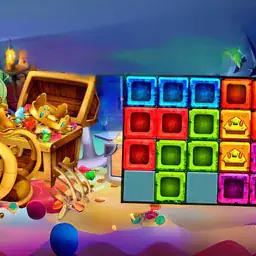
So I tried this game Merge the Balls 2048: Billiards! and it's way more chaotic than I expected. You've got this pool table setup with numbered balls bouncing around, and you're supposed to merge matching numbers by nudging them together. The thing is, there's this magnet that keeps pulling balls toward each other, which sounds helpful but actually makes everything stressful because if any ball rolls past this white line at the bottom, you lose. The visual style is clean and simple, like a mobile billiards game but with bright colors for the numbers. It feels like playing 2048 while someone keeps shaking the table and you're frantically trying to keep everything in bounds. The physics are what got me -- balls bump into each other with real weight, sometimes merging accidentally when you're aiming somewhere else. The soundtrack is just background noise, nothing special. Who gets hooked? People who liked 2048 but wanted more panic, or anyone who enjoys when games make simple concepts feel tense. The early levels are easy, just merging 2s and 4s, but once you hit 32s and 64s the table gets crowded fast. I can see someone with patience getting really into optimizing their moves, like figuring out which side to shoot from to avoid that white line. It's not a masterpiece, but it's solid fun for short bursts.
About Merge the Balls 2048: Billiards!
So you're looking at Merge the Balls 2048: Billiards! and thinking it's just another number puzzle, right? Well, it's not. First off, you've got this pool table with numbered balls bouncing around like they're drunk. Your job is to shoot balls from the bottom of the screen--using a simple drag-and-aim mechanic--and try to land them next to another ball with the same number. When they touch, they merge into a bigger number. That's the 2048 part. But here's where it gets messy: there's a magnetic pull. Balls don't just sit still; they drift toward each other like they're in love or something. So you're constantly fighting against that attraction, trying to pair up balls before they cluster into a blob you can't control.
The game starts easy. You've got maybe four or five balls on the table, all low numbers like 2 or 4. You aim, you release, they merge, you feel smart. But around level 5 or 6, things get hairy. The game introduces a white line near the bottom edge of the table. If any ball crosses that line, it's game over. So now you're not just merging; you're also blocking. You have to shoot balls to push others back up the table, or create barriers with high-number balls that don't move as much. The physics feel real enough that a light tap sends a ball rolling slowly, while a harder shot bounces it off the cushions. You learn to use the walls to curve shots, which is satisfying when you pull it off.
Later levels, like World 3's "Magnetic Madness," crank up the pull strength. Balls snap together fast, so you barely have time to aim. You'll miss, balls will cross the line, and you'll restart a dozen times. The satisfying moment comes when you chain merges--like landing a 16 next to another 16, which becomes a 32, then that drifts into another 32 for a 64. The numbers pop and the table clears a little. There's no upgrade system, just you getting better at predicting where balls will drift. The leaderboard shows your highest merge, and that's what keeps you coming back. It's simple, it's frustrating, and it works because the physics are just unpredictable enough to make each game feel different. The white line isn't even the worst part; sometimes the balls just decide to ignore physics and slide sideways for no reason, which is annoying. But when you nail a triple merge in one shot, it feels great.
Tips & Tricks
Don't just fling balls randomly early on. That magnetic pull is sneaky -- it yanks lower numbers toward the white line faster than you'd expect, costing me plenty of runs. I learned to nudge balls from the sides instead of head-on, which gives more control over where they settle. The white line is your real enemy, not the high numbers. One mistake I kept making was rushing to merge 2s and 4s right away. Patience pays off: let small balls cluster near each other, then use a single shot to chain multiple merges at once. That's how you jump from 32 to 64 in one go, which feels great. Another trick: aim for the corners. Balls stuck in corners are almost impossible to pull across the line, so park your highest numbers there. Mid-game gets chaotic when the table fills up. I started ignoring the big merges for a bit and focused on clearing out low-number balls near the danger zone. A clean table means fewer surprises. Finally, bank shots off the rails are your friend. A gentle bounce can redirect a ball behind a cluster you couldn't reach otherwise. It's not obvious at first, but once you get the angle, it opens up setups you'd miss with straight shots.


















Comments
Please login to leave a comment.